Hanoi’s education sector grows in both quantity and quality
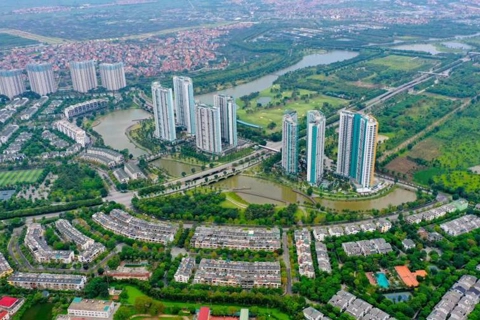
The capital city has undergone a drastic change after 15 years of the expansion of administrative boundaries.
After 15 years expanding its administrative boundaries, Hanoi's education sector has undergone significant changes, both quantitatively and qualitatively.
| The Trung Vuong Secondary School in Hanoi. Photo: Thanh Thao |
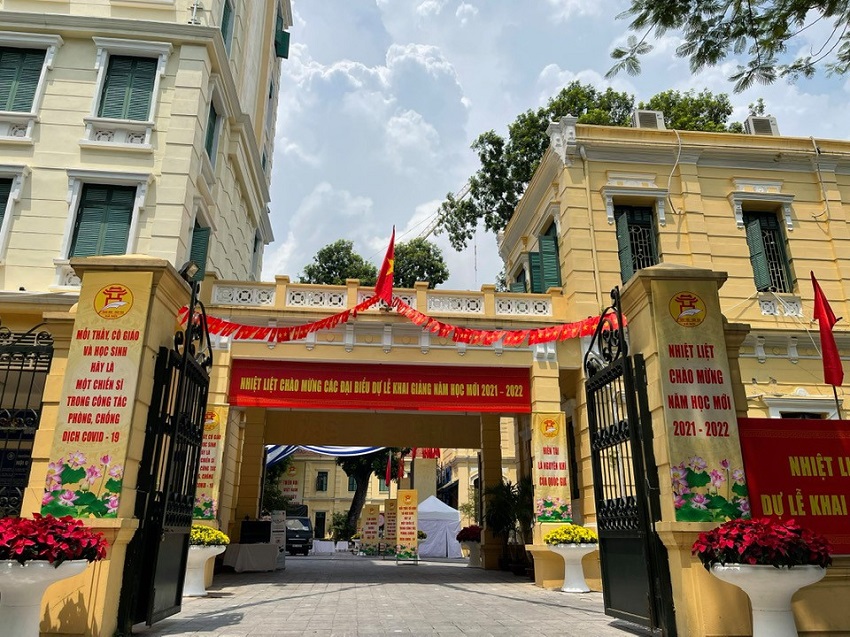
School facilities have been improved, and the gap in educational quality between advantaged and disadvantaged areas has gradually narrowed.
School network meets demand
The city's school network has developed along with its socio-economic development between 2008 and 2023. As of 2023, Hanoi had more than 2,800 kindergartens, schools, and vocational training centers, with nearly 2.2 million students and about 123,000 teachers. Since the 2008 milestone, 537 new schools have been added with more than 28,000 additional classrooms.
Meanwhile, the percentage of day boarders in Hanoi has expanded at all levels. In the last school year, 100% of preschoolers spent the morning and afternoon at school, with a lunch break in between, as did 96.8% of primary school students and 32.8% of secondary school students. The corresponding figures for the 2008-2009 school year were 89.6%, 80%, and 21.3%, respectively.
The results have been attributed to Hanoi's multiple policies on developing a variety of educational institutions. Apart from public schools, students have different options to attend private schools, foreign-invested schools or vocational schools.
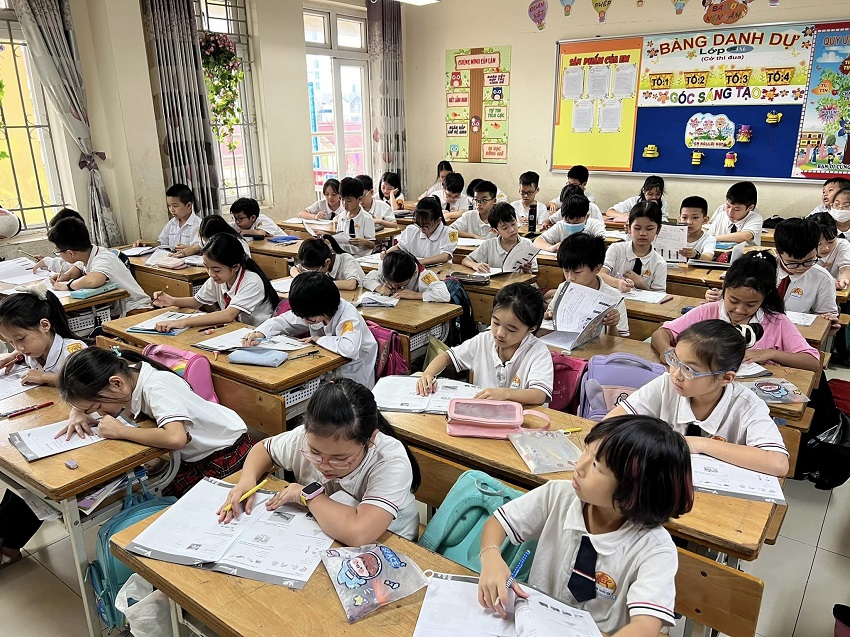
| Pupils of Nam Trung Yen Primary School, Cau Giay District. Photo: Thanh Thao |
"My child is a 9th grader this year. She's above average academically, so if her scores aren't good enough to get into a public high school, we'll apply for a private one. There are quite a few reputable schools in the city now, so it isn't a big issue for my family. The most important thing is that she has a friendly, safe, and appropriate educational environment that will help promote her strengths," said Tran Thi Thanh Hoa, parent of a student at Ly Thuong Kiet Middle School in Dong Da District.
In addition to ensuring enough classrooms, Hanoi is focusing resources on building schools that meet the national criteria for standard schools set by the Ministry of Education and Training to help improve the quality of Hanoi's human resources.
The city targeted that the proportion of public schools meeting the national standard would reach 80-85% by 2025, according to Tran The Cuong, Director of the Hanoi Department of Education and Training. As of July 2023, the rate was reported at 72.5%.
Bridging the gap between the city and the suburbs
| A dance performance by puppils from Nam Trung Yen Primary School. Photo: Thanh Thao |

In recent years, the most noticeable change has been the narrowing gap in teaching conditions and educational quality between schools in central and suburban areas.
Hanoi always prioritizes allocating resources to support disadvantaged districts, including Ba Vi - one with many mountainous wards and a high proportion of ethnic minority students.
According to Phung Ngoc Oanh, Head of Ba Vi District's Division of Education and Training, the entire district currently has 120 schools and more than 76,000 students.
The district has conducted 236 school building and repair projects with a total budget of VND3.8 trillion (US$160 million) since 2013, while spending another VND24.8 billion on teaching materials for the new education program.
Thanks to these investments, Ba Vi has climbed from 17th place in the 2020-2021 academic year to 13th place the following year in the education quality ranking of Hanoi's 30 districts.
Similar to Ba Vi, other localities have also received huge resources to promote education and training. As a result, schools in the suburbs are increasingly named among those with the highest average scores in the city's annual high school graduation exams.
In the 2023 exam, Quoc Oai High School ranked among the top schools in physics, three other suburban schools ranked in the top 10 in chemistry, and another three ranked in the top 12 in civics.
| Tran Phu High School in Hoan Kiem District, Hanoi. Photo: Giao duc & Thoi dai |
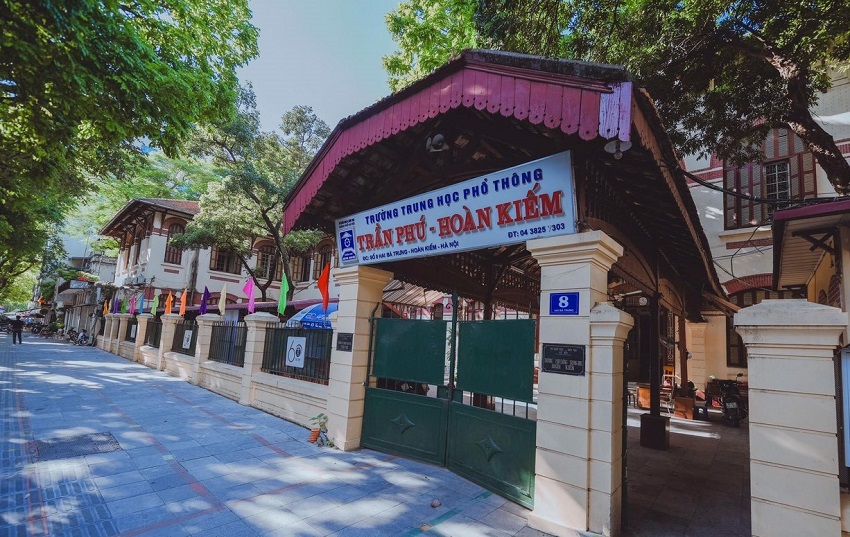
The progress made by schools in the periphery has contributed to the overall boost in the quality of education in Hanoi over the past 15 years. The capital has consistently ranked among the nation's leading localities in the percentage of good and excellent students, and the ratio of students with good behaviors.
Hanoi's high school graduation rate has also increased significantly, from 91.87% in 2008-2009 to 99.56% in 2022-2023, an increase of 7.67%. For several years in a row, Hanoi students have maintained their leading position in national excellent student competitions.