Hanoi's ethnic people keep traditional medicine alive
Ethnic minority people in the capital city are striving to gradually overcome the difficulties and challenges that threaten their vocation of making traditional medicine.
For generations, traditional medicine has been an essential source of income for the Dao ethnic population in Ba Vi District, on the outskirts of Hanoi. However, this livelihood faces many challenges.
The Dao people in Ba Vi Commune are the leading practitioners of traditional medicine. Herbalist Duong Thi Hien shared with The Hanoi Times that every day, her husband and two children go to the forest to pick medicinal leaves while she stays home to process and prepare medicine for customers.
"After years of practicing the craft, we earned enough money to renovate our house. Many other households in my village also earn better income from traditional ancestral medicine," Hien said.
"Traditional medicinal plants have helped many Dao ethnic families out of poverty. At the beginning of 2022, only 11 poor households were left in our commune (accounting for 1.8% of the total number). As of 2019, Ba Vi is no longer in the group of extremely poor communes in the country," said Ba Vi Commune People's Committee Chairman Lang Van Ha.
Fear of running out of raw materials
Herbalist Duong Thi Binh, 75 years old, said she had made traditional medicine since she was 11.
"Before 1996, the source of medicinal herbs was abundant. Going to the forest, you can find many herbs and leaves to make medicine. However, many medicinal plants become rarer after being exploited for a long time. In 1996, Ba Vi National Park was closed to any act of logging. Since then, Dao people have not been able to go to the forest to exploit medicinal plants as before," Binh said. Printing national treasures on the calendar may help promote heritage protection among Vietnamese people.
The source of herbal leaves for making traditional medicines in Ba Vi commune is depleting by the day. Photo: Lam Nguyen/ The Hanoi Times |
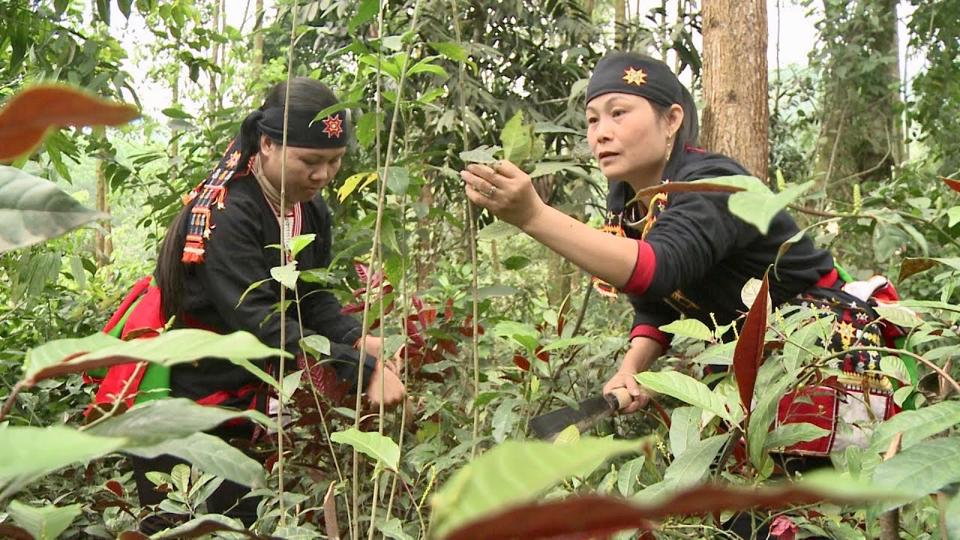
“Since the 1990s, many Dao ethnic households have tried to grow medicinal herbs to ensure the source of raw materials. Nevertheless, due to limited cultivation techniques, the yield and quality of medicinal plants were not high. We have to travel long distances daily to other provinces and cities such as Hoa Binh, Phu Tho, even Lang Son, Ha Giang to look for herbs,” Binh told The Hanoi Times.
The value of traditional Dao medicine is not commensurate with their effort as companies are not interested in investing in this trade, the application of technological advances in traditional medicine is poor, and there has not been a sustainable chain.
Concretizing support policies
In the face of difficulties and challenges that threaten traditional medicine, the Dao people are striving to change to adapt gradually.
With the support of departments and branches in Hanoi and Ba Vi District, many Dao households are able to package, print labels, and trace the origin. Some herbalists have access to online sales channels, live shopping, and partnering with pharmacies to sell traditional medicines.
Chairman of the Ba Vi Commune People's Committee Lang Van Ha said that in December 2013, the traditional medicine village of the Dao ethnic group in his district was recognized as a traditional craft village by the Hanoi People's Committee.
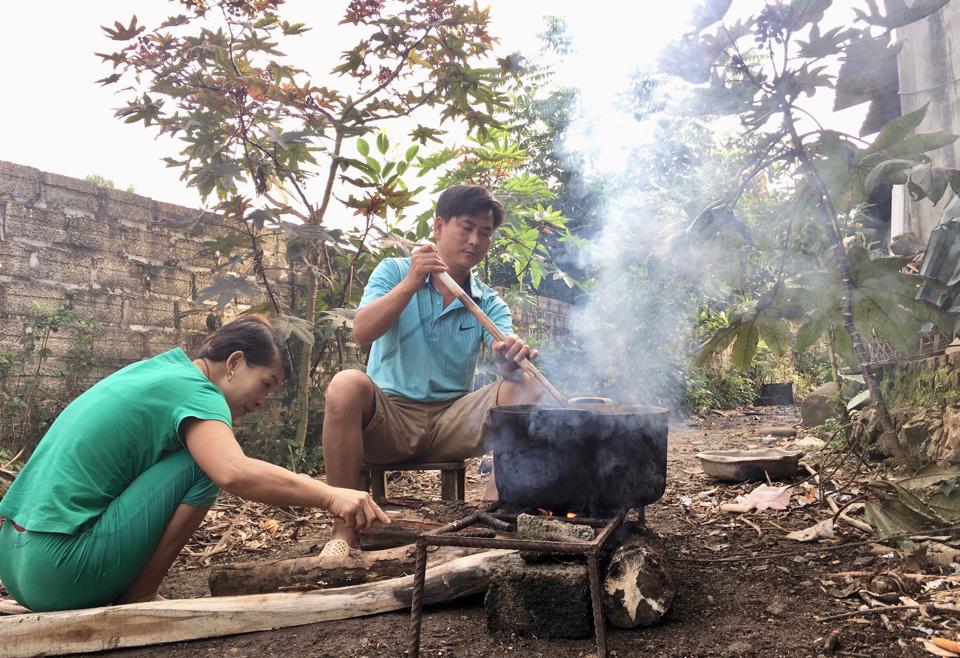
Trieu Thi Duyen and her husband in Ba Vi Commune are making medicinal plants into high-quality products. Photo: Lam Nguyen/ The Hanoi Times |
“We need assistance from the Government to preserve precious and rare varieties of medicinal plants which are in danger of being depleted,” Ha shared with The Hanoi Times.
"Developing community-based tourism in Ba Vi Commune will be of great help. Through tourism, more and more people will learn about the precious traditional remedies, helping preserve and promote the value of the traditional medicinal plants of the Dao people," the chairman added.
"We identify traditional medicine as an important economic field to stabilize political security and social order in the locality," stressed Ba Vi commune Party Committee secretary Duong Trung Tuan.
Head of the Hanoi Committee for Ethnic Minorities Nguyen Tat Vinh said that the city has recently issued a plan to implement the National Target Program for socio-economic development in ethnic minorities and mountainous areas in the capital city between 2021 and 2025.
“One of the key contents mentioned in the plan is developing agro-forestry production, tourism, traditional trades, and craft villages; promoting the potential and strengths to produce goods in the value chain,” Vinh told The Hanoi Times.
In addition, Hanoi will allocate about VND1.5 trillion (about US$63 million) to build essential infrastructure in areas inhabited by ethnic minorities, including the Dao community in the Ba Vi District. This will be necessary support to preserve and promote sustainable values for the traditional medical profession of the Dao people.