Log in
Hanoi

Hanoians' tea culture - past and present

Drinking tea has long been a daily enjoyment of Hanoians regardless of social status or character.

In the old Vietnamese concept, a true man must know gambling/drink tea and read Kieu poem”. It can be seen that tea drinking is considered a common custom or even a culture in Vietnam.

Over time, tea drinking should not be treated like drinking other juices, but a typical kind of art in Vietnamese culture, as it gives drinkers the sense of relaxation amid hectic life.

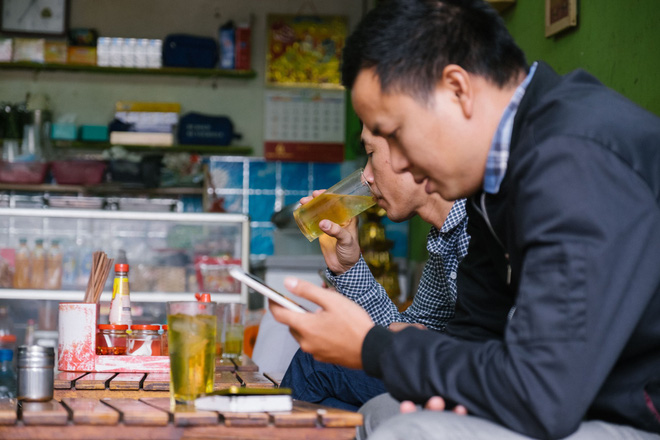
Stopping at a roadside tea bar and enjoying a glass of iced tea gives a sense of true refreshment/ Photo: Nhan Minh

According to professor Tran Ngoc "Vietnamese people are invited to drink tea not merely for refreshment, but to express a high culture, an expression of intimacy, a desire for harmony, a favor of conversation.

Vietnamese people are invited to drink tea to start a talk of peace, to discuss family and social affairs and love affairs, to feel the taste of earth, sky, plants and all things in the cup of tea.

By origin, many cultural researchers stated that Vietnamese tea drinking custom was adapted from China. According to scholar Vu Bang, Vietnamese tea has very basic differences with Chinese peer in the way of making, drinking and tasting.

There are two main types of tea. Fresh tea are original tea leaves boiled in water, drunk to refresh the physical and mental health. Dried tea is made from carefully selected leaves and buds, with many meticulous processing steps and stages.

Tea has become a popular drink for Vietnamese people in general and Hanoians in particular.

Sipping a cup of tea after the breakfast is proven to dissipate working stresses. Stopping at a roadside tea bar and enjoying a glass of iced tea gives a sense of true refreshment. Tea is also the first thing the host offers to welcome guests.

Hanoians drink tea anywhere anytime they like. But, there are three popular tea-drinking places for them: At home, in the office and a tea house or waterfront tea shops. Almost every family in Hanoi has a tea set. Whenever there is a visit, the polished tea-set shows respect and hospitality of the host to the guests.

Coffee shops opened all over Hanoi streets previously are now facing competition from teahouses. Each tea house has its own service fashion: Japanese teahouses with very formal rituals, Chinese teahouse with desserts and Vietnamese teahouse with simplicity of enjoyment. These in combination have enriched the tea culture of Hanoians.Unlike drinking tea at home or at large tea houses, people in Hanoi also tend to drink tea at roadside tea shop serving either white-collar workers, blue-collar workers, students or the elderly with the same casualness and informality so as for them to fully enjoy their cup of tea.

Hanoi people tend to drink tea in places where it’s most convenient for them to park the motorbike and feel comfortable, for example on the roadside.

In the heat of scorching summer, a glass of iced tea will dispel all fatigues. In the morning of cold winter, a cup of hot tea will make people think more about life.
Reactions:
Share:
Trending
Most Viewed
Related news
Hanoi unique coffee streets

Hanoi unique coffee streets

22 Dec, 15:49

Walking around Hanoi cafeterias, you will see a pristine soul of the city, no matter how much it has changed.

Hanoi set for special measures to unlock mega projects

Hanoi set for special measures to unlock mega projects

Such a move would help Hanoi launch major infrastructure projects and advance the city’s long-term development.

Hong Van Commune rises as Hanoi’s emerging model for community-based tourism

Hong Van Commune rises as Hanoi’s emerging model for community-based tourism

Blessed with natural beauty, strengthened by deep cultural heritage and supported by its residents, Hong Van Village is emerging as one of Hanoi’s most distinctive tourism destinations. From ecology and agriculture to handicrafts and festivals, this Red River village is shaping a dynamic vision of sustainable community tourism for the capital.

Hanoi unveils digital heritage journeys to connect tradition with modern urban life

Hanoi unveils digital heritage journeys to connect tradition with modern urban life

Hanoi has launched a new digital heritage program that brings centuries-old cultural assets into a modern, interactive format. By mapping key monuments and creating themed journeys, the city aims to help residents and visitors explore its deep-rooted identity through fresh, engaging experiences.

Hanoi launches two-wheel electric vehicles to expand green urban mobility

Hanoi launches two-wheel electric vehicles to expand green urban mobility

Hanoi has introduced two-wheel electric vehicles for the first time in its transport network, offering residents a new green mobility option and marking a key step in the city’s smart-transport development.

Thai AirAsia launches new Hanoi–Luang Prabang route to boost regional travel

Thai AirAsia launches new Hanoi–Luang Prabang route to boost regional travel

Thai AirAsia has opened a new direct Hanoi–Luang Prabang route using Fifth Freedom traffic rights, creating a faster and more convenient link between two major heritage destinations in Vietnam and Laos.

Hanoi orders strong air-pollution measures and warns schools to adjust schedules

Hanoi orders strong air-pollution measures and warns schools to adjust schedules

Hanoi has issued new directives requiring schools to restrict outdoor activities and consider suspending classes when air quality drops to hazardous levels, while launching a sweeping crackdown on pollution sources across the city.

Hanoi – Vientiane ties set pace for bilateral cooperation

Hanoi – Vientiane ties set pace for bilateral cooperation

The two sides have inked two city-level agreements and eight agreements covering areas such as Party building, economic and investment cooperation, agriculture, health, education and people-to-people ties.

Hanoi completes tunneling for four underground stations of 2nd metro line

Hanoi completes tunneling for four underground stations of 2nd metro line

The completion marks a major step forward for the four-kilometer underground section of the metro line.