Hoa Lam Vien Palace reveals Ly Dynasty power and cultural identity in Thang Long
Hoa Lam Vien, a key Ly Dynasty royal palace in Hanoi, reveals early Thang Long power, culture and spirituality, with experts proposing creative industry solutions to preserve and promote its heritage.
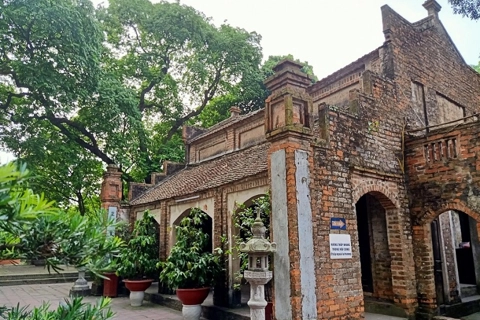
THE HANOI TIMES — Hidden on Hanoi’s Dong Anh Commune, Hoa Lam Vien (the Royal Palace) offers rare insight into the political vision, spiritual life and court culture that shaped Dai Viet during the formative years of the Ly Dynasty.
The grand Ly Dynasty palace once served as a royal residence and a powerful symbol of political authority, Buddhist thought and court aesthetics in the early history of Thang Long.
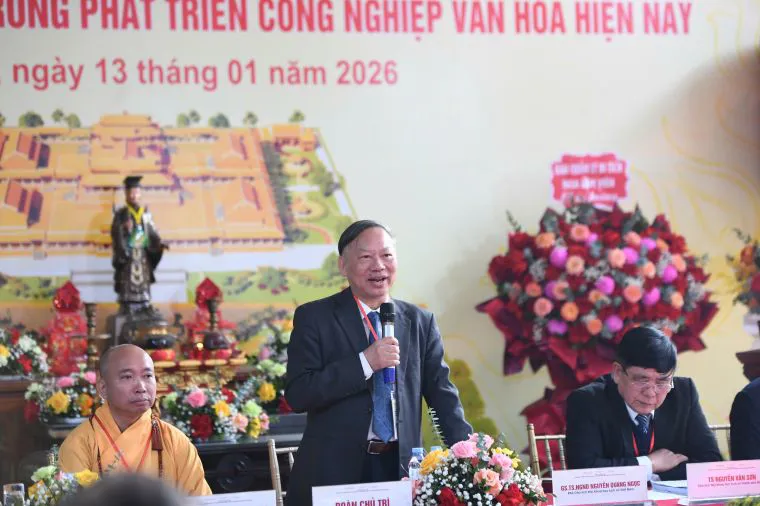
Professor-Doctor Nguyen Quang Ngoc, Vice President of the Vietnam Historical Science Association speaks at the seminar. Photos: Pham Sy/The Hanoi Times
Recent archaeological discoveries at Hoa Lam Vien carry exceptional value, said Prof. Dr. Nguyen Quang Ngoc, Vice President of the Vietnam Historical Science Association, at a seminar on January 13 at Phuc Lam Pagoda in Dong Anh Commune.
The key finds include a pair of stone mythical animals bearing Ly motifs, bases of scripture pillars, lotus-shaped stone pedestals and bricks carved with Ly patterns, he said.
These relics reflect the cultural, political and spiritual life of the period and confirm Hoa Lam Vien’s special place in national history, Ngoc added.
Comparing Hoa Lam Vien with other Ly royal palaces, Associate Professor Nguyen Thi Phuong Chi said it ranked second only to the Thang Long citadel in importance.
Unlike palaces that mainly served royal tours, Hoa Lam Vien also fulfilled ancestor worship functions and stood out for its strong religious, political and ecological character, she added.
Chi said that studying Hoa Lam Vien helps reconstruct the structure of royal palaces outside the capital while deepening understanding of Dai Viet’s governing system and cultural identity during a foundational historical period.
Transforming the relic into a creative space
At the seminar, scholars proposed practical solutions to preserve and promote Hoa Lam Vien through sustainable approaches that balance conservation and development.
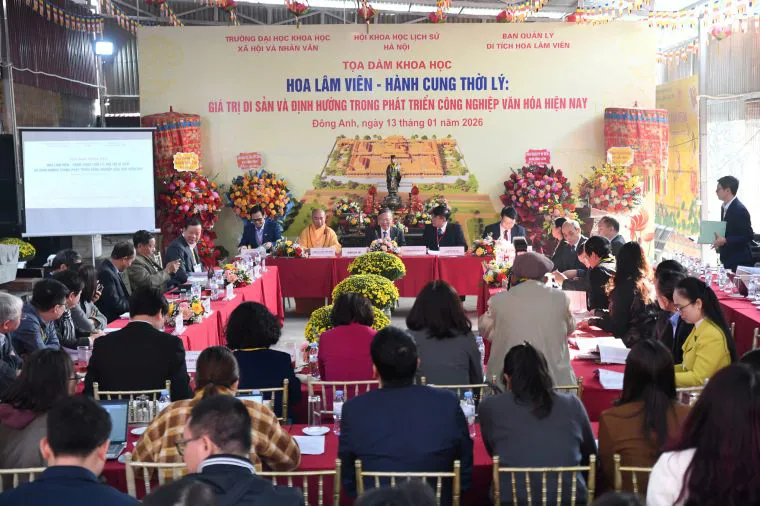
The seminar gathers many cultural and historical researchers.
They suggested turning the site into a platform for cultural industry growth in Dong Anh, in line with Hanoi’s strategy to position culture as a key economic sector.
Ngoc from the Vietnam Historical Science Association said Hoa Lam Vien’s historical and spiritual strengths make it a valuable resource for developing heritage tours linked to the Co Loa heritage axis.
Dr. Bui Van Tuan from the Hanoi Institute of Studies and International Training said placing Hoa Lam Vien within a cultural industry framework could transform heritage from past memory into creative resources, generating new economic, social and cultural value while engaging local communities.
He added that the Ly cultural elements could inspire artistic creation, design, films, exhibitions, educational games and digital products, linking multiple fields within Hanoi’s cultural industry ecosystem.
Sharing this view, Dr. Bui Thi Thu Phuong from the Thang Long-Hanoi Conservation Center proposed developing a heritage route connecting Co Loa, Hoa Lam Vien and the Thang Long Imperial Citadel, taking visitors through key milestones from the second century BC to the 12th century AD.
Experts also recommended applying digital tools such as AR, VR, digital heritage maps and automated guides to enrich visitor experiences.
Properly positioning Hoa Lam Vien within the Thang Long–Hanoi heritage network could expand cultural industry space north of the Red River and add historical depth to the capital’s urban structure.

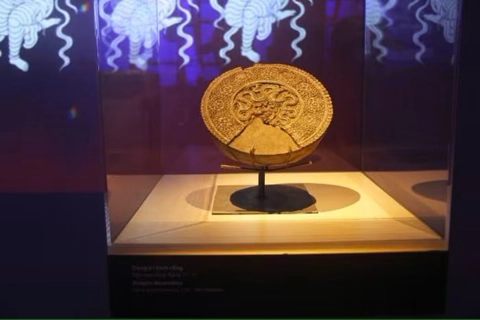
A dragon statue dating from Ly Dynasty found at Thang Long Imperial Citadel. Photo: Trinh Nguyen/The Hanoi Times