Integrated urban model to boost Hanoi’s global edge: Experts
Hanoi can only achieve sustainable development by decisively reforming its urban governance model around four pillars, including cultural, smart, ecological and sustainable.
THE HANOI TIMES — Developing an integrated urban model, cultural, smart, ecological and sustainable becomes urgent if Hanoi maintains its leadership role, enhances international competitiveness and ensures a high quality of life for its residents.
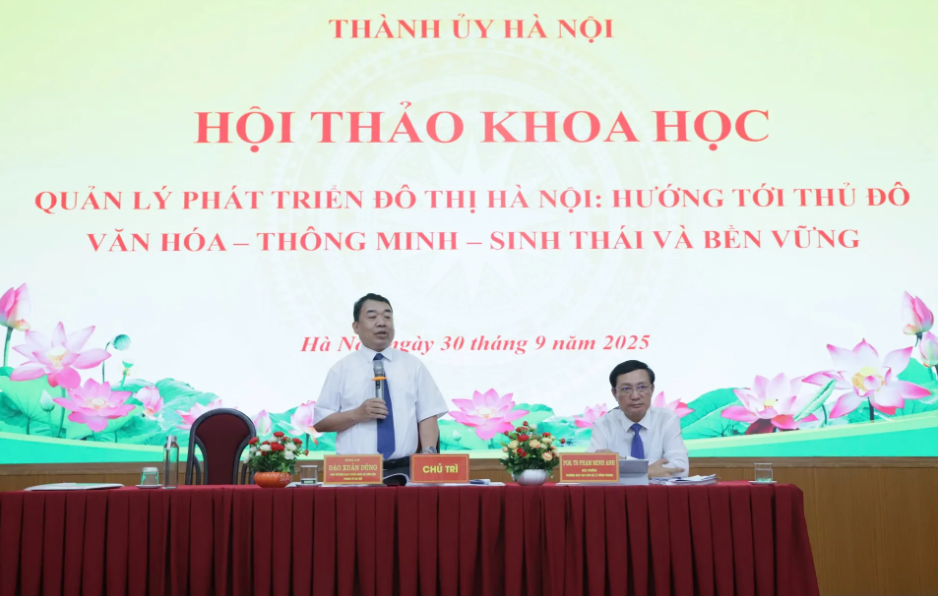
Deputy Head of the Commission for Information, Education and Mass Mobilization of the Hanoi Party Committee Dao Xuan Dung (L) and Director of Le Hong Phong Cadre Training School Pham Minh Anh at the conference. Photos: Nam Thanh/The Hanoi Times
Dao Xuan Dung, Deputy Head of the Commission for Information, Education and Mass Mobilization of the municipal Party Committee, shared the view during a scientific conference held on September 30.
According to Dr. Dung, in recent years, Hanoi has achieved significant progress in urban development, evident in its expanded spatial scale, improved infrastructure and transformed cityscape.
The capital’s Master Plan to 2030, with a vision to 2050, has clearly set a multi-centered development direction, promoting satellite cities and easing pressure on the urban core. Many modern urban areas have been built, contributing to better living standards.
Hanoi has invested heavily in transport through ring roads, overpasses and particularly the Cat Linh–Ha Dong and Nhon–Hanoi Station metro lines. Social infrastructure, such as schools, hospitals, affordable housing and public spaces, has also improved steadily.
In parallel, urban management has advanced with digital transformation, the pilot implementation of the two-tier urban government model, and the establishment of smart operation centers.
“Yet the city continues to face both short- and long-term challenges,” said Dung.
“Hanoi is under urgent pressure to renew its governance model to match the scale of a large capital with a diverse population structure, while keeping pace with global trends such as digital transformation, smart cities, creative urban development, multi-center planning, circular economy and sustainability,” he continued.
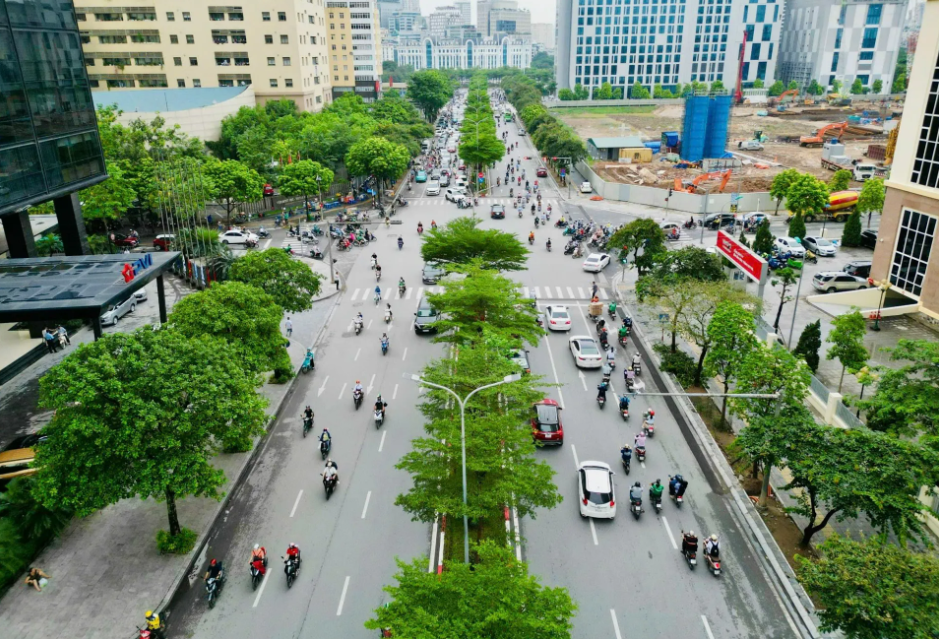
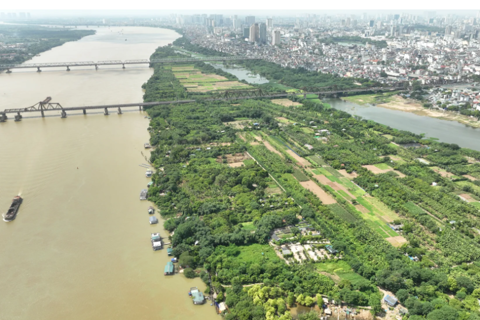
Hanoi from above. Photo: Duy Khanh/The Hanoi Times
Associate Professor Dr. Doan Thu Ha, Director of the Institute of Water Supply, Drainage and Environment, the Vietnam Water Supply and Sewerage Association, stressed that “a sustainable city can only be formed when the community is placed at the heart of governance.”
She argued that residents must be empowered to take part in planning, monitor public services, and give feedback through digital platforms.
Ha recommended that Hanoi strengthen community self-management, make data public, and expand public–private–community partnerships to promote co-creation.
Placing the discussion in an international context, Dr. Architect Nguyen Viet Huy, Lecturer at the Faculty of Architecture and Planning, Hanoi University of Civil Engineering, stressed that Hanoi should learn from experiences such as Grand Paris and the Tokyo Metropolitan Region to establish expanded functional zoning and regional coordination mechanisms.
“This is key to reducing pressure on the inner city, improving infrastructure connectivity, and unlocking the full potential of the Capital Region,” said Huy.
Meanwhile, Dr. Dang Viet Dung, Chairman of the Vietnam Federation of Civil Engineering Associations, asserted that transport remains the biggest bottleneck.
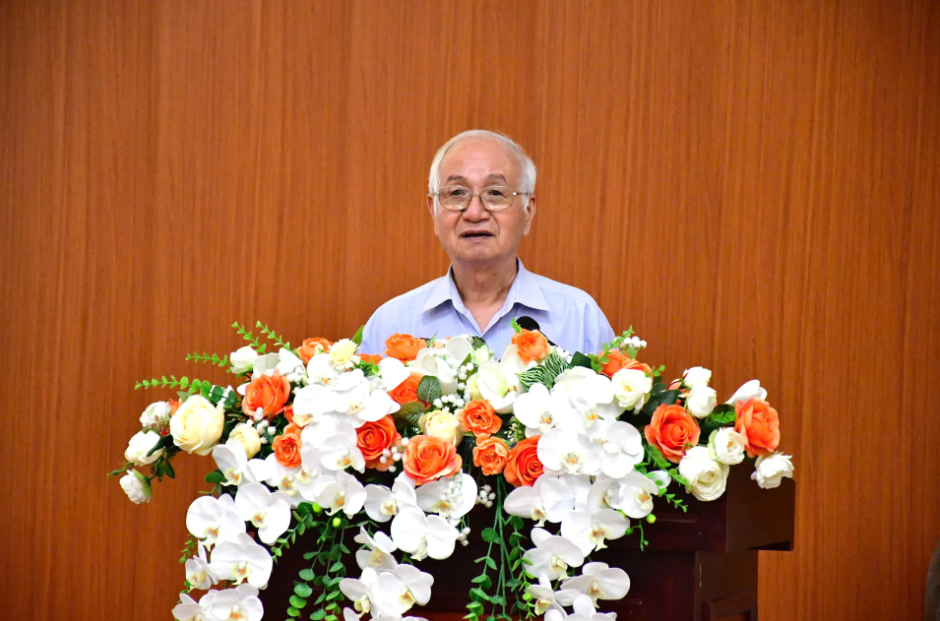
Dr. Architect Dao Ngoc Nghiem, Vice President of the Vietnam Urban Planning and Development Association.
Dung noted that without strong development of metro lines, bus-rapid-transit (BRT) systems, ring roads, and the adoption of the transit-oriented development (TOD) model, Hanoi will struggle to overcome congestion, pollution and land inefficiency.
“Public transport is not just a means of travel, but an economic driver and the backbone of modern urban planning,” he added.
Dr. Architect Phan Dang Son, Chairman of the Vietnam Association of Architects, warned that if urbanization prioritizes short-term interests and neglects culture, Hanoi risks losing its long-term competitive edge.
He stressed that heritage preservation, the creative economy, and cultural public spaces must be integrated into the city’s strategy so that the Capital remains modern while retaining its millennia-old cultural depth.
Solutions for breakthrough in urban management
According to Dr. Architect Nguyen Viet Huy, Hanoi should quickly implement expanded functional zoning and establish regional coordination to foster multi-center development.
“Only through integrated regional linkages can the city ease infrastructure pressure and drive balanced growth,” said Huy.
Associate Professor Dr. Doan Thu Ha underscored that the community cannot remain passive recipients but must become active participants. She called for broader urban democracy, transparent data, and citizen feedback to make governance more inclusive.
Meanwhile, Dr. Dang Viet Dung identified transport as Hanoi’s breakthrough priority. He suggested that the city focus on expanding metro, BRT, and ring road systems while applying TOD to turn metro stations into anchors for new urban areas.
“This will not only ease congestion but also stimulate socio-economic growth,” he said.

Dr. Architect Phan Dang Son, Chairman of the Vietnam Association of Architects.
Dr. Architect Phan Dang Son highlighted the need for green and blue infrastructure, such as retention lakes, rain gardens, green roofs and water parks, to be embedded in the master plan.
Ignoring cultural identity would erode Hanoi’s long-term competitiveness. Therefore, heritage preservation and the creative economy must be seamlessly integrated into the city’s urbanization strategy.
Associate Professor Dr. Do Hau reiterated that while the two-tier government model is a step forward, more robust decentralization is required, particularly in planning, finance, and conservation. The Capital Law 2024, once fully operationalized, could provide the institutional momentum needed for effective and flexible governance.
Dr. Architect Dao Ngoc Nghiem, Vice President of the Vietnam Urban Planning and Development Association and former Director of Hanoi’s Department of Planning and Architecture, emphasized that to realize sustainable urban solutions, Hanoi must pursue a holistic approach rather than fragmented, piecemeal implementation.
“Modern urban governance is not just about building infrastructure or passing individual policies, but about integration where institutions, planning, culture, technology, and communities function together as a unified ecosystem,” he explained.
According to him, this integrated approach would allow Hanoi to address multiple challenges at once, from congestion, environmental pollution and infrastructure overload to heritage preservation and creative space development.
“Only when the pillars are synchronized with sustainability as the guiding principle can Hanoi define its unique identity, a capital that is modern and globally connected, yet deeply rooted in its thousand-year cultural heritage, truly worthy of being the nation’s heart,” Nghiem stressed.