Joining UNESCO’s Creative Cities Network a right step for Hanoi’s sustainable development
This aligns with Hanoi's commitment to becoming part of the global community of developing cities focused on innovation.
Joining UNESCO's Creative Cities Network is a step towards sustainable development for the capital, as Hanoi consistently endeavors to actualize initiatives and fulfill commitments made to UNESCO.
| Vice Chairman of the Hanoi People's Committee Vu Thu Ha. Photos: Lai Tan/The Hanoi Times |
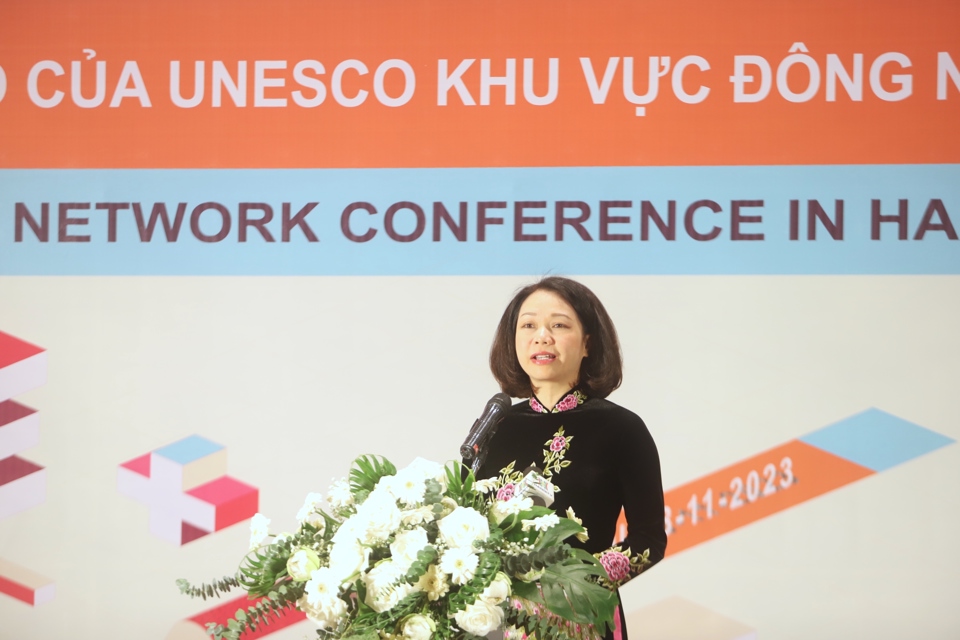
Vice Chairwoman of the Hanoi People’s Committee Vu Thu Ha shared the view during the ASEAN’s UNESCO Creative Cities Network Conference in Hanoi on November 18.
The event, a collaborative effort between the Hanoi Department of Culture and Sports, the UNESCO Representative Office in Hanoi, and the UN-Habitat, brought together over 100 Vietnamese delegates and more than 20 foreign delegates representing member cities of the ASEAN network.
Under the theme "Urban Regeneration and Sustainable Development," the conference underscored the significance of the cultural and creative sectors in the development of cities and the improvement of the quality of life for people in ASEAN member countries.
It also served as a platform for dialogue on solutions within the ASEAN+3 Regional Creative Cities Network to harness cultural and creative resources, particularly as cities grapple with the challenges arising from rapid urbanization and climate change. Through collaboration at the local and international levels, cities in the ASEAN Regional Network can harness these resources for shared socio-economic development and address pressing urban issues.
During the conference, Hanoi shared insights into its new development orientation, potential, and opportunities for collaboration in the realm of creative design.
Vice Chairwoman Vu Thu Ha stressed that joining UNESCO’s Creative Cities Network is a strategic move for the capital to enhance its brand positioning and image across various cultural creative fields.
| Delegates at the conference. |
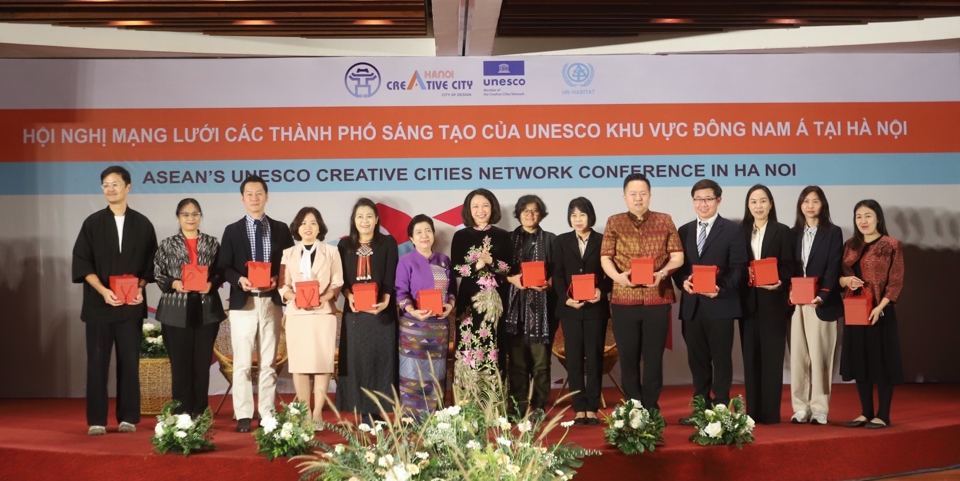
“This aligns with Hanoi's commitment to becoming part of the global community of developing cities focused on innovation, by the United Nations' 2030 Agenda for Sustainable Development,” Ha said.
She highlighted that despite challenges posed by Covid-19 and urbanization issues, Hanoi has diligently implemented UNESCO's initiatives over nearly four years.
These include hosting international seminars and discussions on creative city development, establishing a network of young creative designers, strengthening creative spaces, and organizing the annual Hanoi Creative Design Festival, she noted.
“Hanoi continues to foster a vibrant environment for creative activities and is gradually turning its potential into a competitive advantage,” Ha said.
On how to promote the fields of creative design in urban development for a better quality of life, Yee Yeong Chong, Senior Deputy Director at Singapore Creative Design Center, shared that the Singapore Design Council, a national agency, is dedicated to encouraging designs to transform Singapore into a city that prioritizes well-being.
Over two decades, the Council's initiatives have showcased the efficacy of the design industry in urban reconstruction. Singapore is currently building a design ecosystem, nurturing talent, and fostering brands, aiming to make a significant impact on various aspects of sustainable urban development, Yee said, highlighting the conference as an ideal platform to promote design initiatives.
During the Forum, delegates from ASEAN and other Asian countries discussed initiatives undertaken upon joining UNESCO's Creative Cities Network to leverage national resources for creative activities and urban development.
Kenji Kondo, Senior Manager at Kobe Design and Creativity Center in Japan, outlined Kobe’s efforts to become a city that is universally welcoming to all.
He noted that the city government focuses on three key policies: crafting an appealing urban landscape with a strong identity, fostering a people-centered community, and emphasizing the importance of creating a welcoming city.
The goal is to make visitors perceive Kobe not just as a tourist destination but as a place they can call home. The creative design field plays a pivotal role in achieving this by developing designs that resonate with people, utilizing the unique elements of the city's mountainous terrain and seaside architecture, Kondo said.
The UNESCO Creative Cities Network Forum in Southeast Asia, hosted by Hanoi, serves as a platform for ASEAN member countries to exchange ideas and insights on cultural resources and creativity. The forum actively encourages cities in ASEAN to join the UNESCO Creative Cities Network. The event showcased the progress and actions taken by Hanoi since its accession to the network in late 2019.