Kick-off of the UNESCO-recognized Saint Giong Festival
One of Hanoi's most fascinating and historic events, the festival is a tribute to Saint Giong, one of Vietnam's four immortals.
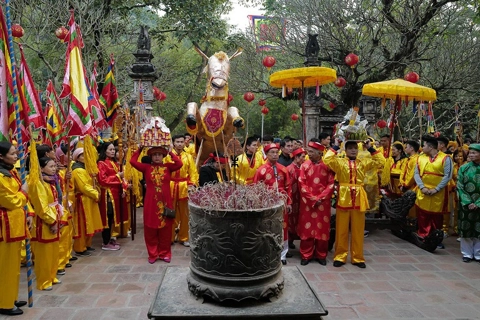
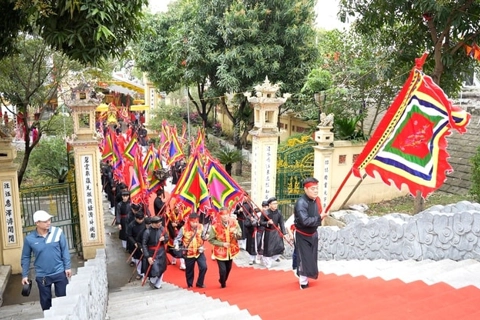
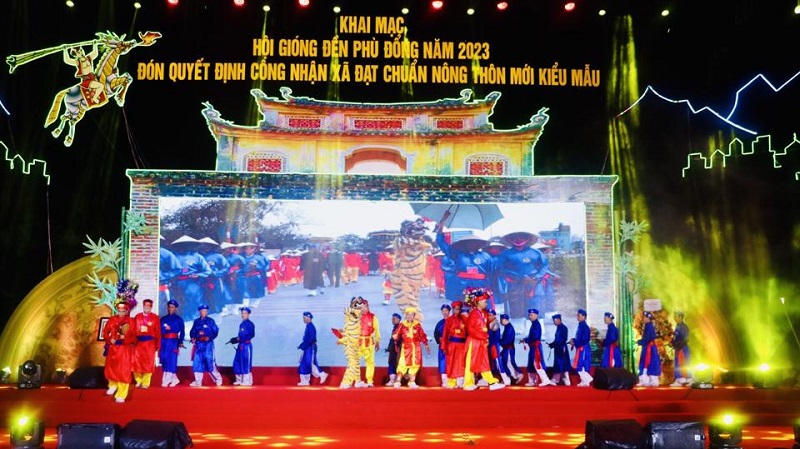
The 2023 Giong Festival kicked off last week at Phu Dong Temple in Hanoi's suburban Gia Lam district. The festival's opening ceremony also marked the recognition of Phu Dong Commune as a new rural area.
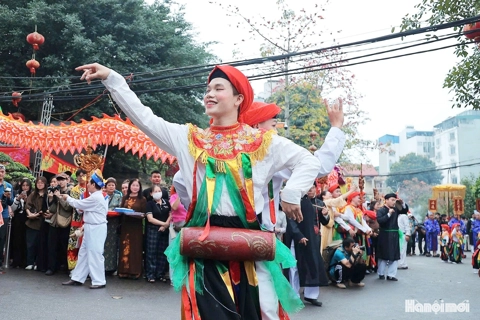
| The opening ceremony of the Giong Festival at Phu Dong Temple in Phu Dong Commune of Gia Lam District. Photo: Hoang Quyet/The Hanoi Times |
Speaking at the ceremony, Nguyen Duc Hong, Vice Chairman of Gia Lam District People's Committee, said the district is an ancient land of cultural convergence of Thang Long (original name of Hanoi) and Kinh Bac (an old name designating the northern provinces of Bac Ninh and Bac Giang) and the holy place where Saint Giong was born.
"The festival is in commemoration of Saint Giong, or Heavenly King of Phu Dong, who led the country against foreign invaders during the reign of the Sixth Hung King. The Giong Festival at Phu Dong Temple is held every year from the 7th to the 9th of the fourth lunar month (or from May 25 to 27 this year) and attracts thousands of visitors," he said.
Saint Giong symbolizes the patriotic spirit of the Vietnamese people and is one of the four immortals deeply rooted in their spiritual life.
Legend has it that Saint Giong was born after his mother walked in the footsteps of a giant. At the age of three, Giong suddenly transformed into a giant and fought against foreign invaders.
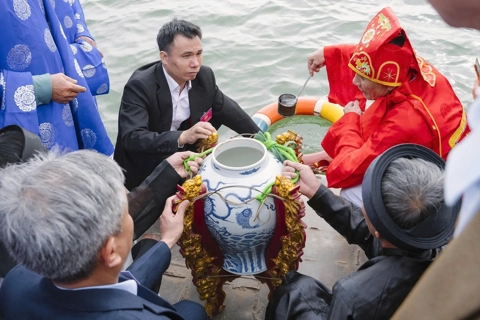
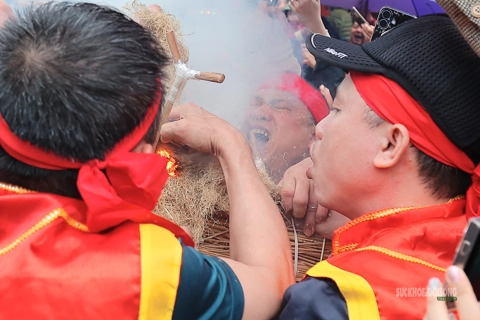
The Saint Giong Festival includes symbolic activities such as bathing the Saint statue, a procession, and offering incense.
| UNESCO-recognized Giong Festival lures thousands of visitors yearly. Photo: Hoang Quyet/The Hanoi Times |
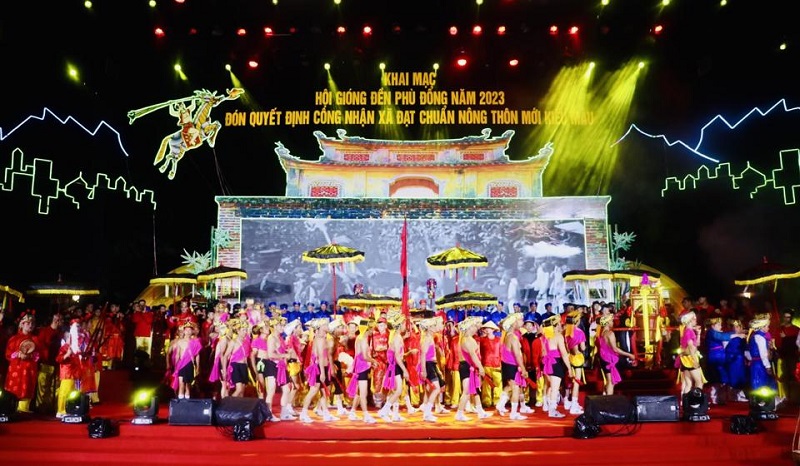
The procession is the main activity. According to tradition, people offer bamboo flowers, paper elephants and horses, and other items related to Saint Giong.
Traditional games such as Chinese chess, human chess and cock fighting are held during the event.
The Saint Giong Festival is held in several places in Hanoi. Among them, Soc Temple, where the saint ascended to heaven, and Phu Dong Temple, where he was born, are the two most important places.
Domestic and foreign researchers have rated the Saint Giong Festival as unique among Vietnam's 7,000 traditional folk festivals with special cultural and religious values.
The festival was inscribed on UNESCO's World Intangible Cultural Heritage List in 2010.
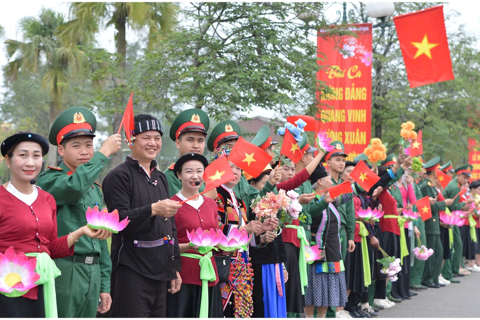
| The celebration of receiving the decision to recognize Phu Dong commune as a model new rural area took place on the evening of May 25. Photo: Hoang Quyet/The Hanoi Times |
.jpeg)
In addition, since 2022, Phu Dong Commune in Gia Lam District has been recognized as a "new-style rural area" and meets the criteria to become an urban district linked to tourism development.
The new-style rural movement has raised the per capita income to VND73.9 million (US$3,200) per person per year, significantly improving the lives of local people.
According to the 2025 plan, Phu Dong Commune would be recognized as a Phu Dong tourism site in 2021 and meet the criteria of a new-style rural area in tourism in 2022.
By the end of 2023, its cropping structure will be 100% changed from inefficient rice growing to the cultivation of flowers, ornamental plants, and fruit trees. The commune will meet the basic standards to become an urban ward of Gia Lam District, Hanoi.