Kim Toan - the journalist who returned from his own funeral
In Vietnam's journalism, some journalists are inspired for not for their profession but enduring sacrifice, and dedication.
THE HANOI TIMES — On a quiet evening in Hanoi, the crowd fell still not out of mourning, but awe as veteran journalist Kim Toan recalled the day he attended his own funeral.
It wasn’t a metaphor. Decades ago, in the chaos of battle, he was declared dead, mourned in verse, and honored with a solemn service. Then, two months later, he returned alive. That moment, equal parts surreal and symbolic, encapsulates the extraordinary life of Kim Toan: journalist, soldier, survivor.
Now, as Vietnam marks the 100th anniversary of its Revolutionary Press (June 21, 1925–2025), Kim Toan’s story has been brought to life in a documentary that honors a man whose pen once wrote through gunfire and grief.
Under the pen name Cao Kim, he chronicled war, mentored generations of reporters, and helped lay the foundation for the country’s revolutionary press, quietly becoming one of the press sector’s most enduring figures.
Spectacular return

Journalist Kim Toan (standing) shares his brilliant career memories at the launch of the documentary Kim Toan- The Journalist And Soldier. Photo: Thien Nhien/ The Hanoi Times
In the spring of 1968, amidst the inferno of battle in the southwestern Saigon–Gia Dinh region during the war against America, Kim Toan served as a field journalist for the Giai Phong Newspaper on the front lines. During a fierce encounter, one of the severely injured soldiers was mistakenly identified as him - his body was bruised beyond recognition and he was clutching only a Party document bearing the name Cao Kim - Toan’s pseudonym.
Believing he had fallen, the military unit sent a solemn death notice to the editorial board. A memorial service was held in his honor. Poet Vo Thi An, one of Kim Toan’s colleagues, even wrote a sorrowful poem mourning his loss: "The whole editorial office was shocked; grief came. / Cao Kim sacrificed in battle... / All turned grief into strength..."
Two months later, through sheer luck and willpower, Kim Toan returned. The editorial office burst into tears of disbelief and joy. This “resurrection” not only defied death, but also affirmed the unbreakable will of those who lived and reported amidst death and destruction. The 'mistaken death notice' has since become one of the most powerful symbols of his life: a document of fate and a sacred relic of memory.
A life captured on film
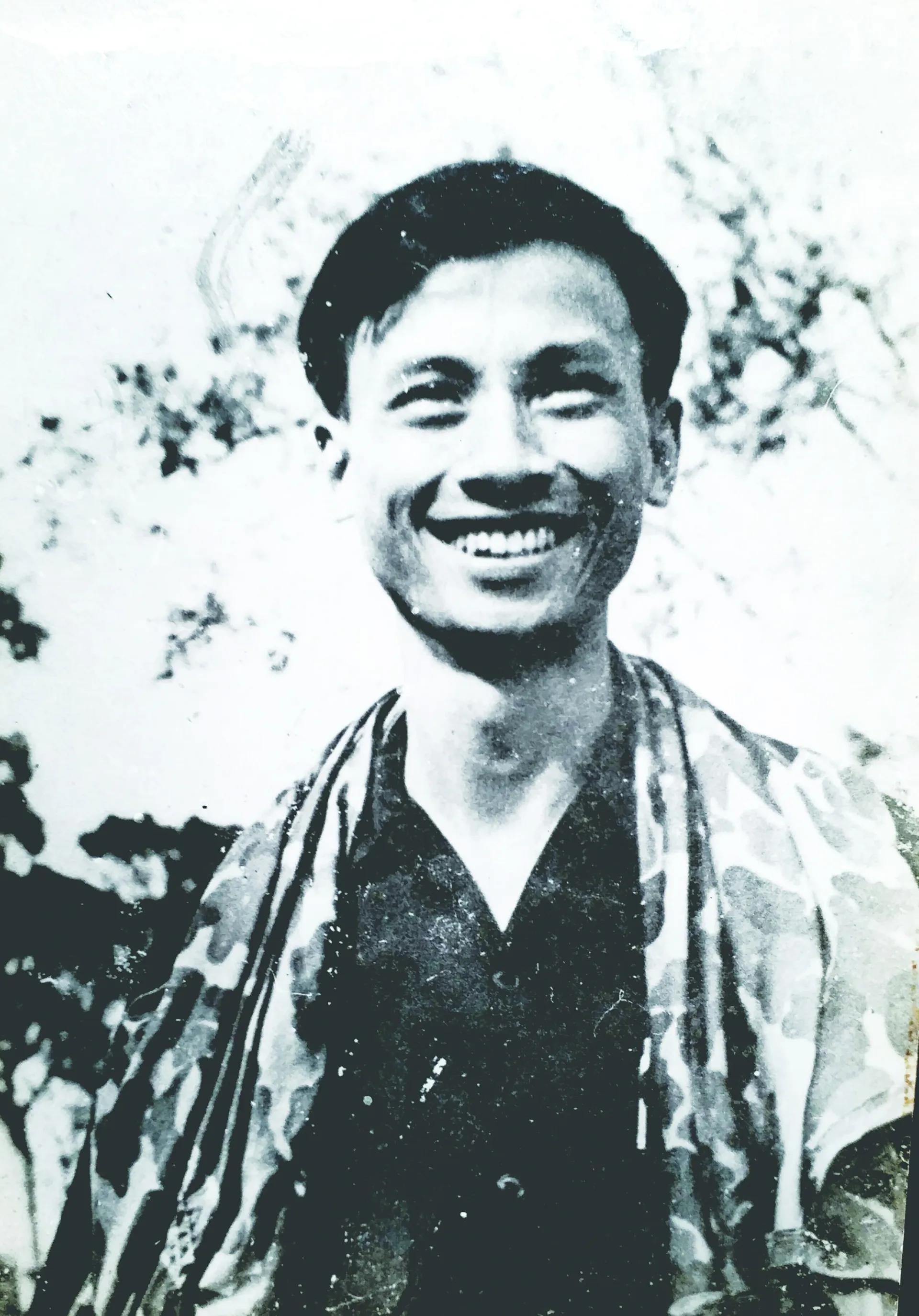
A portrait of Journalist- Soldier Kim Toan, taken in 1968. File photo
This compelling life story inspired the Vietnam Press Museum's two-year effort to produce the documentary Kim Toan: The Journalist and Soldier, as part of the 100th anniversary of Vietnam's Revolutionary Press.
Through raw footage, artifacts, and the recollections of his colleagues and contemporaries, the film traces Kim Toan's journey from the battlefield to the newsroom: from revolutionary penman in the jungle to reformist press leader in peacetime. His story is not shrouded in glory or sadness, but is told with honesty and warmth, highlighting the human soul behind his ink-stained hands.
Speaking at the launch of the documentary, Kim Toan said: "I never thought my life story would be made into a film. What I did, I did simply out of belief. Looking back, the years spent writing between life and death were the most meaningful of my life”.
Chairman of the Vietnam Journalists Association, Le Quoc Minh, hailed Kim Toan’s life as “a wordless epic representing a whole generation of journalists who sacrificed everything for national independence.” He emphasized the importance of remembering such figures to inspire and encourage journalistic responsibility among today's youth.
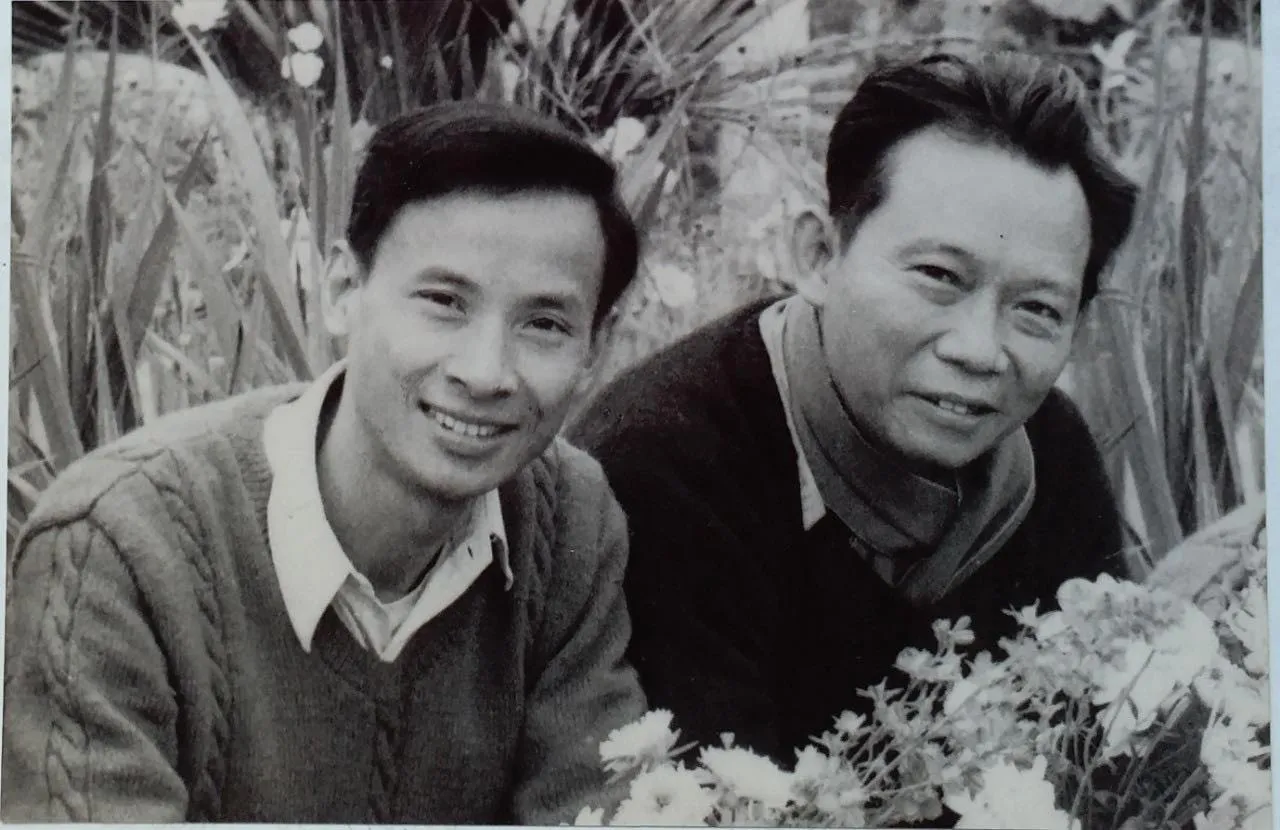
Journalists Kim Toan (pen name Cao Kim) and Hong Chau (pen name: Thep Moi) (R) – two courageous reporters who infiltrated Saigon and carried out covert press operations in the heart of enemy territory during the 1968 Tet Offensive and General Uprising. File photo
The documentary left a deep impression on many viewers. Journalism lecturer Nguyen Thanh Mai said: "This film helps me understand that being a journalist is not just about writing; it's about living with ideals, conscience, and the people."
Meanwhile, former war correspondent Le Van Hoa shared this sentiment: "Kim Toan is part of our shared memory. Back then, writing meant offering your life on the page."
An enduring legacy of courage and dedication
Born in 1940 in the northern coastal city of Haiphong, Nguyen Kim Toan began his journalism career in 1960 and worked as a correspondent for Giai Phong Newspaper, the voice of the National Liberation Front of South Vietnam, he reported from deep within enemy territory under the pseudonym Cao Kim.

Journalist Kim Toan presents mementos of his journalistic career to the representative of the Vietnam Press Museum.
He did more than just writing but fighting too. He trained young local reporters, established the foundations of a revolutionary press corps in wartime, wrote in the dark to shed light on the truth amidst the thunder of bombs.
After the national reunification, Kim Toan returned to write for the Haiphong Newspaper, later serving as its editor-in-chief. During the Doi Moi (Reform) period of the 1980s, he was one of the pioneers who transformed local Party journalism, raising the profile of the Haiphong Newspaper and earning it two Independence Medals of Vietnam.
He also presided over the Haiphong Journalists Association and sat on the Standing Committee of the Vietnam Journalists Association. Throughout his career, he trained, mentored, and inspired younger generations, instilling in them the belief that journalism is not just a profession, but a sacred calling to serve the fatherland and the Vietnamese people. As he once confided: "To be a journalist is to live fully with society, to embrace hardship and even danger. But it is also the noblest profession because it enables people to live truthfully with themselves and with others.”