Legal tools required to tackle air pollution issues in Hanoi
To address the current constraints, it is crucial to update and refine the legal framework for environmental protection.
Experts argue that while technological and managerial solutions are essential, robust legal regulations are also critical for reducing air pollution in Hanoi.
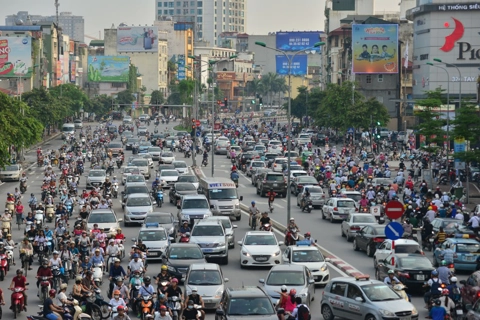
| Air pollution has been one of the major issues for Hanoi. Photo: Cong Hung/The Hanoi Times |
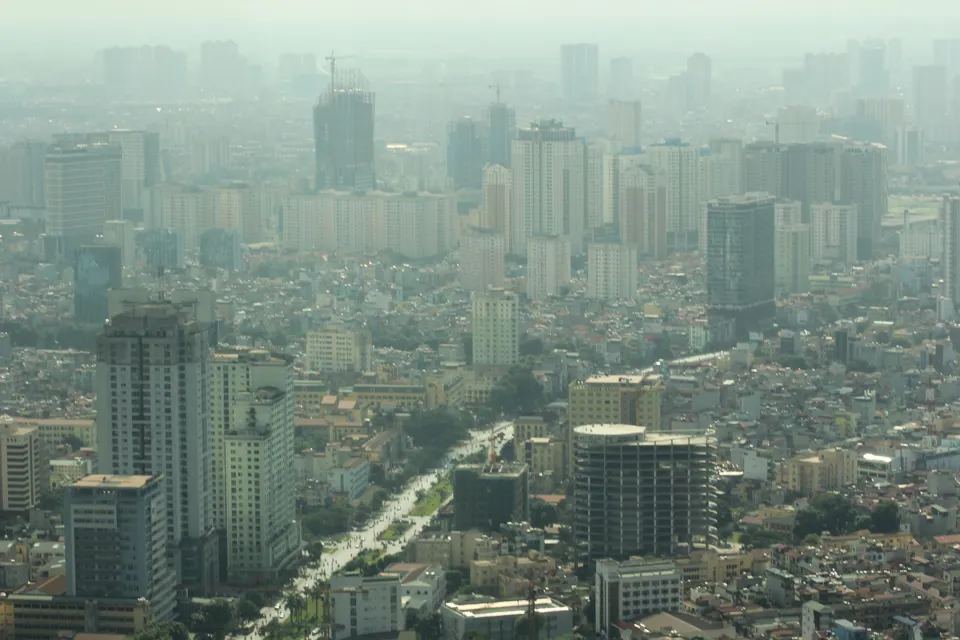
Air pollution is a pressing concern globally, particularly in large urban areas. In Vietnam, major cities like Hanoi and Ho Chi Minh City frequently experience air quality levels that exceed safe thresholds. This issue not only endangers the health of millions of residents but also adversely affects the environment, economy, and society.
According to the World Health Organization (WHO), air pollution contributes to millions of premature deaths annually, primarily due to respiratory and cardiovascular diseases. The main contributors to this problem are the rapid increase in motor vehicle traffic, especially motorcycles, along with emissions from industrial zones and construction activities. Current emission control measures face many obstacles due to a lack of coordination and insufficiently dissuasive penalties.
Lawyer Bui Dinh Ung from the Hanoi Bar Association pointed out that although the Environmental Protection Law 2020 and related regulations have thoroughly defined responsibilities for managing, controlling, and penalizing air pollution violations, actual enforcement remains problematic, leading to widespread violations.
One major bottleneck is controlling motorcycle emissions. Given the nature of personal vehicle ownership and the livelihoods of residents, implementing strict emission control measures is challenging, said Ung.
Additionally, environmental management agencies often lack the resources and capacity to conduct regular inspections, resulting in unaddressed legal violations. Moreover, penalties for violations are generally not severe enough to deter companies from flouting the law or opting to pay fines rather than investing in pollution reduction measures.
"To better enforce environmental laws, there must be significant improvements in compliance and monitoring. This requires close coordination between relevant agencies and active participation from the community and social organizations," stated Ung.
Experts suggest that in order to overcome current limitations, it is crucial to update and refine the legal framework for environmental protection. Regulations need to be adapted and supplemented to suit practical realities and modern life demands. Specifically, clear, specific, and feasible air quality standards must be set. Additionally, penalties for violations should be increased to ensure deterrence and prevention.
Meanwhile, Associate Professor Bui Thi An, Director of the Institute of Environmental Resources and Community Development, believes that community and social organization involvement in monitoring is crucial to improving environmental protection efforts. They can provide timely information on violations and pressure authorities to take action.
A highlighted the crucial role of the community in monitoring and reporting pollution issues. Public participation not only helps promptly identify violations but also motivates authorities to work more diligently. She also mentioned the need to empower local leaders, emphasizing accountability.
Besides legal solutions, enhancing air quality protection requires increased international cooperation.
An called for Vietnam to actively participate in international environmental protection agreements, and to learn and apply the experience of advanced countries.
“Sharing information, technology, and experiences will help Vietnam improve its pollution control measures and reaffirm its commitment to global environmental protection,” she noted.
“Reducing air pollution requires a comprehensive set of solutions, with legislation playing an indispensable role. Sustained effectiveness requires significant improvements in lawmaking and enforcement, active community participation, and international cooperation. Only then can we protect air quality and ensure the health of future generations,” she concluded.