Make Hanoi a worth-living place: Opinions
Experts have raised their voices to keep the beauty of Hanoi's pavements and make the city a worth-living region.
Hanoi's authorities have been striving for years to find a sidewalk management solution that harmonizes the interests of pedestrians, street vendors, stores, and drivers. Although concerns remain, economic development and increased public awareness may make it easier for the capital city to fulfill its mission.
Architect Doan Ky Thanh: Sidewalks management should ensure benefits of three sides
Sidewalks are meant for pedestrians. In Vietnam, sidewalks are for walking, parking, socializing, and doing business. The city government should have a way to balance the interests of all three parties, including public agencies that rent their street-front premises to businesses, households that own stores on the street, and the safety of pedestrians.
| Architect Doan Ky Thanh. Photos: The Hanoi Times |

Local authorities should open a communication channel through which people can visually report sidewalk violations and take action to address them. At the same time, the city should join the people in caring for and preserving the best sidewalk conditions.
Sidewalk construction and planning must meet space and time requirements. That means that people can do business in regulated locations during specific times of the day. Planning should clarify business zones and hours, allow people to rent the sidewalk, and provide penalties for activities that cross the line.
In addition, the city should delineate specific sidewalk areas for car and motorcycle parking.
Good sidewalk planning and management will increase urban property values, as this is what makes the city livable. In developed economies, people relax in sidewalk cafes. In Hanoi, the sidewalk is not in its best condition due to how we manage and treat it.
Economist Hoang Thi Thu Phuong: Practices make efficient management
In other countries, infrastructure management is often as costly as construction because localities usually improve technical conditions and durability. In Vietnam, construction is often preferred to maintenance, as the latter is often hidden from the public.
| Economic management specialist Hoang Thi Thu Phuong. |

Washington D.C. reserves a sidewalk width of at least 1.5 m for pedestrians. All street stores are licensed as to their line of business, products, and duration and must ensure sufficient space for pedestrians.
In London, sidewalks are rented. Rental rates are published on the government portal. The city charges restaurants $922 per month to place five sets of tables and chairs on sidewalks and more than $1,352 per month for six sets or more.
For better sidewalk management, the government should follow the rules of information, incentive, and punishment. In Vietnam, too many street vendors are self-employed without a business license and have critical needs to make a living, so we cannot control them all.
Motorbikers often disregard no-parking signs and stop to buy things in street stores. On the other hand, the parking area arrangement is still far from meeting expectations.
To solve these issues, the government needs to regulate and assign responsibilities to subordinate agencies to reduce administrative work based on the specific conditions of each street. Additionally, the government needs to develop a digital map that is updated with detailed activities on each road for better management.
Architect Tran Huy Anh: Shared economy on pavements
The sidewalks have long been misused due to poor administration and chaotic traffic. Street shops encroach the pedestrian path, leaving no space for people to walk. Motorbikers park their vehicles on the sidewalks, creating conflict between drivers and pedestrians.
| Architect Tran Huy Anh. |

I think it can be helpful as the Hoan Kiem district decides to rent the sidewalks of five streets. In this way, it adapts to the market economy and harmonizes the interests of stakeholders as well as between socio-economic development and urban infrastructure use.
Many cities around the world have done the same. Hoan Kiem district authorities should closely monitor the leases, evaluate the income brought in by these commercial activities and assess their impacts on urban development, then see whether or not the policy should continue to be implemented.
The policy can create a shared economy, as all stakeholders can enjoy a fair and healthy business environment. Sidewalk management should be based on digital technologies, and revenues from sidewalk rentals should be transparent.
Writer Do Phan: Maintain the beauty of vendors
| Writer Do Phan. |
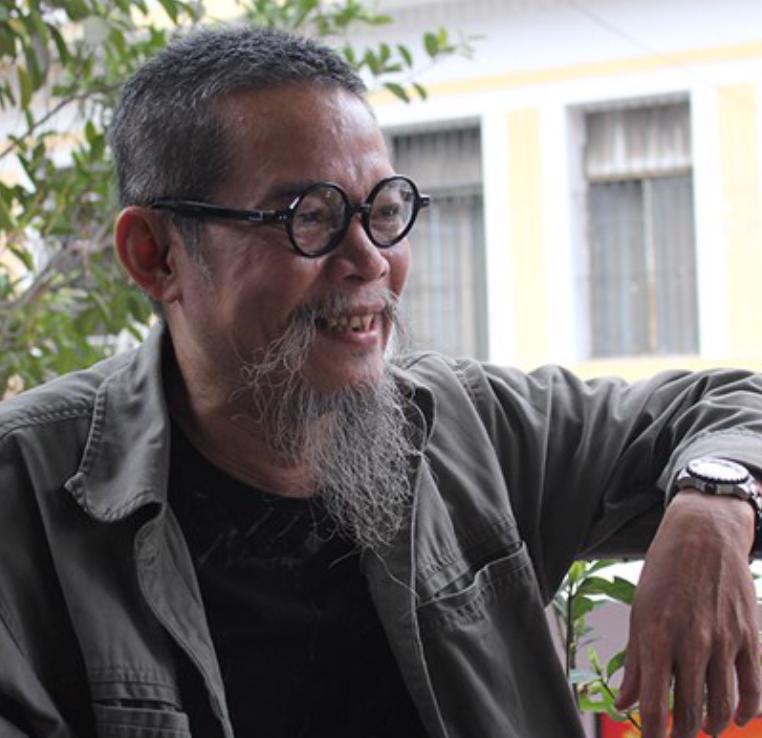
I am not one of those who want sidewalks to back to the way they were in the 1960s. Living on the sidewalk is not okay with modern life, as people no longer wait for vendors to come to their door to buy things. Today children need spaces on sidewalks to play, adults to exercise, and businesses and organizations for activities.
One of the unique things about Hanoi is the street vendors, which we are losing. Street vendors are the lively legacy of the city, representing its life and making it enticing to foreign visitors. To prevent street vendors from disrupting urban transport, we should keep vendors within some specific regulated zones. It's about the art of management.