Mien Luon: A Hanoi delicacy praised by Michelin Guide
In the heart of Hanoi’s vibrant food scene, mien luon (glass noodle soup with eel) stands out for its delicate balance of flavors, achieved through meticulous eel preparation and a richly layered broth that embodies northern Vietnamese culinary tradition.
THE HANOI TIMES — For Phuong Vu, a Vietnamese expatriate living in Australia, mien luon is the dish she misses most when she returns home. "It only tastes authentic when enjoyed in Hanoi's Old Quarter," she told The Hanoi Times.
From rural roots to urban tables
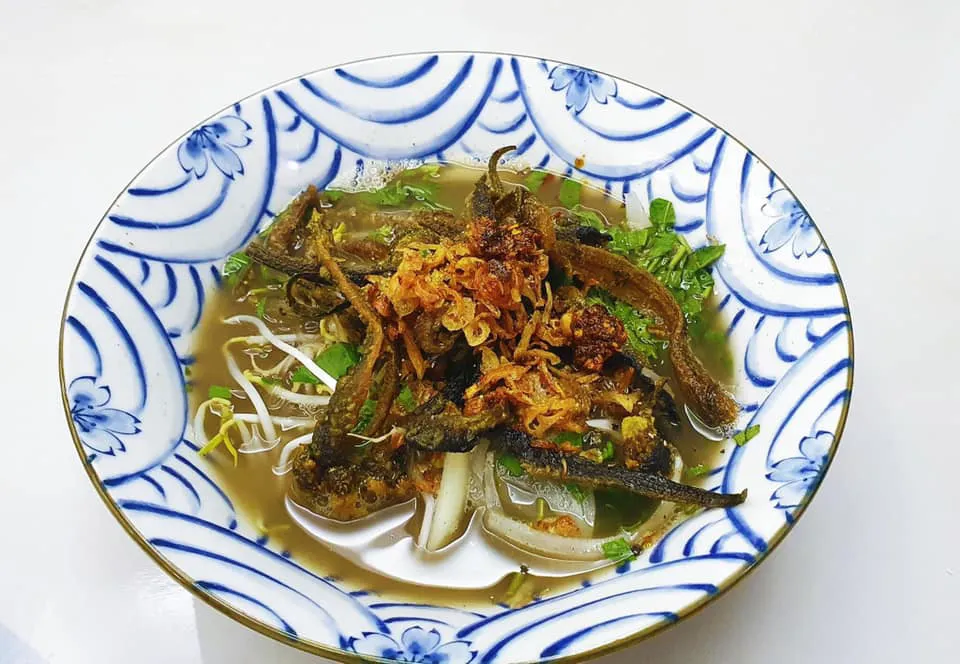
Hanoi's specialties offer a distinctive flavor that consistently captivates visitors. Photo: Mien Luon Chan Cam
While global food lovers are familiar with Vietnam’s celebrated pho bo (noodle soup with beef) and bun cha (fresh noodle with grilled pork), mien luon quietly claims its own spotlight. Its fragrant, umami-rich profile has made it a cherished favorite among locals and visitors alike.
Recently, the spotlight shone a little brighter when Mien Luon Chan Cam, a humble street food stall nestled in Hoan Kiem District has been recognized by the Michlin Guide Vietnam 2025, a proud showcase of the city's food culture .
Though the exact origins of mien luon remain unclear, it has long been a culinary gem in Hanoi. Made from ingredients deeply rooted in the northern countryside: slippery glass noodles from dong rieng (Canna indica); tender eel sourced from rice paddies; and a blend of fragrant local herbs and spices the dish reflects the sophistication of traditional Vietnamese cooking.
Due to its labor-intensive preparation, mien luon is rarely made at home. Locals often recommend experiencing its full flavor at one of the many time-honored eateries in Hanoi’s Old Quarter , where generations of cooks have perfected this specialty.
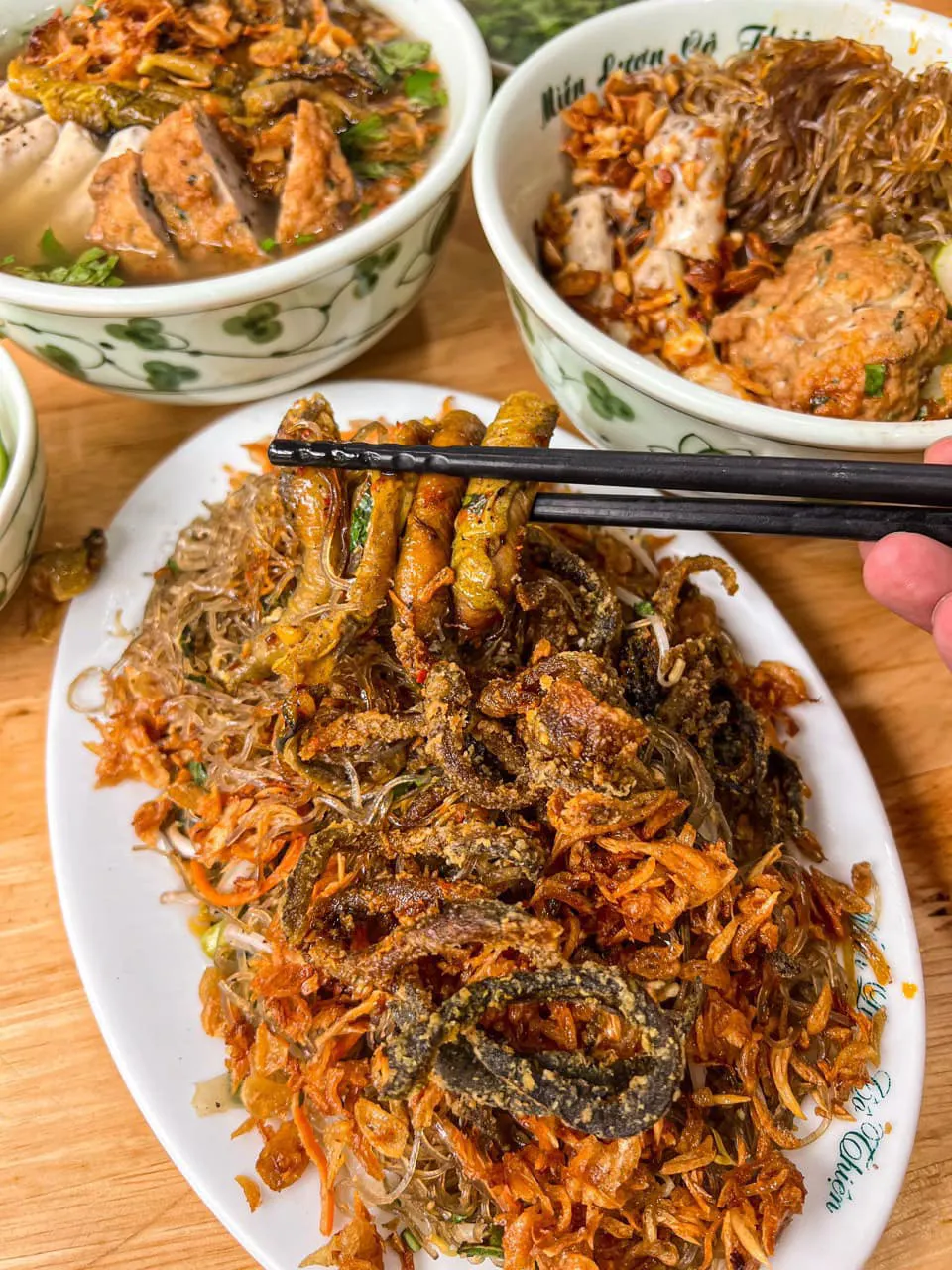
Light and refreshing, the salad-style of mien luon tron is an ideal summer dish. Photo: Mon Ngon Ha Noi
The preparation of mien luon begins with freshwater eels. Mien luon comes in two popular variations: classic eel noodle soup (mien luon nuoc) and a dry, salad-like version (mien luon tron). Diners can choose between crispy or tender eel.
For the soup version, glass noodles are blanched in hot broth just before serving. They are placed in a bowl and topped with golden eel pieces and fresh herbs, such as Vietnamese coriander. Rich, clear broth is ladled in as a final touch, along with ground pepper and chili to awaken the senses.
For the dry variation, the noodles are briefly blanched to retain their chewy texture. Then, they are mixed with eel, herbs, cucumber, bean sprouts, roasted peanuts, crispy shallots, and a sweet and sour dressing – a harmonious mix of flavors and textures in every bite.
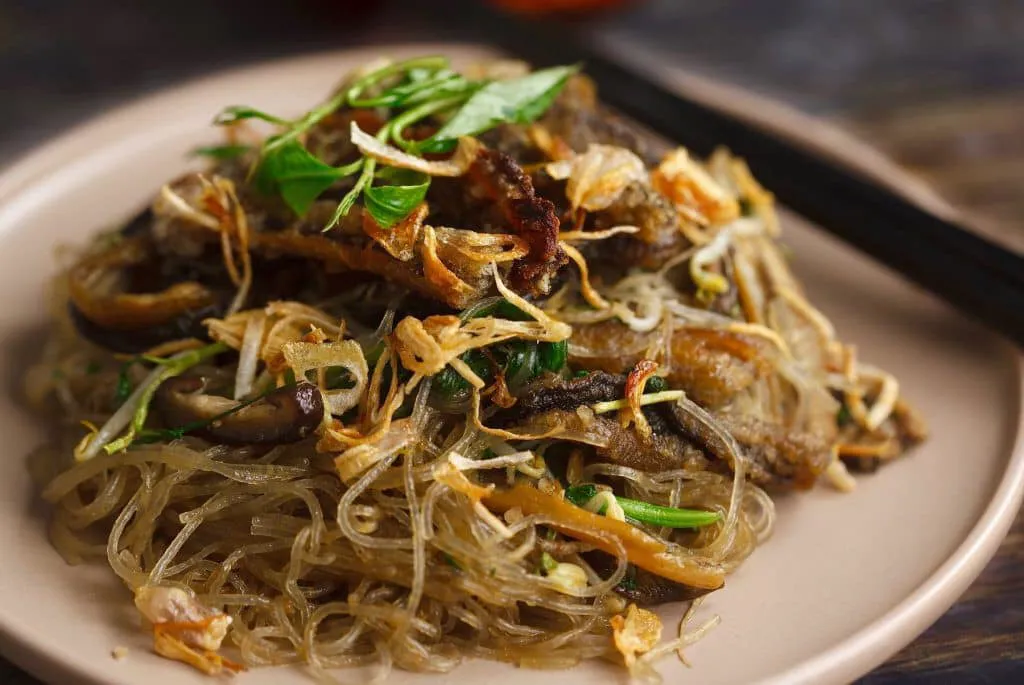
There’s also a lesser-known but equally flavorful variation: stir-fried mien luon. This dish is a fragrant combination of eel, glass noodles, Vietnamese coriander, shallots, and seasonal vegetables. It's ideal for lovers of wok-seared dishes with smoky undertones.
Tradition meets technique
Stir-fried mien luon, a fragrant combination of eel, glass noodles, Vietnamese coriander, shallots, and seasonal vegetables. Photo: Mon Ngon Ha Noi
Quang Dung, head chef at Chapter, a fine-dining restaurant in Hanoi recognized by the 2024 Michelin Guide Vietnam, is a devoted fan of the dish. He indulges in mien luon at least once a week.
"Mien luon is enchanting," he said. "The most traditional version is the soup. The magic is in the contrast of textures: crispy fried eel, silky glass noodles, the light sweetness of bean sprouts, and the fresh aroma of herbs." In the mixed version, it’s all about balance: chewy noodles, crunchy eel, and a tangy-sweet sauce. For those who enjoy richer flavors, the stir-fried version delivers a satisfying smoky depth.”
Despite its rich flavor, mien luon remains a light, comforting dish suitable for a midday meal or afternoon snack.
Quach Kim Dung, owner of Mien Luon Dong Thinh, a beloved Hanoi eatery that received the Bib Gourmand distinction in the 2024 Michelin Guide Vietnam, knows this better than anyone. Her family’s restaurant has been serving eel dishes for over 40 years.
She believes the secret lies in the quality of the eel and the clarity of the broth. "We source our eels from Nghe An and Bac Ninh. They must be medium-sized with smooth skin and round bodies - not too large or too small. Once dried, the meat should be crisp yet moist, never dry.”
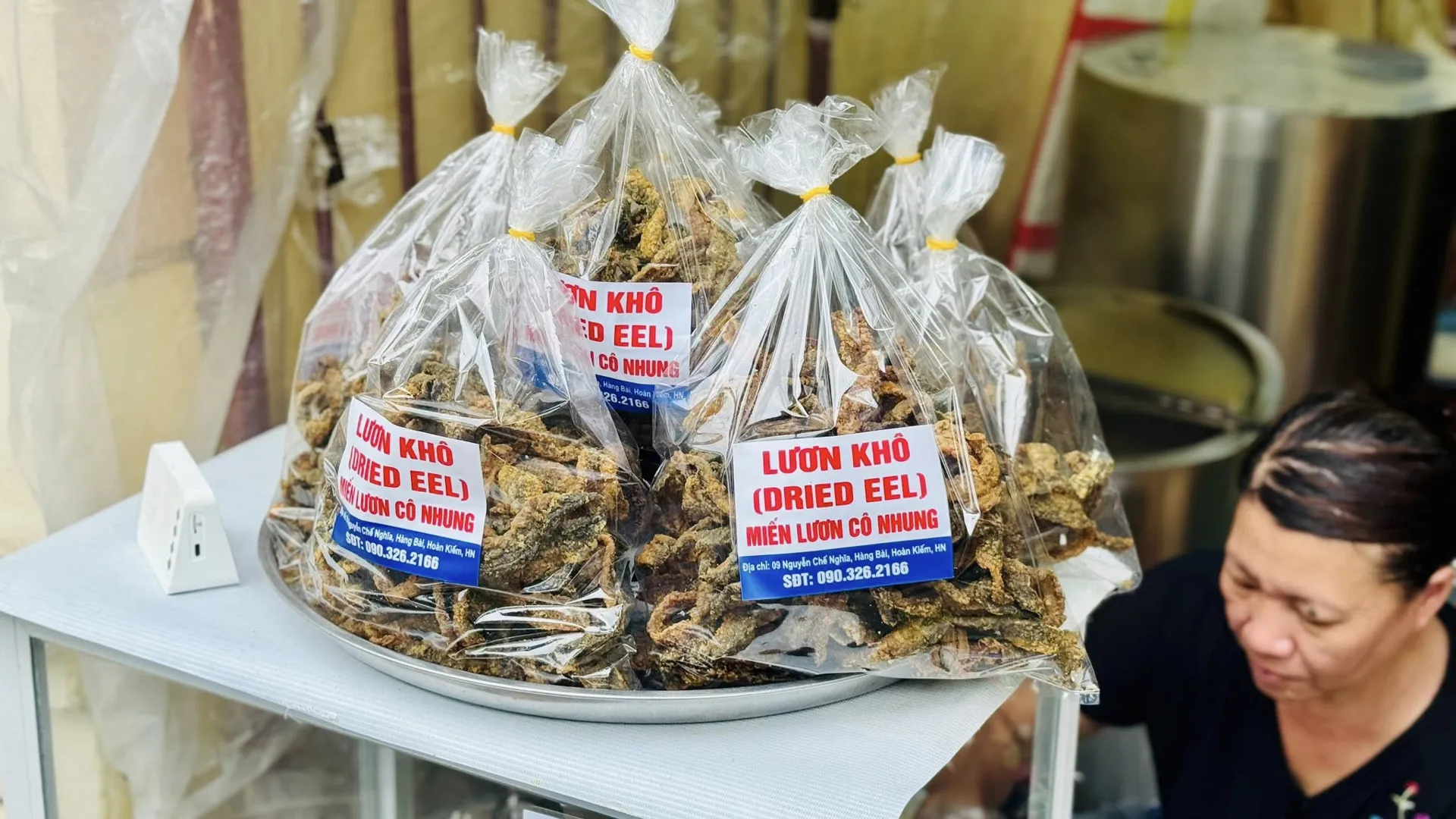
Dried eel is even packaged as a gift for visitors to Hanoi. Photo: Kevin Tran
She explains that the soul of the dish is in the broth, which is made by slowly simmering pork and eel bones until the broth becomes clear, naturally sweet, and deeply nourishing.
Thanks to its distinctive, delicious taste, mien luon has a loyal following that includes lifelong Hanoians, visitors from across Vietnam, and international diners from countries such as South Korea and Japan.
In a city known for its rich street food culture and centuries-old culinary heritage, mien luon remains a quiet yet enduring icon. It is a dish that speaks to the ingenuity of Hanoi’s cooks and the soul of its people.
Whether enjoyed steaming hot on a misty morning in the Old Quarter or savored as a crispy, tangy salad on a summer afternoon, eel glass noodles offer a taste of nostalgia, comfort, and deep-rooted tradition.
-1743834399.jpg?w=480&h=320&q=100)