Log in
Life

"Pho Ganh" vendor sculpture represents Hanoi's culinary street

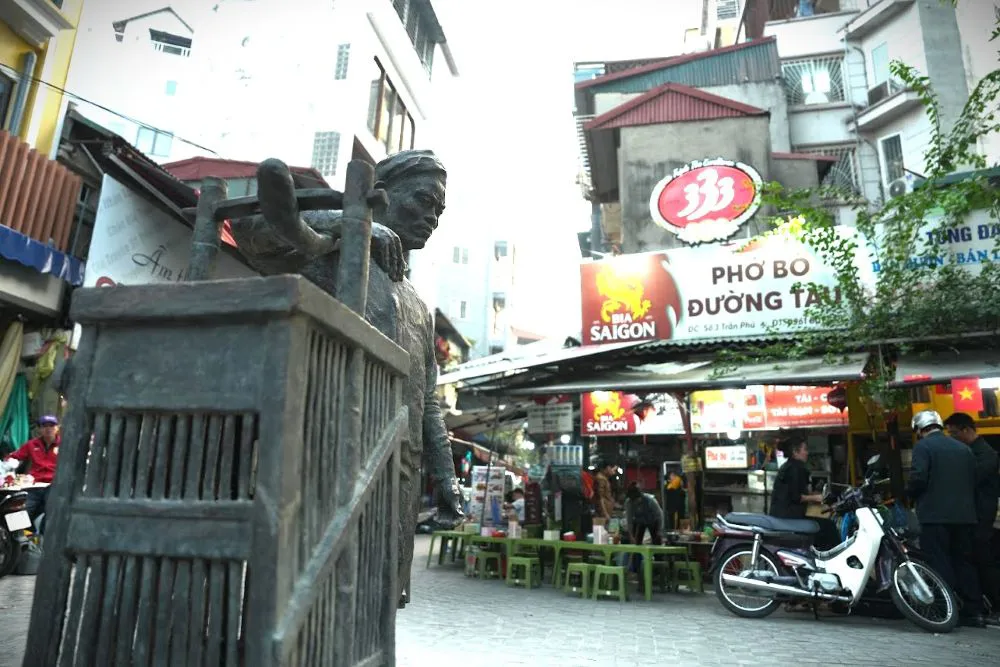
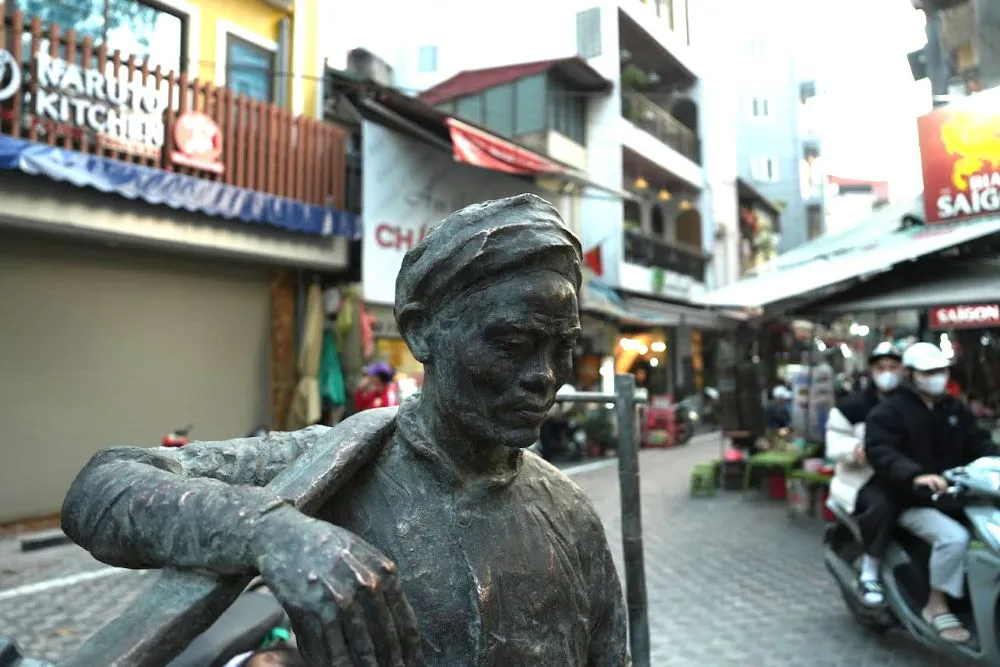
A bronze statue of a street vendor has been erected on Hanoi's food street as a way to honor pho, a unique and popular specialty in the capital.

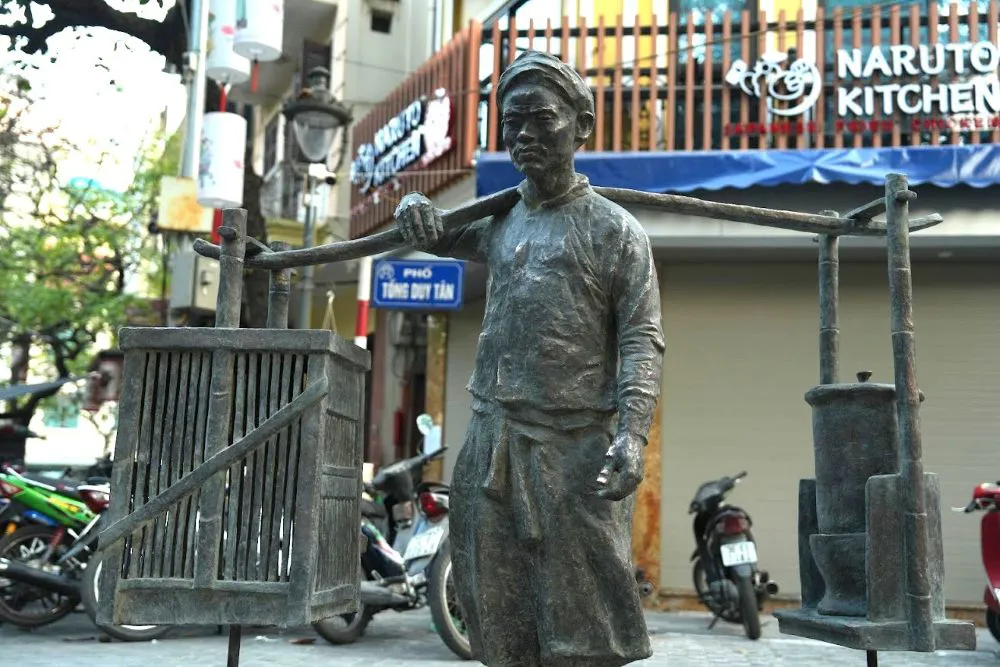
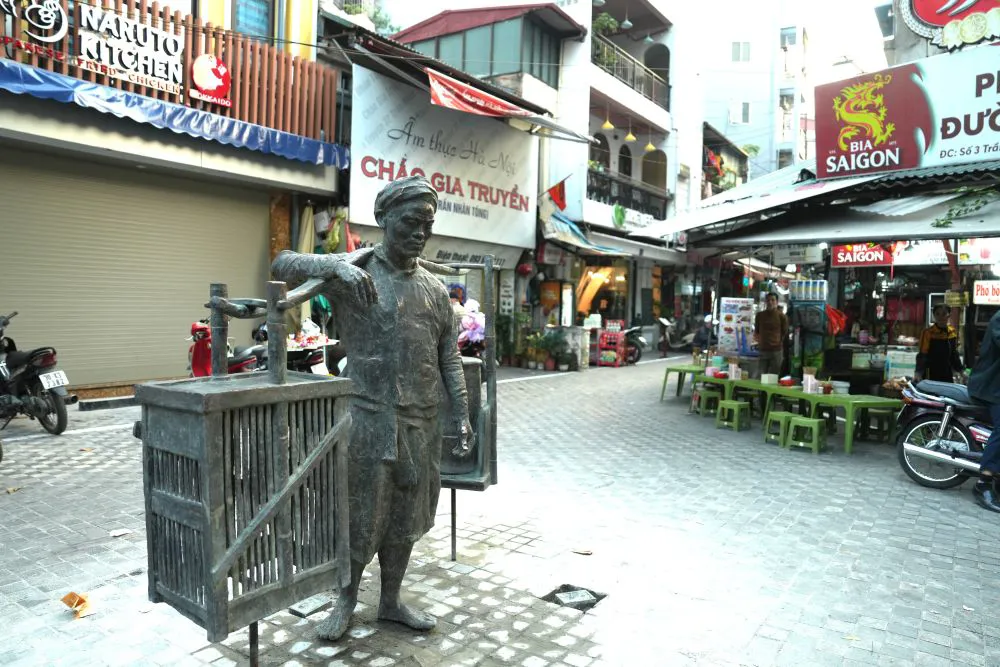
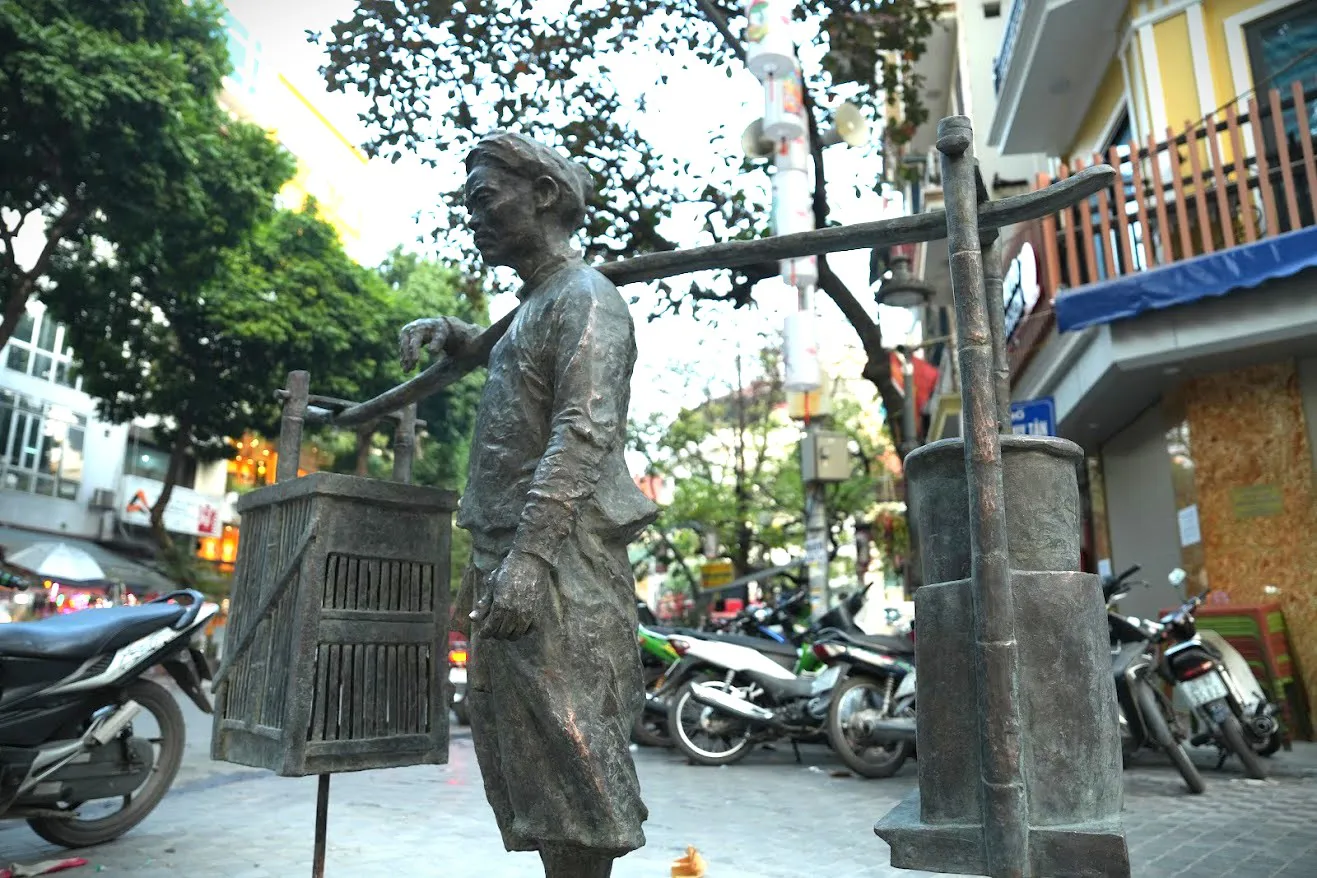
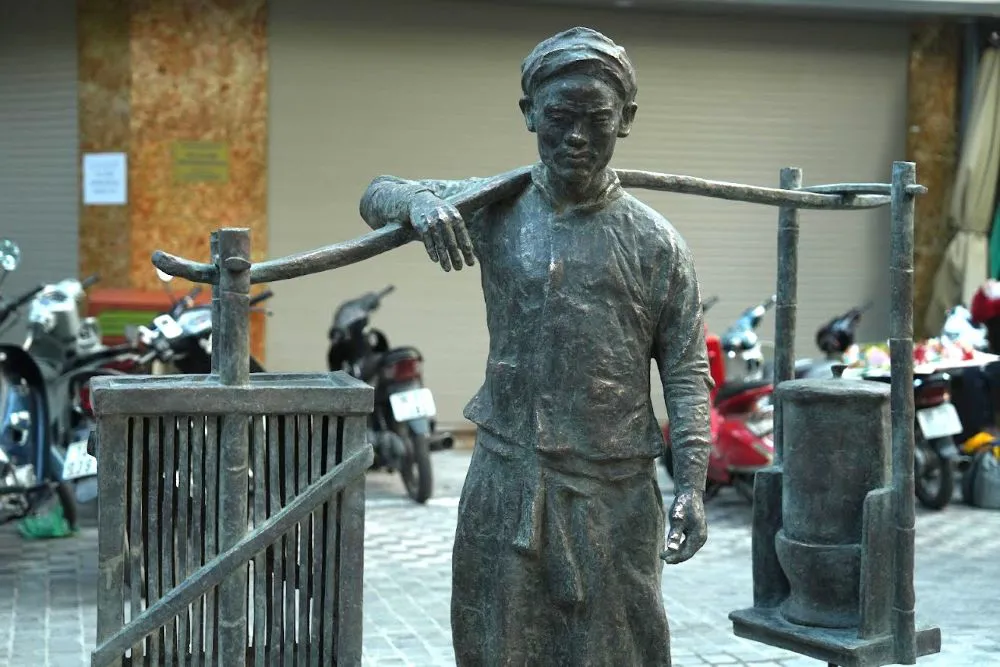
The 1.6-meter bronze statue depicting a vendor selling pho, was installed on Tong Duy Tan Food Street in Hang Bong Ward, Hoan Kiem District, Hanoi.

 The newly erected bronze statue on Tong Duy Tan Street in Hanoi's Old Quarter. Photos: Huy Pham/The Hanoi Times

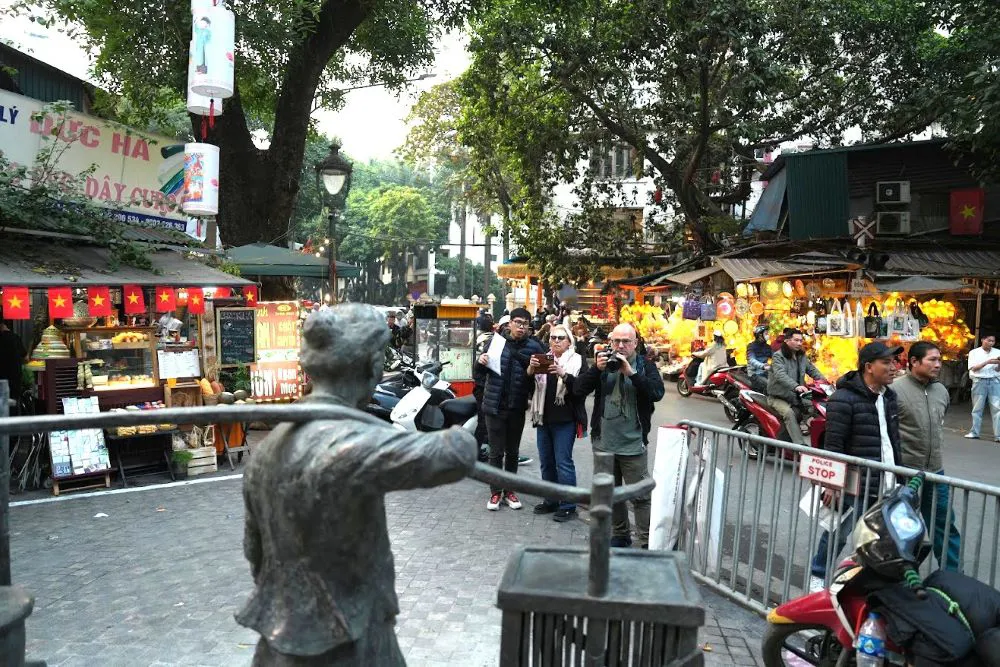
According to curator Nguyen The Son, the statue, placed at the beginning of Tong Duy Tan Street near the famous "Train Street" of Tran Phu, welcomes both locals and tourists.

He said: "This location is within walking distance of Hoan Kiem Lake, making it an attractive spot for tourists." "The artwork is also a tribute to the value of Hanoi's culinary heritage, especially pho." 

The statue's design was inspired by an old photograph by an unknown French author and captures the essence of the traditional pho-selling trade, once commonly practiced by vendors shouldering a pole with a cauldron at one end and a bowl cabinet at the other.

 Located at the intersection of Tong Duy Tan Street and Tran Phu Street, near the railway tracks, the statue serves as a fitting monument to Hanoi's street food culture.
 Pho ganh is sold from mobile stalls that once dotted the streets of Hanoi.
 Dating back to the French colonial era, pho ganh is served by street vendors shouldering a pole hanging deep, round bamboo baskets on either end, or "ganh" in Vietnamese. 
 One basket holds a cauldron of broth on a charcoal stove, while the other contains a homemade cupboard filled with all the ingredients, as well as bowls and chopsticks.
 Pho ganh diners used to eat standing up, with one hand holding the hot bowl of noodles and the other using chopsticks, no spoons.
 The bronze statue is expected to attract photo enthusiasts and tourists visiting Tong Duy Tan Street.

Tong Duy Tan Street, also known as Cam Chi Alley, is one of the oldest neighborhoods in Hanoi, dating back to 1873. Due to its proximity to the examination school, it became a popular dining area for candidates taking exams at the Thang Long Imperial Citadel. During the French colonial period, it was known as Rue Brusseaux.

In 1954, the street was renamed Bui Ba Ky Street and later became known as Ky Dong Street, after the famous Banh Cuon Ky Dong (rice crepes) sold by Mr. and Mrs. Ky Dong. In 1964, it was renamed Tong Duy Tan Street in honor of the 19th-century patriot Tong Duy Tan (1837-1892).

In 2000, the city approved a project to upgrade the street's infrastructure, transforming it into a culinary culture hub within Hanoi's Old Quarter. Tong Duy Tan Street is 200 meters long and eight meters wide with no sidewalks, officially became Hanoi's first "Culinary Culture Street" in March 2002. 

Reactions:
Share:
Trending
Most Viewed
Related news
Making Hanoi pho spread worldwide

Making Hanoi pho spread worldwide

11 Dec, 14:28

Developing a Hanoi pho map addresses both the demand and marketing needs, offering specific recommendations and directions to top pho shops in Hanoi, selected based on real surveys and set criteria.

Hanoi boosts tourism compliance through focused legal training for travel firms

Hanoi boosts tourism compliance through focused legal training for travel firms

The training course is expected to help travel firms better understand legal requirements, improve risk management and operate more sustainably in an increasingly competitive market.

Hanoi taps Ao Dai heritage in new push for cultural tourism

Hanoi taps Ao Dai heritage in new push for cultural tourism

With rising global interest in experiential travel, Hanoi is betting on the elegance and craftsmanship of the ao dai to tell its cultural story and draw visitors deeper into the city’s heritage

Craft villages across Hanoi reinvent tourism through heritage, creativity and community-led experiences

Craft villages across Hanoi reinvent tourism through heritage, creativity and community-led experiences

Artisans are opening their homes, redesigning workshops and turning everyday skills into immersive experiences that pull visitors into the heart of rural Vietnamese culture. What once lived quietly behind wooden doors now thrives as part of Hanoi’s most promising tourism frontier.

Cuu Village: A 500-year-old heritage site once known as the “Village of the Rich”

Cuu Village: A 500-year-old heritage site once known as the “Village of the Rich”

The rapid deterioration of the village renowned for its hybrid villas and tailoring heritage requires Hanoi’s huge cultural preservation efforts.

Vietnam and the US celebrate diplomatic tie through music and youth culture

Vietnam and the US celebrate diplomatic tie through music and youth culture

The project marks the 30-year anniversary of US-Vietnam relations while offering a fresh and youth-centered perspective on a milestone that has shaped both countries.

Capturing Vietnam: Heritage and tradition through 2025 award-winning lenses 

Capturing Vietnam: Heritage and tradition through 2025 award-winning lenses 

Through the lenses of talented photographers, Vietnam’s living heritage emerges in ancient dances, sacred rituals and timeless crafts captured in moments that reflect memory, identity and the nation’s soul.

Hanoi breathes new life into heritage space with weekend art program

Hanoi breathes new life into heritage space with weekend art program

The community art program along Hoan Kiem Lake, held every weekend, offers a fresh cultural experience for both residents and visitors.

Hanoi closes Photo Hanoi’25 with a vibrant celebration of creativity and culture

Hanoi closes Photo Hanoi’25 with a vibrant celebration of creativity and culture

From lakeside displays to Old Quarter art walks, Photo Hanoi’25 concluded with the celebration of a city where creativity flows through every street and photography serves as a bridge between cultures.