“Girls Playing Drums”: The dance that defines Hanoi’s culture
Each time it is performed, the Hanoi’s centuries-old art draws travelers into a world where history, beauty and community spirit intertwine.
THE HANOI TIMES — Hidden behind fluttering skirts and playful eyes, the legendary “con di danh bong”, "bong dance" or “girls playing drums” dance of Trieu Khuc Village, now part of Thanh Liet Ward in Hanoi, remains one of Vietnam’s most surprising and enchanting cultural traditions.
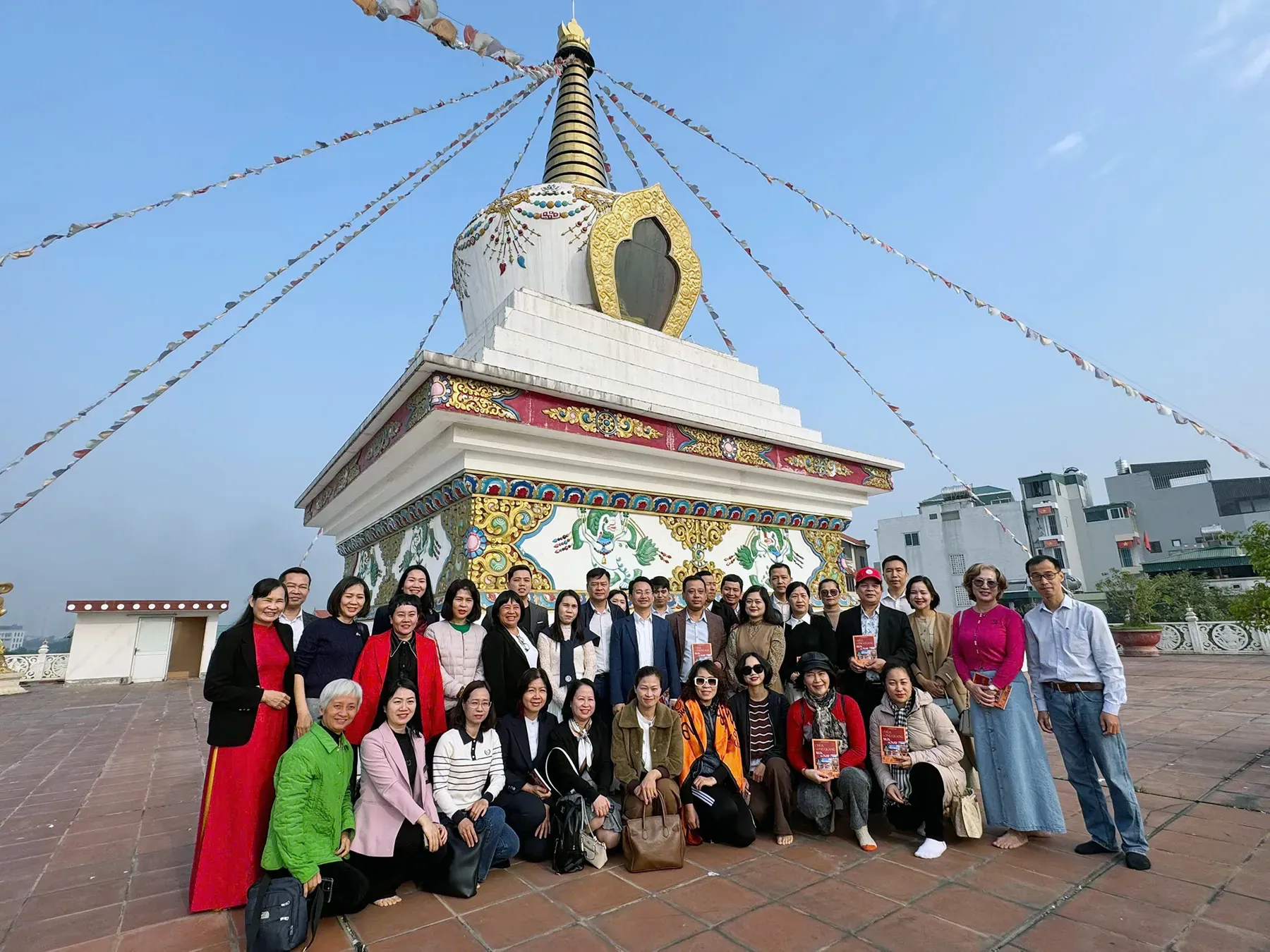
The lively traditional dance captured the hearts of delegates at the survey tour “Improving Service Quality and Linking Tourist Destinations of Thanh Liet Ward with Hanoi Travel Businesses in 2025” held on December 9 by the Hanoi Department of Tourism in collaboration with Thanh Liet Ward.
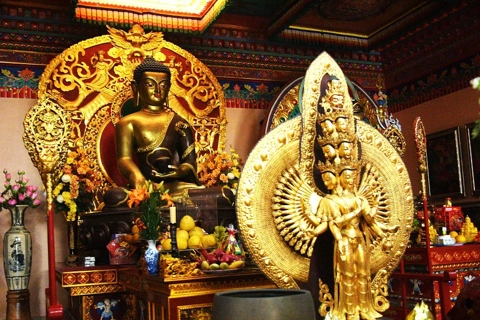
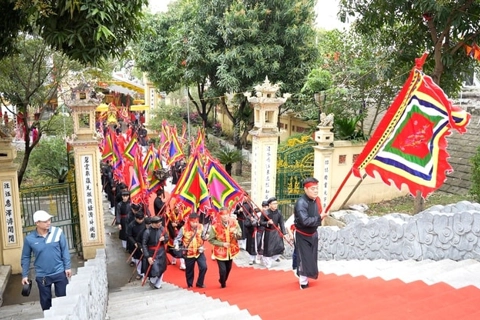
The tour began at the Inner Communal House, where delegates offered incense to honor Confucian scholar Chu Van An (1292–1370, to key heritage sites, including Long Quang Pagoda, Quang An Pagoda, the Outer Communal House dedicated to General Do Ho Pham Tu (476–545) and the Trieu Khuc relic cluster, where they watched a lively hand drum dance.
These firsthand visits highlighted Thanh Liet’s rich cultural assets and its potential as a vibrant tourism destination, blending ritual, history and local artistry.
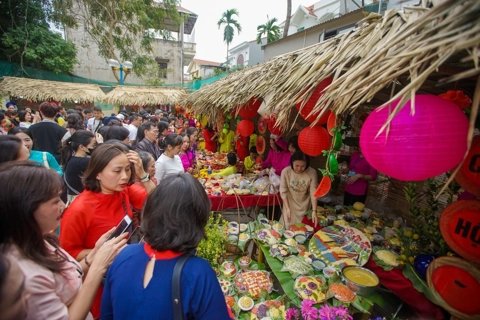
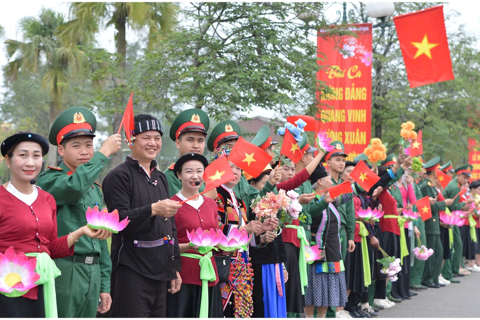
Visitors arriving in Trieu Khuc during its spring festival often pause with the same question: Are those dancers really girls?
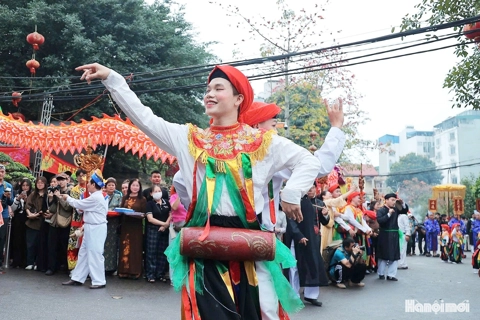
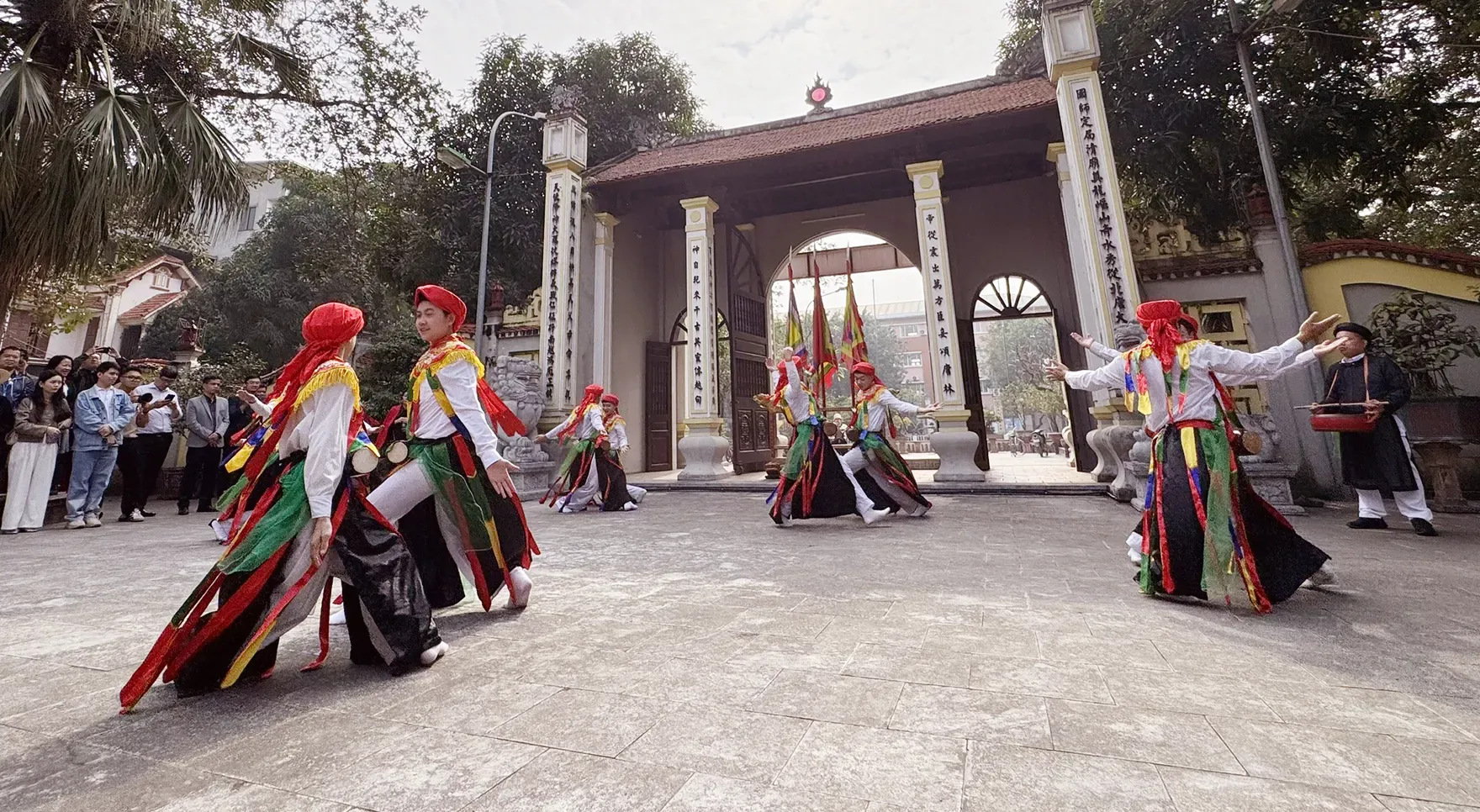
The performers glide in white blouses and lotus-shaped bras trimmed with five-color fringes, of which red headscarves form bright triangles across their foreheads, black skirts sway above white trousers as they move with soft, feminine poise. Only a closer look reveals the truth that these are young men, carrying on a role passed down for generations.
Their movements are light and fluid - hips circling gently, arms rippling like silk and hands shaping flowers before brushing the small drums tied to their chests. With each motion, they seem to rise from the earth as if lifted by the spring breeze.
The tradition is rooted in legend. In the 8th century, national hero Phung Hung trained his troops in Trieu Khuc while resisting the Tang dynasty. To lift spirits, he ordered soldiers to dress as women and dance with drums. What began as battlefield humor became a cherished ritual, performed annually from the 9th to the 12th day of the first lunar month. Today, the dance is the emotional heart of the festival.
Pride of Hanoi’s villagers
The choreography unfolds in perfect harmony, with dancers moving in mirrored pairs, back-to-back, face-to-face and arm-to-arm, as their steps shift from spirals to smooth glides and their expressions move between playful and contemplative.
Only young men may perform, a custom linked to old rules that restricted women from sacred spaces. The honor is reserved for boys from respected families who show talent, discipline and genuine affection for the art.
Folk artist Trieu Dinh Hong, who has spent five decades preserving the tradition, explained: “The dancers must be handsome, unmarried and gifted. Beyond learning the steps, they must understand the spirit because the dance is not only for the audience but for the deities and ancestors.”
The performance begins solemnly at the communal house as ceremonial wine is offered. When the drums sound, the dancers transform, no longer boys in costume, but living vessels of the village’s memory. Outdoors, during the parade, the dance becomes more exuberant, filled with color and rhythm.
Among this year’s visitors was Nguyet Minh from Trung Hoa Ward, who watched with delight. “It may not appear traditionally elegant, but it’s fun to see which male dancer looks the most graceful. It has its own charm.”
The festival also draws international visitors. Lena Schmidt from Germany shared: “I’ve never seen anything like this. It beautifully challenges expectations of gender in traditional arts. The performance is joyful and alive.”
Audience reactions reflect the festival’s enduring appeal: the dance feels both ancient and immediate—a celebration of identity, memory and joy that crosses cultural boundaries.
Today, the “girls playing drums” stands as a rare cultural treasure and a lively symbol of Hanoi’s village spirit. As drums echo under spring skies and dancers swirl in vibrant colors, the tradition renews itself each year, with new performers stepping into the same graceful roles and retelling the same legend.
For travelers seeking a window into Vietnam’s living heritage, Trieu Khuc offers not just a performance, but a story told through rhythm, color, devotion and a touch of playful illusion.
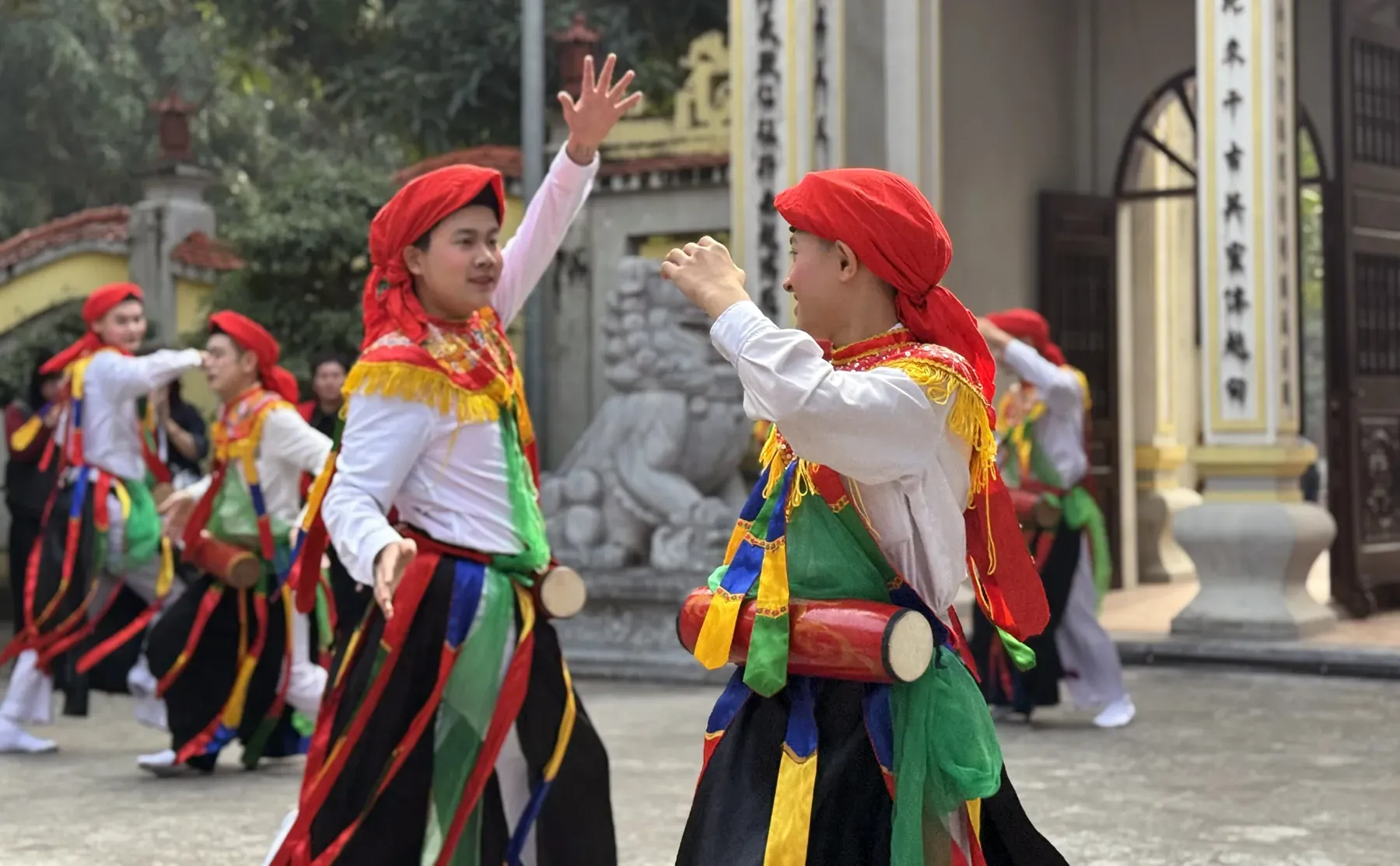
Selected men for being dancers in ‘girls playing drums’ dance must be unmarried boys, handsome and were talent in dancing.
The festival increasingly attracts curious travelers from abroad as well. Lena Schmidt from Germany shared that she has never witnessed a dance like this. “It beautifully challenges expectations of gender in traditional arts. The performance is so joyful and alive,” she stated.
The audience’s impression echoes the sentiment that makes this festival so memorable. The dance feels both ancient and immediate, a celebration of identity and joy that transcends cultural boundaries.
Today, the “girls playing drums” dance stands as both a rare cultural treasure and a lively symbol of Hanoi village’s spirit. As drums echo beneath blossoming spring skies and dancers swirl in vibrant colors, the tradition continues to renew itself, each year a new generation stepping into the same graceful roles, each performance echoing the same legend.
For travelers seeking a glimpse into Vietnam’s living heritage, Trieu Khuc offers not just a dance, but a story that is told through rhythm, color, devotion and a captivating touch of illusion.