Business
Minister chides public, calls “barefoot scientist’” achievements modest
While the public and the media have showered praise on “barefoot scientists”, or farmers who have made new machinery, the Minister of Science and Technology Nguyen Quan has called their achievements “modest”, and chided the public and media for describing them as “inventions”.
Not all of these inventors are farmers; some are businesspeople. For example, a story about the first made-in-Vietnam combatant submarine appeared in local newspapers four months ago.

Phan Boi Tran, a composite material engineer, is the inventor of the Yet Kieu 1 mini submarine. It runs on an electric engine which can bring it to a maximum speed of 15 miles per hour. Ninety percent of the submarine’s parts and accessories can be manufactured domestically. This was big news for Vietnamese, who believe that Vietnam “can only assemble machines, but cannot manufacture machines”.
Several days later, local newspapers reported that Nguyen Quoc Hoa, the owner of a print company in Thai Binh province, stated he had successfully tested his submarine named Truong Sa (Spratly Islands).
Science reporters, in a great excitement about “Vietnamese intelligence”, have discovered that a series of other scientific research works had been conducted by “barefoot scientists”, or farmers who work every day in rice fields and have no university education.
Bui Hien, a farmer, created a mini helicopter in accordance with international standards to prove that Vietnamese people can do anything.
While barefoot scientists have been praised for their achievements, the scientific community, which comprises thousands of PhDs, have been heavily criticized and described as “spongers”, because they cannot invent machines useful for production and daily life.
The well-educated scientists work at academies and big research institutes, where there is modern equipment, but they cannot create products which farmers, untrained and working in the rice fields, can.
However, Minister Quan “poured a ladle of cold water onto the public’s excitement” after he said that farmers’ achievements are “modest” and are not “inventions”.
Defending scientists, Quan said that if scientists and research institutes are assigned to create submarines and helicopters, they would create products much better than those made by the farmers.
In a related matter, the government does not intend to allocate resources to aircraft manufacturing.
In fact, Quan said, even countries that are more developed than Vietnam dare not think of manufacturing aircraft and submarines as the technical equipment requires very high technologies.
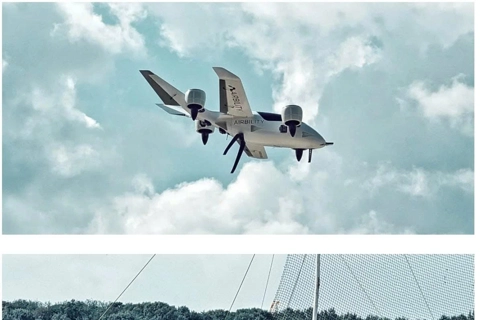
This explains why Boeing and Airbus aircraft are used all over the world, while only a few countries make submarines.
“The public tends to go to extremes when commenting that scientists are less capable than barefoot farmers,” he said.
The National Office of Intellectual Property (NOIP) grants intellectual property right certificates and extends patents to 1,000 inventions every year, both foreign and domestic, of which the number of patents granted to Vietnamese are under 100.
Quan stressed that most of the 100 patents are granted to scientists, institutes, schools and enterprises, while very few are granted to farmers.
Several days later, local newspapers reported that Nguyen Quoc Hoa, the owner of a print company in Thai Binh province, stated he had successfully tested his submarine named Truong Sa (Spratly Islands).
Science reporters, in a great excitement about “Vietnamese intelligence”, have discovered that a series of other scientific research works had been conducted by “barefoot scientists”, or farmers who work every day in rice fields and have no university education.
Bui Hien, a farmer, created a mini helicopter in accordance with international standards to prove that Vietnamese people can do anything.
While barefoot scientists have been praised for their achievements, the scientific community, which comprises thousands of PhDs, have been heavily criticized and described as “spongers”, because they cannot invent machines useful for production and daily life.
The well-educated scientists work at academies and big research institutes, where there is modern equipment, but they cannot create products which farmers, untrained and working in the rice fields, can.
However, Minister Quan “poured a ladle of cold water onto the public’s excitement” after he said that farmers’ achievements are “modest” and are not “inventions”.
Defending scientists, Quan said that if scientists and research institutes are assigned to create submarines and helicopters, they would create products much better than those made by the farmers.
In a related matter, the government does not intend to allocate resources to aircraft manufacturing.
In fact, Quan said, even countries that are more developed than Vietnam dare not think of manufacturing aircraft and submarines as the technical equipment requires very high technologies.
This explains why Boeing and Airbus aircraft are used all over the world, while only a few countries make submarines.
“The public tends to go to extremes when commenting that scientists are less capable than barefoot farmers,” he said.
The National Office of Intellectual Property (NOIP) grants intellectual property right certificates and extends patents to 1,000 inventions every year, both foreign and domestic, of which the number of patents granted to Vietnamese are under 100.
Quan stressed that most of the 100 patents are granted to scientists, institutes, schools and enterprises, while very few are granted to farmers.