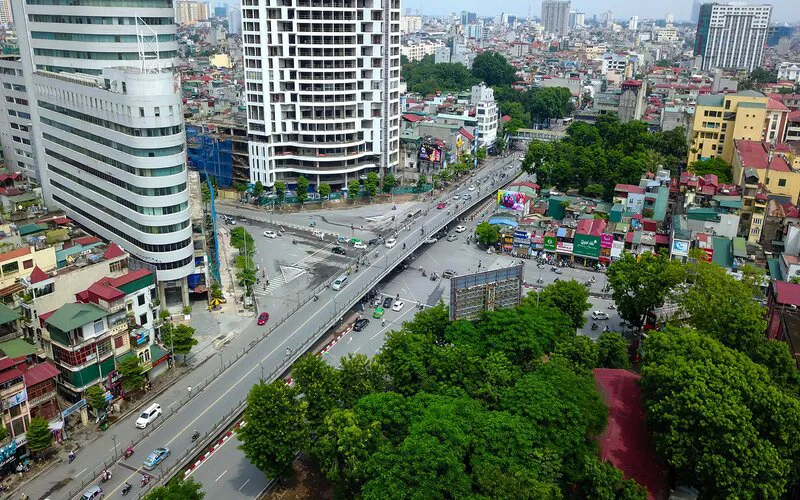
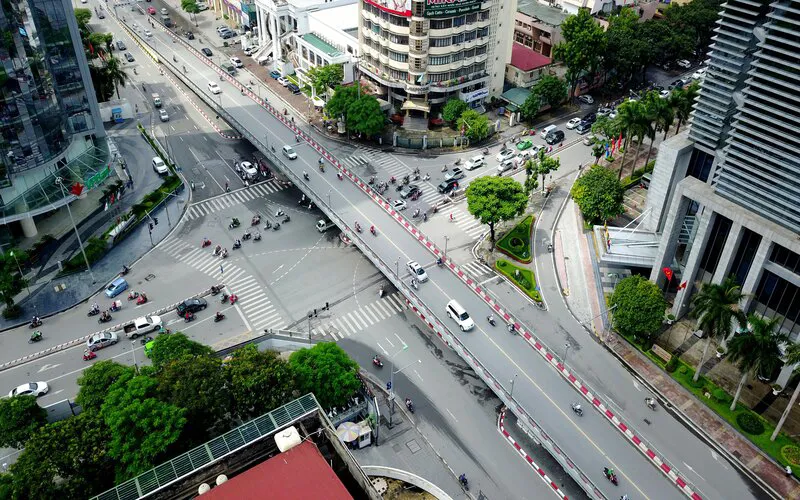
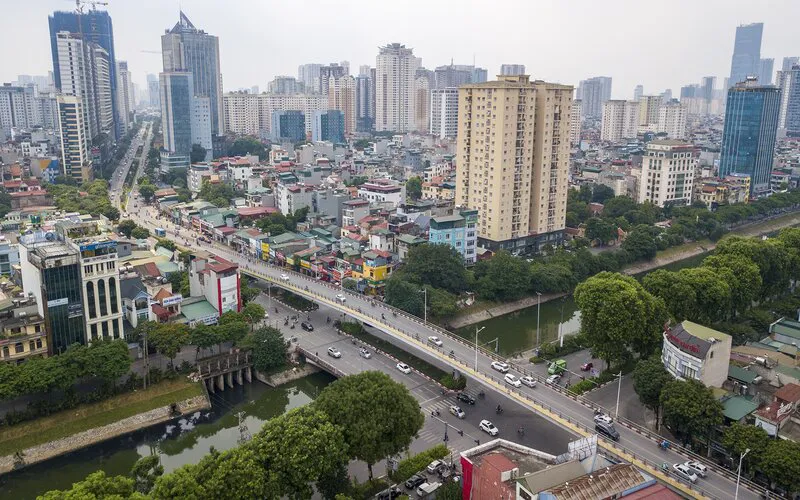
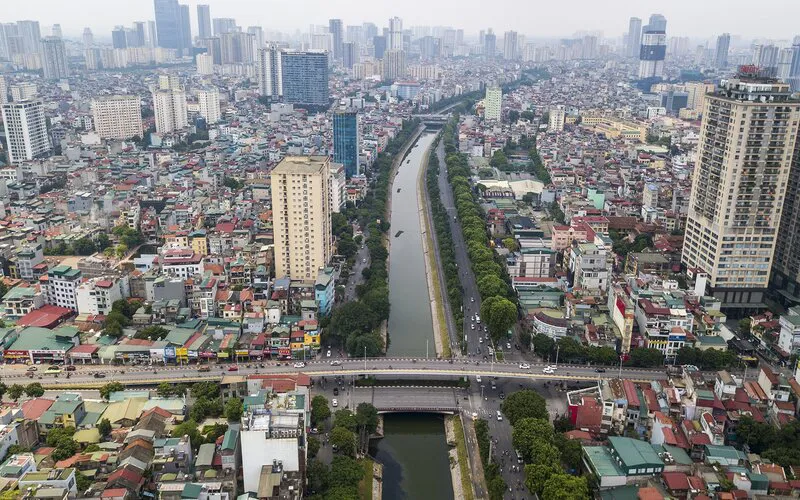
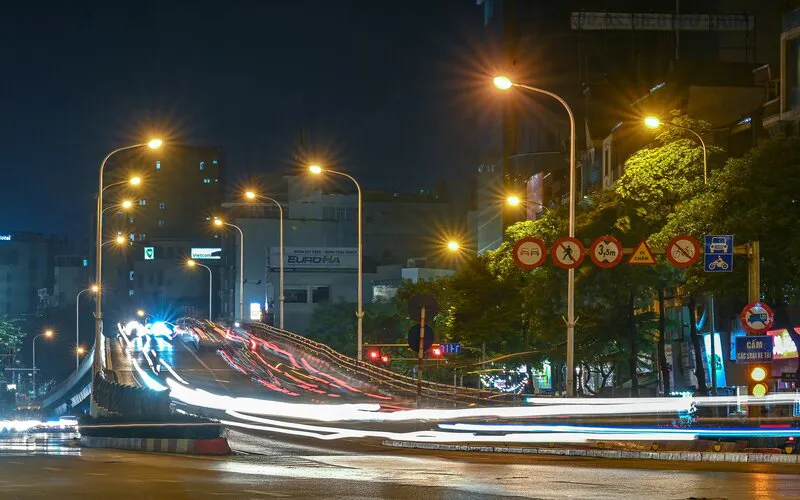
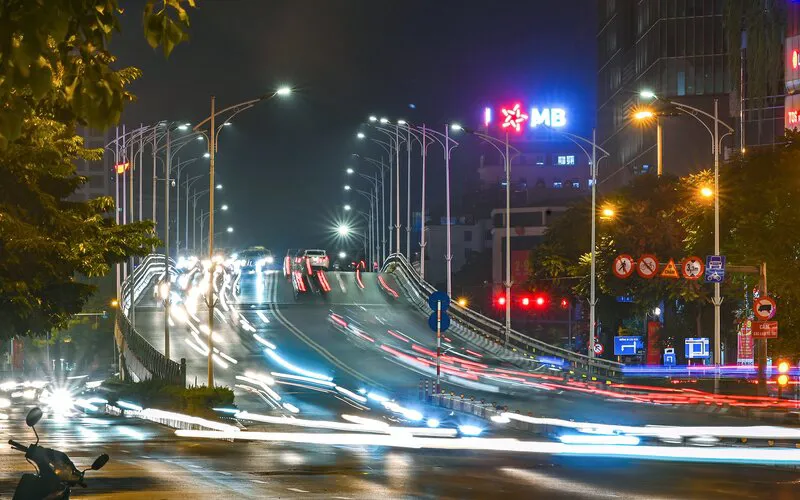
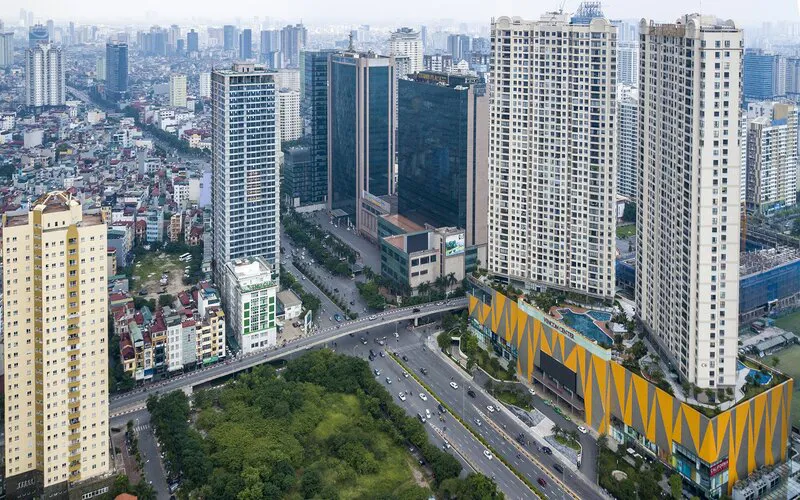
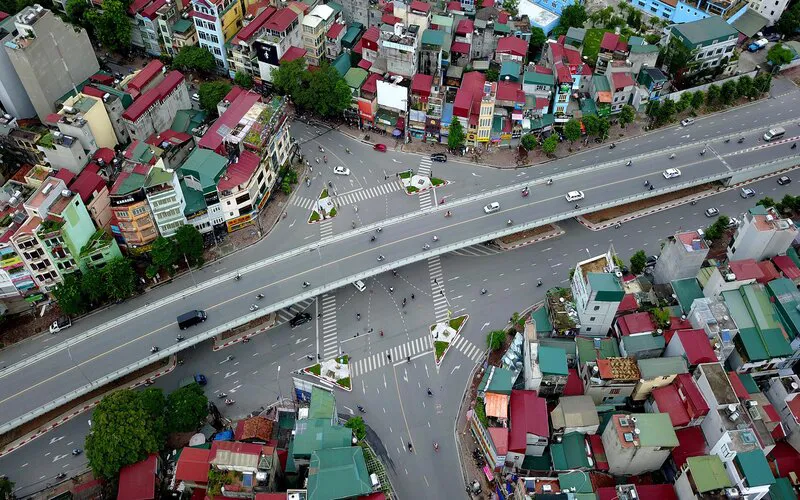
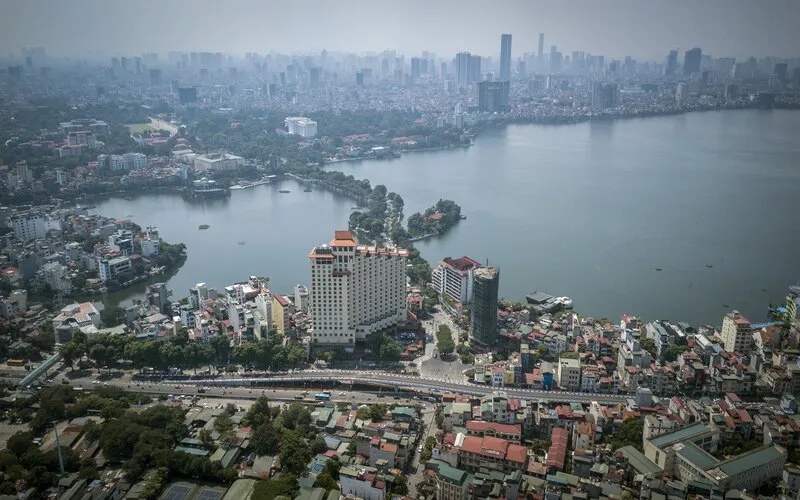
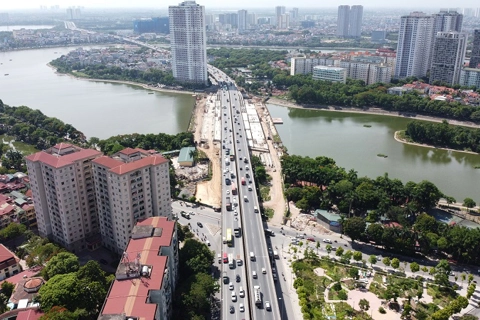
Hanoi’s government has built a series of flyovers in the inner city which help change the capital city's urban landscape.
The modern flyovers are expected to ease traffic congestion on highly transited roads in the city's downtown and clear a series of traffic bottlenecks in Hanoi.
If in 2012, there were only two flyovers, Tay Son and Lang Ha, so far Hanoi has built another 12 flyovers spanning key intersections to reduce traffic jam.
|
The first overpass in the capital city is Tay Son - Chua Boc. The works began on January 21, 2012 and inaugurated on April 26, 2012. The overpass is 249 meters long, with a total investment of VND65.5 billion (US$2.83 million). |
|
| Then, the Lang Ha flyover at the Thai Ha - Huynh Thuc Khang intersection was also opened to traffic. It is 189m long, with a total cost of more than VND67 billion (US$2.89 million). The flyover only allows vehicles with a weight of less than three tons and the highest speed of 25 kilometers per hour. |
|
| Le Van Luong flyover costs more than VND200 billion (US$8.63 million) at the Lang – Lang Ha intersection. It is 315m long, 9m wide, with two car lanes and two motorbike lanes. Work on the flyover commenced on May 11, 2012 and it was opened to traffic in November 2012. This is the third flyover in Hanoi, with total weight of steel beams of over 1,000 tons. |
|
| The fourth one is Nguyen Chi Thanh - Tran Duy Hung flyover, which cross the streets of Lang, Nguyen Khang and Nguyen Ngoc Vu. It was opened to traffic in December 2012. The flyover is 315m long, 16m wide with four lanes in two ways. The work costed VND348 billion (US$15 million). |
|
Hanoi’s sixth flyover is Tran Khat Chan at the intersection of Bach Mai – Hue streets. It was inaugurated in August 2013. It is over 352.4 m long, with the total investment of more than VND181 billion (US$7.8 million). |
|
| The seventh one is Lieu Giai flyover at the Nguyen Chi Thanh – Kim Ma intersection. The work started on June 6, 2013 with a total investment of VND360 billion (US$15.53 million) and four lanes in two ways. |
|
| The eighth flyover links Nguyen Chanh street and Hoang Minh Giam street, with the total investment of VND148 billion (US$6.4 million). Its construction was carried out with the spiraling pile NS Ecopile technology which reduced noise and vibration. |
|
| The capital city’s ninth flyover has linked streets of O Dong Mac, Tran Khat Chan and Nguyen Khoai was opened to traffic in December 2016. With a total cost of nearly VND166 billion (US$7.2 million), it is one of the urgent traffic works with a view to easing traffic congestion which had existed for many years. |
|
| An Duong – Thanh Nien flyover started in September 2017 with the total investment of nearly VND312 billion (US$13.46 million). The flyover is 271m long and 10m wide and the 11th one in Hanoi city. |
|
| Nguyen Van Huyen flyover crosses Hoang Quoc Viet street, which was just inaugurated on August 28, 2020 and connects Cau Giay, Bac Tu Liem and Tay Ho districts. Work on the flyover began in October 2019 with a cost of VND560 billion (US$24.08 million) sourced from the city’s budget. It measures 278m long and 16m wide. |