MoLISA proposes US$260 million to train workers affected by Covid-19 pandemic
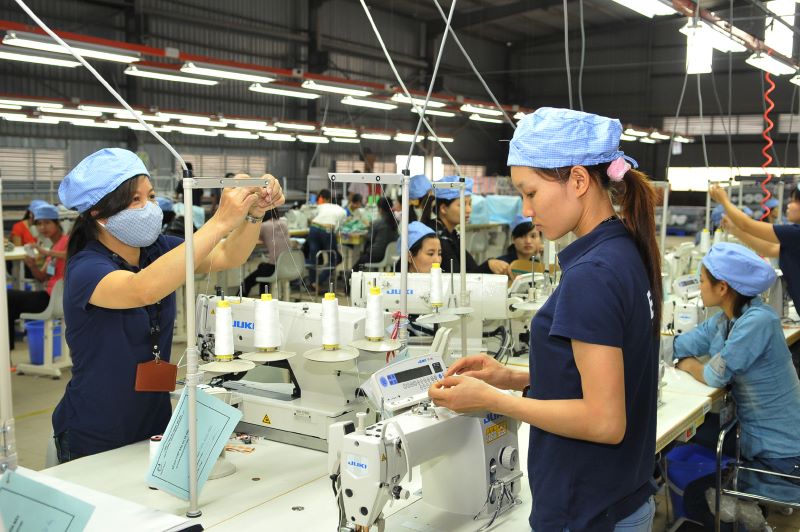
Each worker will receive around VND1 million (US$ 43.56) each month for six months for their vocational training.
Vietnam’s Ministry of Labor, Invalids and Social Affairs (MoLISA) has proposed to a package worth VND6 trillion (US$260.4 million) for training workers at risk of losing their jobs due to Covid-19.
The US$260.4 million will be sourced from the Unemployment Insurance Fund to finance worker training programs. Each worker would receive around VND1 million (US$ 43.56) each month for six months for their job training and around one million people would benefit from the program.
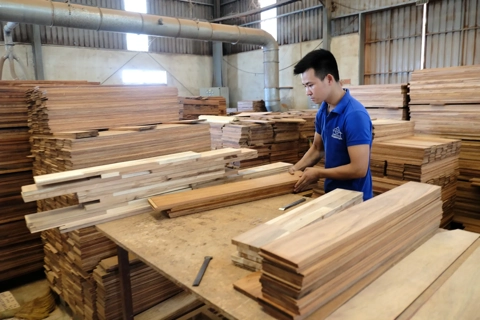
Each worker would receive around VND1 million (US$ 43.56) each month for six months for their job training. Photo: Trung Kien |
The Unemployment Insurance Fund had around VND84 trillion available at the end of 2020. Though the law stipulates part of the fund could be used to train workers who lose their jobs due to technological changes, no business has managed to apply so far due to stringent requirements.
With the proposal of MoLISA, businesses wishing to benefit from the fund must meet certain conditions including including uninterrupted payment of unemployment insurance premiums for their workers in the previous 12 months, restructuring their business or production model to cope with the adverse effects of the pandemic and submitting financial reports of the nearest quarter to prove their revenues fell by at least 20 percent from the same period in 2019.
They could apply to the ministry, and the program is expected to begin within a year after the announcement of the policy.
The pandemic severely affected 90% of businesses, according to the Vietnam Chamber of Commerce and Industry (VCCI) and the World Bank. The worst affected industries included textiles, telecommunications and electrical appliance manufacturing.
Nguyen Thi Lan Huong, former director of the MoLISA’s Institute of Labor Science and Social Affairs told VnEconomy that the policy would be effective in addressing the impacts of Covid-19.
However, it is necessary to build specific scenarios for career training, Huong said, adding that if the policy is well implemented, it will be a premise for long-term and methodical training strategies in the future.
"The issue is that there must be a retraining strategy, which clearly identifies which groups of industries and occupations are really in need of appropriate training," Huong said.
VCCI’s Vice President Hoang Quang Phong also affirmed that in the past time, business support packages have not been as effective as expected.
Therefore, supporting policies in the coming time should be built in the way that it is more accessible for companies so that they could sustain their business and develop the market, Phong stressed.