A national treasure of Hanoi women’s painting by To Ngoc Van
The painting “Two Maidens and a Little Boy” by To Ngoc Van is a national treasure, depicting the worries of Hanoian women in the 1940s.
Among To Ngoc Van’s 59 artworks preserved at the Vietnam National Fine Arts Museum, “Two Maidens and a Little Boy” made many viewers pause for a long time when visiting gallery No.9 on the second floor. Recognized as a national treasure in 2013, the painting is one of the typical works of the early stage of the artist’s career.
Praising the beauty of Hanoi women
| The beauty of Hanoi women depicts in the famous painting “Two Maidens and a Little Boy” by Vietnamese painter To Ngoc Van |
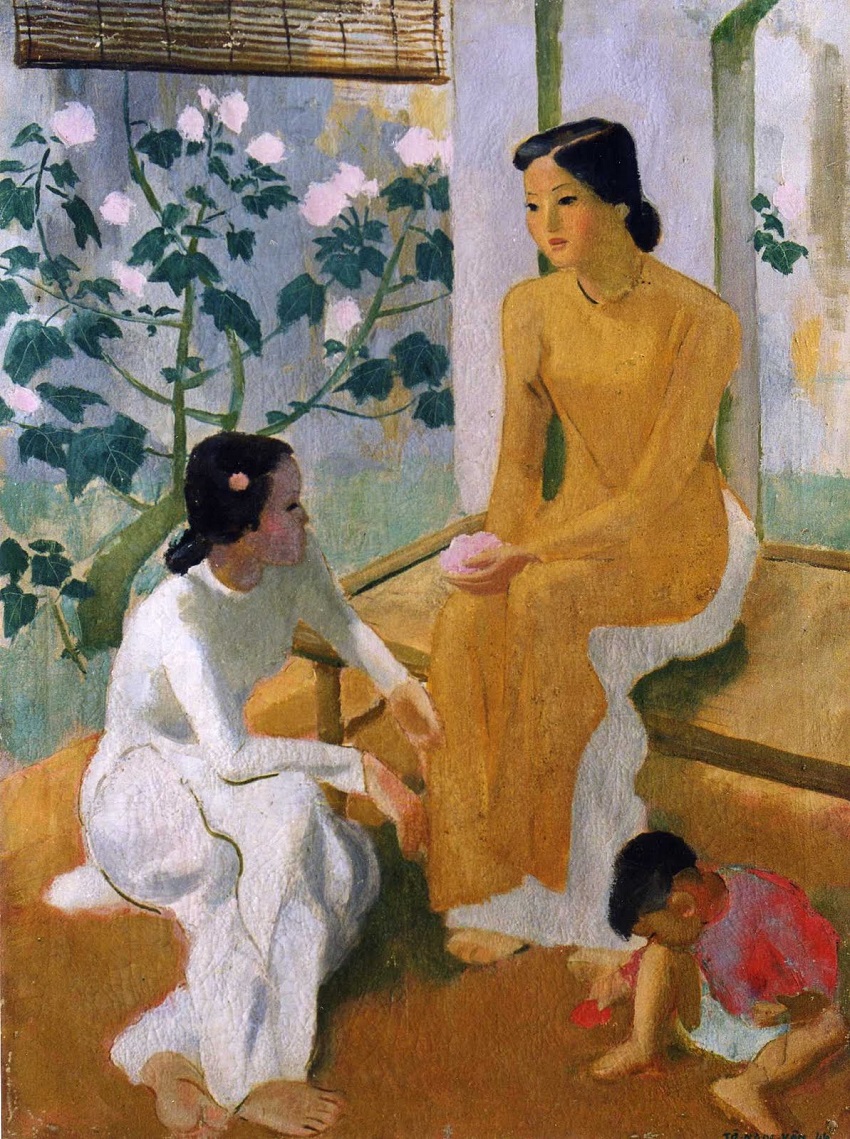
Born in 1944, "Two Maidens and a Little Boy" depicts a corner of life in Hanoi in the 1940s. By the porch, where the bamboo blind is rolled up high, and the confederate rose bush is full of pale pink flowers in the garden, two young girls sit next to a little boy and share confidence.
The three characters are in a triangular composition within a vertical frame - a classical arrangement of Western painting. One girl in a warm-yellow Vietnamese ao dai sits on a bamboo cot holding a pink flower in her hands, with her hair neatly tied at the nape of her neck.
The other, wearing a white ao dai, sits on the floor with her back gracefully arched and a pink clip highlighting her black hair. In the bottom right corner, a boy in a red shirt sits and plays.
The artist used a flat, uninterrupted coloring style with cohesive lines and curves. The prominent earthy yellow mixed with a bit of warm orange harmoniously combines with white, pale pink, lotus pink, and green. The work is a sensational blend of the Eastern spirit and the art style learned from the West at that time.
The history of the paintings
To Ngoc Thanh, famous painter To Ngoc Van's son, shared that the girl in yellow is teacher Mai - a friend of Van's wife, the girl in white, is Thang - Van's niece and the boy is Thanh himself at the age of four. The work was created when the artist lived in a house on Kham Thien Street in Hanoi.
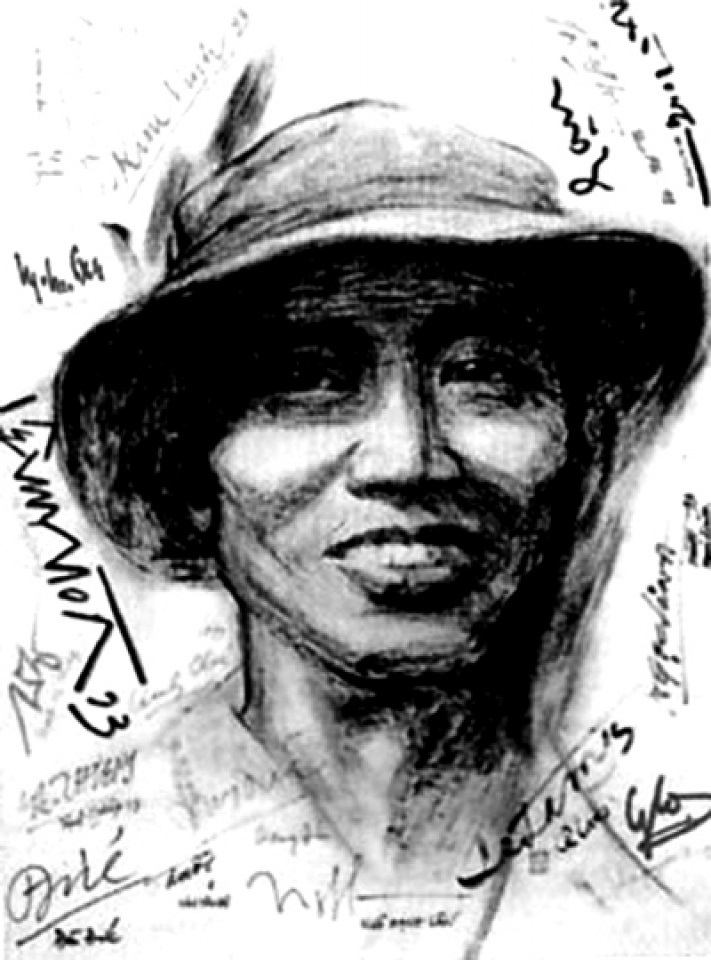
| The portrait of the painter To Ngoc Van. File Photo |
According to Thanh, in the painting called initially "Maidens and Confederate Rose," the artist compared a woman's life to a confederate rose flower, which blooms and fades quickly. The two characters in the painting sit and contemplate their fate. At that time, they belonged to the petty-bourgeois class: neither rich nor poor, yet still facing a lot of hardships.
The work was then owned by professor Nguyen Tan Gi Trong, a close friend of painter To Ngoc Van. Around 1965, Dr. Di Trong ceded it to the Vietnam National Fine Arts Museum for 200 Vietnamese Dong.
Painter To Ngoc Thanh said: "Nguyen Tan Di Trong appreciated my father's talent and art, so he respectfully preserved the painting. Until now, the painting is still kept in dad's old frame. I visit the museum to visit the work, and I'm glad it's preserved well. If the painting were damaged, restoration work would diminish its value".
Around 1958-1960, "Two Maidens and a Little Boys" was exhibited in many European countries. In 1970, when Thanh studied at the Academy of Fine Arts in Prague, he once visited the Goethe-Institut and found printed copies of the painting on sale, which many tourists bought as souvenirs.
He also bought some as gifts for friends and relatives back home. Also for sale was the book "Vietnamese Painting in the Federal Republic of Germany," including three oil paintings and two sketches of soldiers by painter To Ngoc Van. Thanh wrote a letter to the director of the publisher in Germany for copyright royalties. He received 400 Deutschmark and had painter Le Huy Van - painter Le Quoc Loc's son, then Germany - bought him a camera.
A national treasure
| The famous painting of “Two Maidens and a Little Boy” by Vietnamese painter To Ngoc Van is on display at Vietnam National Fine Arts Museum in Hanoi. Photo courtesy of the museum |
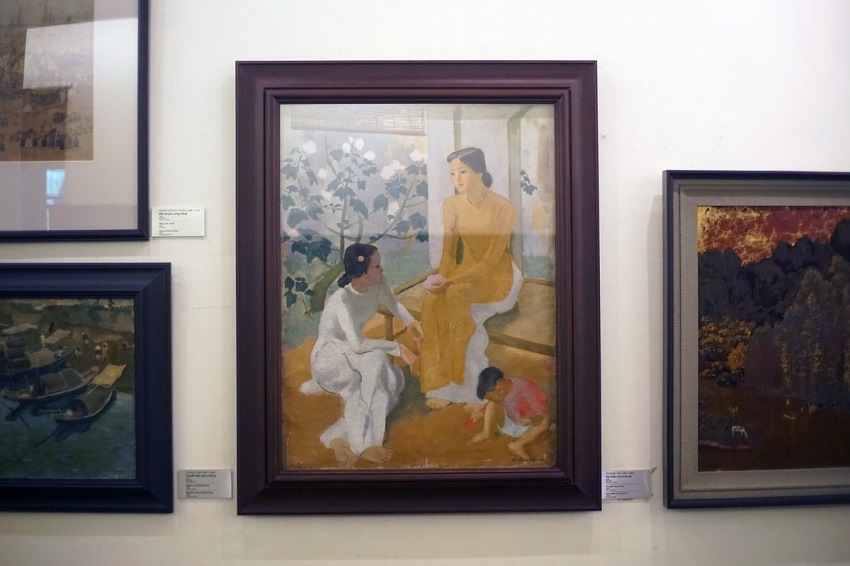
The “Two Maidens and a Little Boys” was recognized as a national treasure in 2013 thanks to its historical, aesthetic, and cultural value. According to the Heritage Profile of the Department of Cultural Heritage, the work was selected as an original and one-off object, highly appreciated by many researchers. In terms of historical value, the work marks a period of Vietnamese fine art in the first half of the 20th century.
The painting shows the distinctive style of painter To Ngoc Van - a master of Vietnamese fine arts in late modernity. With oil paint, the painting exudes exquisiteness in depicting Vietnamese women.
“Two Maidens and a Little Boy” also reflects the characteristics of Vietnamese society and culture before the August Revolution in the eyes of intellectuals at that time. This is one of the master’s highest accomplishments, which has had a strong influence on the following generations, contributing to the study of cultural exchange elements and values in the field of visual arts.
Assoc. Prof. Le Anh Van – People’s Teacher, former rector of the Vietnam University of Fine Arts - once commented: “The painting depicts a typical daily-life scene of the citizens: two young women in ao dai sitting and sharing confidences, next to a little boy sitting and playing. All create a peaceful atmosphere. Using European oil paints, but with a master’s distinctive techniques and style, the work skillfully demonstrates the combination of the Oriental spirit and Western visual art”.
The world-famous painter
| Painter To Ngoc Van in his youth. File photo |
.jpg)
To Ngoc Van (1906-1954), also known as To Tu or Ai My, was born in Van Giang District, Hung Yen Province. He graduated from the Fine Arts College of Indochina, 1926-1931 class, as one of the Big 4 painters Tri - Van - Lan - Can (i.e., Nguyen Gia Tri, To Ngoc Van, Nguyen Tuong Lan, and Tran Van Can).
Among them, To Ngoc Van is the most typical and most successful in oil painting. He was the first principal of the Resistance Painters Course (1950-1954), as well as the author of many theoretical and critical articles on fine arts that attracted public attention, such as "The First Step of Vietnamese Painting" (1942) "Learning or Not" (1949) or "Painter" (1950).
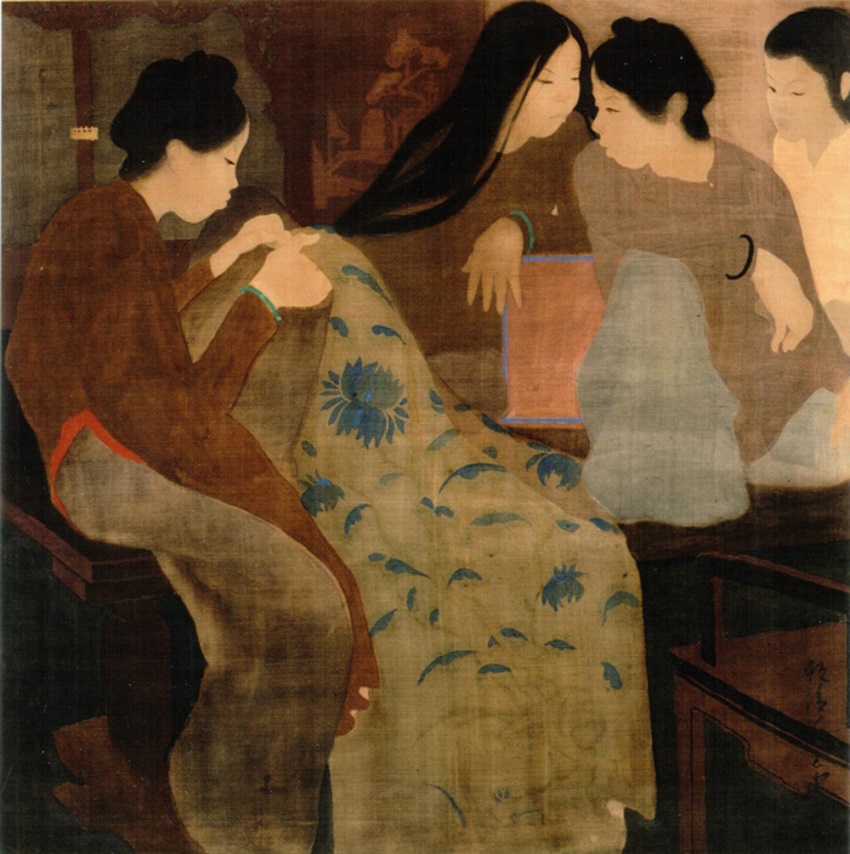
His career can be divided into two periods: specializing in painting young women and landscapes before the August Revolution in 1945 and focusing on people's lives as his subjects after the revolution.
In 1996, To Ngoc Van was posthumously awarded the first-class Independence Order and the Ho Chi Minh Prize in Literature and Arts by the State.
| Another renowned painting by To Ngoc Van - "The Young Woman with Lilly", oil on canvas, 1943 |
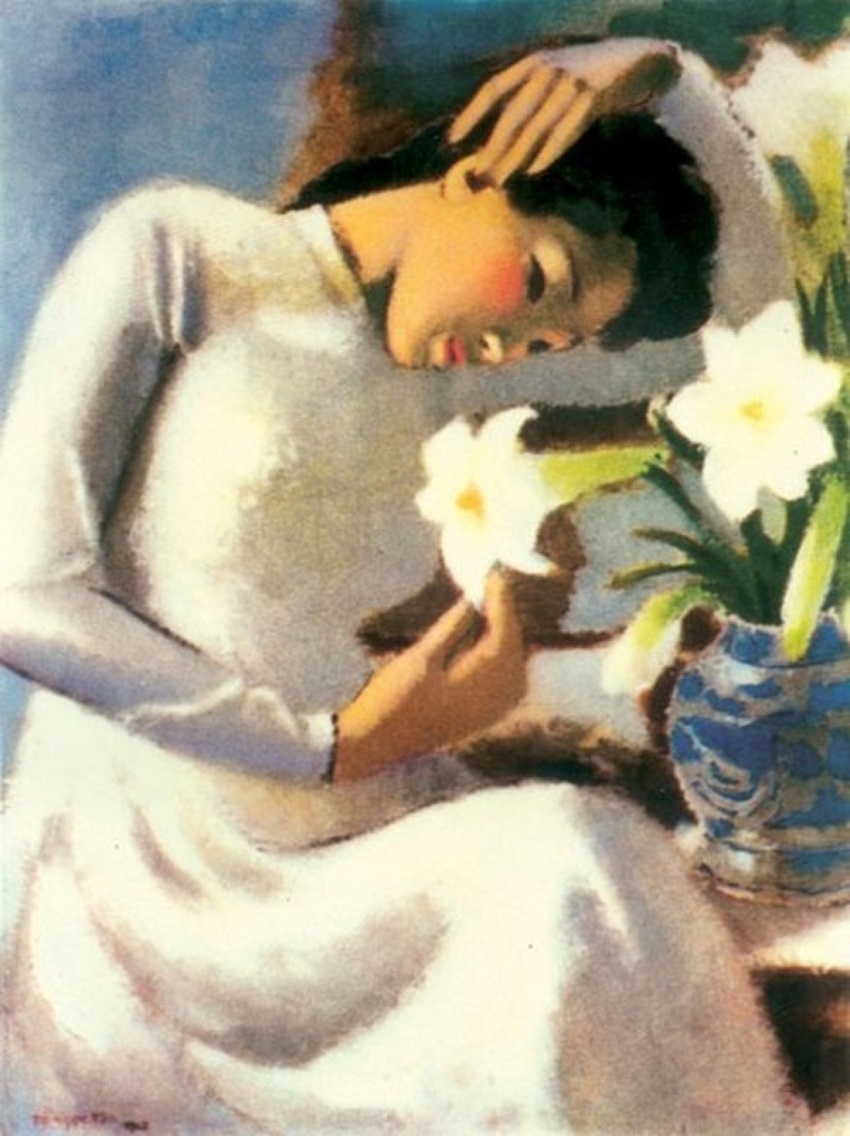
| One among To Ngoc Van painting showcases the beauty of Hanoi women. File photo |