Log in
Social Affairs

Nearly six million passengers ride Hanoi’s first metro

Hanoi metro line ridership has increased 2.5 times compared to when the service opened.

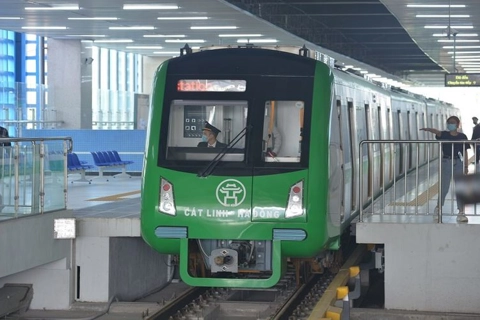
Statistics from Hanoi Urban Railway Company Limited (Metro Hanoi) show that nine months into the commercial operation since November last year, nearly six million passengers have rode the Cat Linh-Ha Dong Metro Line, the first of its kind in Vietnam.

The average daily ridership ranges from 21,000 to 22,000 on weekdays, and 25,000 to 30,000 on weekends, the Metro Hanoi said, adding that during holidays, this average figure goes as high as 40,000.

During the holiday of National Day [September 2], more than 516,000 passengers used the service. Especially on September 2, the daily passenger count hit 55,000, breaking the previous record of 54,000 passengers  during the holiday of International Labor Day [May 1], the Metro Hanoi stressed.

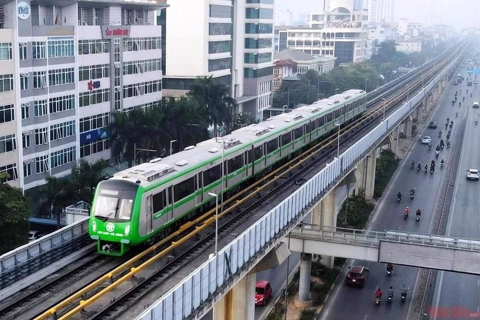
Passengers travel on the Cat Linh-Ha Dong metro line. Photo: Khanh Huy/ The Hanoi Times

According to General Director of Metro Hanoi Vu Hong Truong, railway line ridership has increased 2.5 times compared to when the service opened.

“The has an on-time performance of 99%. Daily passengers with a monthly pass account for up to 60% of commuters, and up to 80% during rush hours,” Truong said.

Explaining the reason behind the increase in ridership, Truong said that people have seen the railway line as convenient, stable, and unaffected by traffic jams.

"People using the train tend to accept walking a long distance to get to the stations. After boarding the train, they can then transfer to connecting buses. There are now 54 bus lines connected to the Cat Linh-Ha Dong skytrain, with 16 lines at each of the two ends of the railway, and eight to nine lines at stations along the way," Truong added.

He stressed that the railway had brought positive initial results, contributing to reducing road congestion along the route during rush hours. The current state of operation is the best scenario that Hanoi Metro has prepared for.

At each terminal along the Cat Linh-Ha Dong metro line, the metro line staff distribute guidance handbooks to passengers, instructed commuters  to get on and get off the trains properly.

The lowest price per ride is VND8,000 (US$0.34), while full-day and monthly tickets are priced at VND30,000 ($1.3) and VND200,000 ($8.8) respectively.

The trains operate from 5:00 am to 11:00 pm daily with the frequency of six minutes during rush hour and ten to 15 minutes  during ordinary time.

Although the designed train speed can reach a maximum of 80 kilometers per hour, the average current speed is just 35 kilometers per hour. The total travel time in the whole line is over 24 minutes and the trains  stop for 45 seconds at each terminal.
Reactions:
Share:
Trending
Most Viewed
Related news
15-year campaign builds a safer, more responsible traffic culture across Hanoi

15-year campaign builds a safer, more responsible traffic culture across Hanoi

After 15 years, a long-running traffic safety campaign continues to shape safer behavior and shared responsibility on Hanoi’s streets.

Border soldiers walk alongside children on Lai Chau’s hardships to school

Border soldiers walk alongside children on Lai Chau’s hardships to school

In Vietnam’s northern border highlands, many children begin their school day hours before sunrise, walking dangerous mountain paths to reach class. Behind their perseverance stands quiet, long-term support from border soldiers, teachers and local authorities.

PM requests emergency in house rebuilding for flood-hit residents 

PM requests emergency in house rebuilding for flood-hit residents 

The Government leader has called the mission a mandate from the heart, urging all authorities to act as a moral commitment to the people.

Two-tier local government model strengthens Hanoi’s efforts to end urban flooding

Two-tier local government model strengthens Hanoi’s efforts to end urban flooding

Associate Professor Nguyen Hong Tien analyzes why Hanoi still faces chronic flooding, explains weaknesses in drainage planning and implementation and outlines how the two-tier local government model can support long-term solutions.

PetroVietnam advances nationwide STEM classrooms to drive innovation and future talent

PetroVietnam advances nationwide STEM classrooms to drive innovation and future talent

PetroVietnam expands its STEM Innovation program to develop high-quality classrooms and strengthen Vietnam’s future workforce in science, technology and innovation.

Vietnam Happy Fest 2025 spreads joy through simple things

Vietnam Happy Fest 2025 spreads joy through simple things

The Vietnam Happy Fest 2025 honors the idea that joy comes from everyday moments and Vietnamese smiles, sharing a spirit of happiness with the world.

Flood-hit people to have houses by Lunar New Year as committed by Vietnamese Government

Flood-hit people to have houses by Lunar New Year as committed by Vietnamese Government

Rebuilding houses for disaster-affected residents must be linked with rural and regional plans to ensure immediate recovery and long-term safety.

Investments in infrastructures, teaching staff to drive English to become second language

Investments in infrastructures, teaching staff to drive English to become second language

Vietnam’s ambition to make English a second language in all schools has gained strong support, yet teachers, experts and lawmakers warn that the plan requires major upgrades in infrastructure, staffing and policy to succeed nationwide.