Log in
Hanoi

Noi Bai International Airport set for major expansion under 2030 master plan

The new master plan for the largest airport in northern Vietnam will be key in shaping the region’s international gateway as air travel, logistics and regional connectivity continue to grow over the next 10 to 20 years.

THE HANOI TIMES — Hanoi’s Noi Bai International Airport is set for a major expansion, as the Ministry of Construction has approved the preparation of its master plan for 2021–2030, with a vision to 2050, paving the way for upgrades to meet soaring passenger demand.

The planning area will cover about 1,500 hectares.
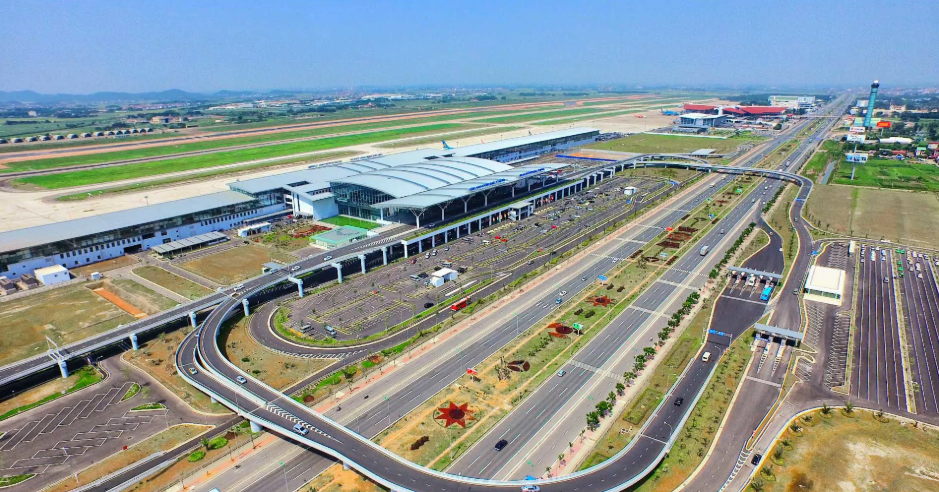
Noi Bai Airport from above. Photo: ACV

The move aims to maximize existing infrastructure, accommodate rising air transport demand and ensure flexibility in phased investment while aligning with national defense and safety requirements.

It also seeks to optimize the use of land designated for civil aviation activities.

The master plan aims to organize the Noi Bai International Airport’s space to support long-term development in line with air transport demand and local socio-economic growth, including proposals for suitable investment phases.

Key tasks include surveys, data collection and assessment of current infrastructure capacity, along with forecasts of future air transport demand.

The study will propose planning options for both airside and landside areas and related facilities to enhance capacity.

It will define the airport’s development role and scale, basic land use, and technical infrastructure requirements, while identifying environmental protection measures and estimating total investment needs.

The plan is expected to shape the future of northern Vietnam’s main international gateway as demand for air travel, logistics and regional connectivity continues to rise in the next two decades.

Located in Noi Bai Commune, Hanoi, the Noi Bai Airport operates two runways and two terminals, T1 for domestic and T2 for international flights, with a designed capacity of 25 million passengers per year.

In the first nine months of 2025, the airport served over 25.3 million passengers, nearly 80% of its annual target and handled 155,000 flights and 729,000 tons of cargo, showing strong growth compared to 2024.

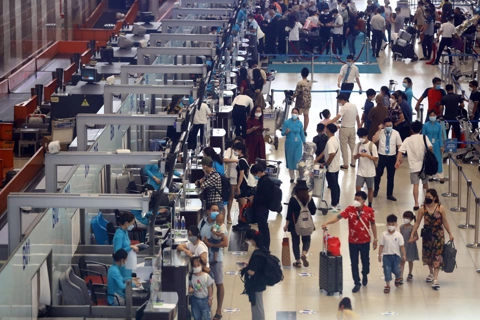
The post-pandemic surge in air travel has pushed the airport’s infrastructure to near capacity, making expansion essential for sustainable development.
Reactions:
Share:
Trending
Most Viewed
Related news
Hanoi Metro launches automated ticket-control system to boost smart mobility

Hanoi Metro launches automated ticket-control system to boost smart mobility

Hanoi Metro has introduced a fully automated fare-collection system on the Cat Linh–Ha Dong line, marking a major milestone in the capital’s transition toward smart and green public transportation.

Hanoi to roll out time-based bans on polluting vehicles near pedestrian hotspots

Hanoi to roll out time-based bans on polluting vehicles near pedestrian hotspots

These locations already have the foundations for sustainable traffic and tourism management.

Hanoi, Seoul strengthen strategic cooperation in smart urban and river development

Hanoi, Seoul strengthen strategic cooperation in smart urban and river development

Both sides highlighted the strong foundation of their three-decade partnership and emphasized the need to deepen collaboration in innovation, urban planning and people-to-people exchanges.

Hanoi looks to Seoul’s Han River revival for Red River transformation

Hanoi looks to Seoul’s Han River revival for Red River transformation

The revival of the Han River transformed Seoul’s urban landscape, improved residents’ quality of life and supported South Korea’s broader growth, the possible transformation for the Red River.

Hanoi set for special measures to unlock mega projects

Hanoi set for special measures to unlock mega projects

Such a move would help Hanoi launch major infrastructure projects and advance the city’s long-term development.

Hong Van Commune rises as Hanoi’s emerging model for community-based tourism

Hong Van Commune rises as Hanoi’s emerging model for community-based tourism

Blessed with natural beauty, strengthened by deep cultural heritage and supported by its residents, Hong Van Village is emerging as one of Hanoi’s most distinctive tourism destinations. From ecology and agriculture to handicrafts and festivals, this Red River village is shaping a dynamic vision of sustainable community tourism for the capital.

Hanoi unveils digital heritage journeys to connect tradition with modern urban life

Hanoi unveils digital heritage journeys to connect tradition with modern urban life

Hanoi has launched a new digital heritage program that brings centuries-old cultural assets into a modern, interactive format. By mapping key monuments and creating themed journeys, the city aims to help residents and visitors explore its deep-rooted identity through fresh, engaging experiences.

Hanoi launches two-wheel electric vehicles to expand green urban mobility

Hanoi launches two-wheel electric vehicles to expand green urban mobility

Hanoi has introduced two-wheel electric vehicles for the first time in its transport network, offering residents a new green mobility option and marking a key step in the city’s smart-transport development.