Old villas in Hanoi: an imprint of French architecture
The charming old French houses have become precious heritages of Hanoi, creating an interesting highlight for visitors to the capital.
Its architecture, particularly in Hanoi, remains France’s major contribution to Vietnam.
“How would the city be without its French architecture?” asked Chris Godley, an Australian tourist, when he was in Hanoi.
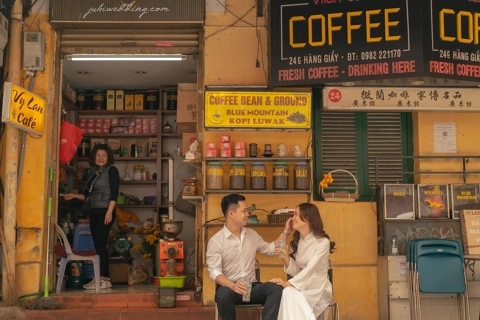
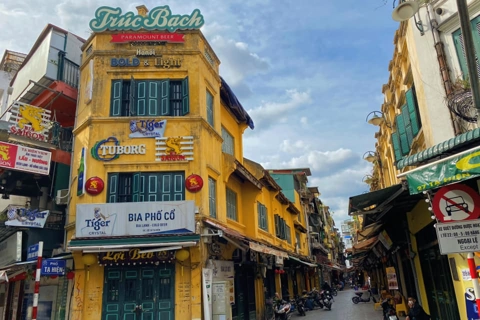
He said a lot of old French villas are no longer dwelling places, especially those in the Old Quarter. "It’s worth walking around to get a glimpse of the buildings, many of which have become extraordinarily beautiful restaurants and brilliant offices.”
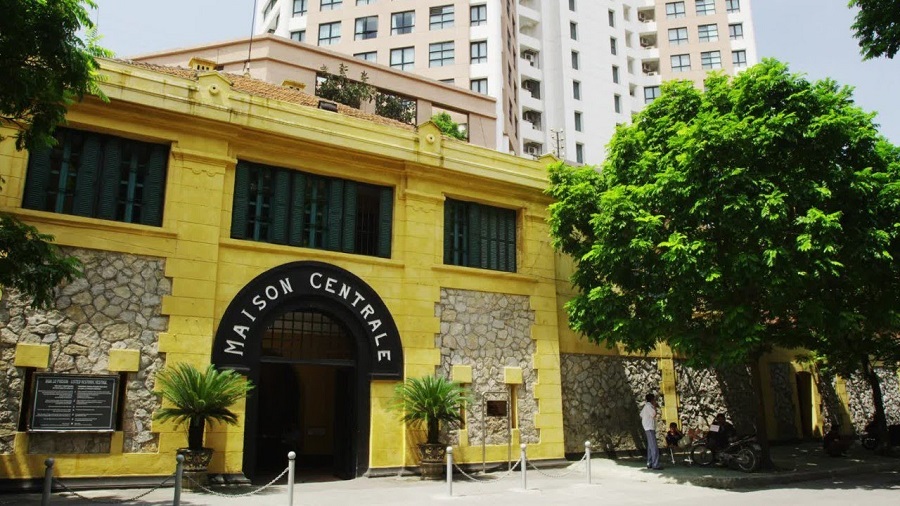
| The Hoa Lo Prison Relic- a typical French architecture in Hanoi. Photo: Huu Huy |
Chris is right. While Ho Chi Minh City was considered “The Pearl of the Orient”, attracting visitors with its sumptuous, dense dynamics; Hanoi, in contrast, is attractive thanks to its charming and unique architecture.
The mingling between French architecture with a touch of oriental design has given its own style to the old buildings of Hanoi, both ancient and modern, which will hopefully exist forever.
The surprising legacy of the French in Hanoi
The story of French architecture in Hanoi began in the late 19 century when French invaders occupied the city.
French architects began exerting an influence over the Hanoi streetscape in 1893, when the French colonialist troop led by Henri Rivière (1827-1883), a naval commander, took over Thang Long Citadel for the second time.
Henri Rivière ordered the gates of the citadel to be demolished, some sections of walls to be torn down while Kinh Thien Palace was repaired to house the High Command of the invading force.
A year later, French army engineers built a road linking the citadel with the French concession. The French set plan to build a cathedral in the city and the first colonial residences south of the city, and the urbanization of the area surrounding Hoan Kiem Lake.
| An old French villa in Trang Thi Street, Hoan Kiem District, Hanoi. Photo: Loi Pham |

Later on, they began building military quarters inside the citadel, where royal and mandarin buildings had once stood. The French Public Works Section of the Civil Service began its first large-scale construction projects with the arrival of the first French governors in the early 1900s.
These projects changed the landscape of Hanoi. A broad boulevard, Rue Paul Bert (now Trang Tien Street), expanded the French Quarter to the east on land reclaimed from ponds between Hoan Kiem Lake and the Red River. Construction continued with the creation of three more boulevards: Rollandes (now Hai Ba Trung), Carreau (now Ly Thuong Kiet), and Gambetta (now Tran Hung Dao).
Where East meets West
Nowhere else in Southeast Asia but Hanoi, the cultural mix between East and West seems to be so apparent, especially in its architecture. Between 1880 and 1890, Western rationalism mixed with Eastern philosophy created a hybrid culture in which Hanoi's architecture foreshadowed the Indochinese in the architectural school of the 1930s.
In the second stage of Hanoi urbanization, public buildings were no longer scattered throughout the city but instead, were gathered in one quarter shaping an administrative center of Indochina.
| The old French villa at No 8 Chan Cam Street, Hoan Kiem District, Hanoi. Photo: Loi Pham |
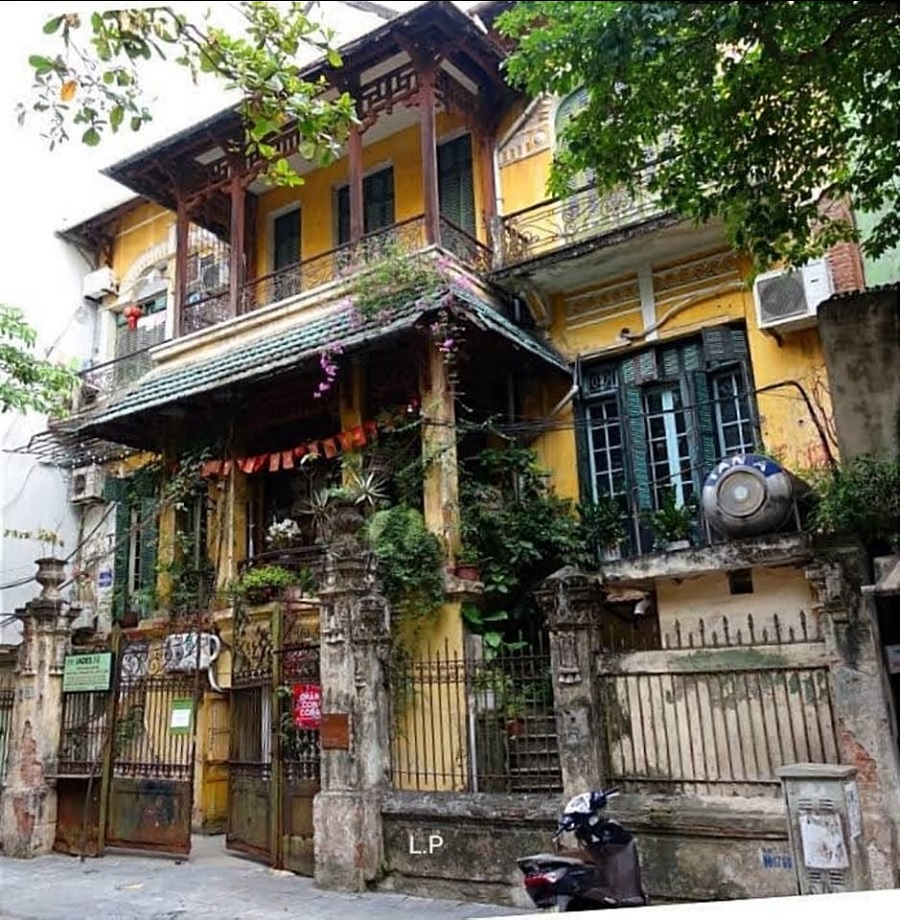
Relied on the solidity and decorative vocabulary of neoclassical architecture, Auguste - Henri Vildieu (1847-1926), an architect working for the colonial regime, decided to draw the attention of Vietnamese masses.
Between 1892 and 1906, Vildieu designed the Post Office (1 Le Thach, completed in 1896), the French Army Division Headquarters (28 Ly Nam De, finished in 1897), and Hoa Lo Prison (known around the world as the “Hanoi Hilton” and inaugurated in 1899).
He even designed more grandiose buildings after 1900, including the Supreme Court (48 Ly Thuong Kiet, 1900-1906), the French Governor General’s Palace (Hung Vuong Street, 1901-1906), and the Residence of the French Resident Superior of Tonkin (12 Ngo Quyen, completed in 1911).
Within a dozen years, French architects had built more than 100 villas combining isolated rationalism and freer compositions. They integrated into their design’s overhangs, covered staircases, curved facades, terraced roofs, and circular windows and also used Asian-inspired ornamental plaster and paint on the exteriors. By doing so they created a modern quarter and changed the look of Hanoi.
The alive witness of history
| Another impressive French colonial architecture in The Giao Street, Hai Ba Trung District, Hanoi. Photo: Huu Huy |
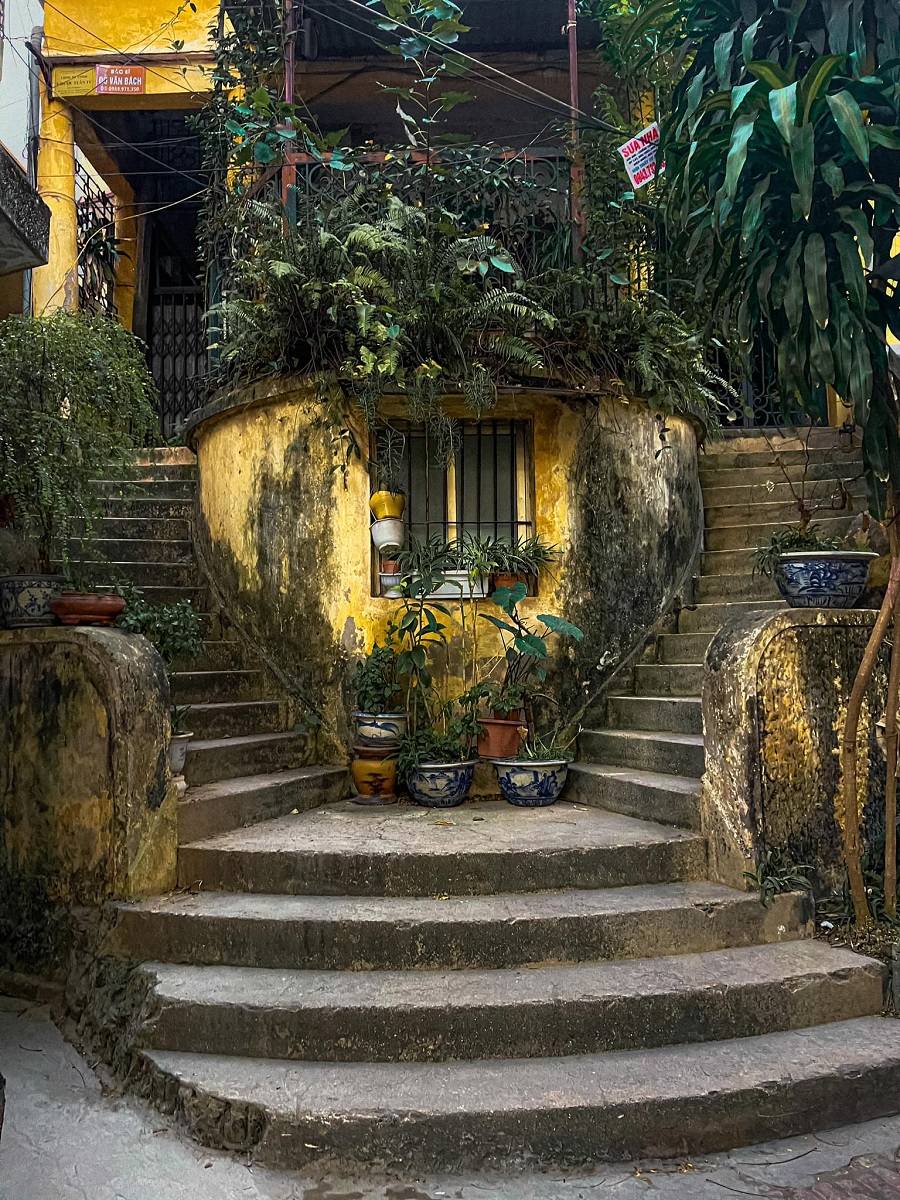
Colonial construction reached its peak with the Hanoi Opera House, a neoclassical palace that encumbered the French budget for more than a decade.
Said to have the same architectural style as the Opera House in France and built nearly 300 years after the original, it avoids superfluous architectural details, making it more magnificent and attractive. Inside there are a stage and seating areas with two private VIP boxes on the second floor. It is the best place in Vietnam to enjoy classical opera.
The nearby Metropole Hanoi Hotel was built in 1901. As the only colonial hotel in Hanoi, the Metropole stands in a class of its own. The century-old hotel offered different things - an age-refined sophistication versus a glitzy contemporary brashness, an antique aura versus ultramodern efficiency, and a nostalgic dose of the past versus a head-spinning view of the future.
Guests can decide for themselves which hotel experience they prefer, but judging from the long-standing popularity of the Metropole, many prefer its turn of the century elegance and historic ambience.
In the past, it became known as the finest hotel in French Indochina, the region of Southeast Asia that includes present-day Cambodia, Laos and Vietnam.
| A trace of colonial French architecture in Van Kiep Alley, Tran Hung Dao Street, Hoan Kiem District, Hanoi. Photo: Huu Huy |
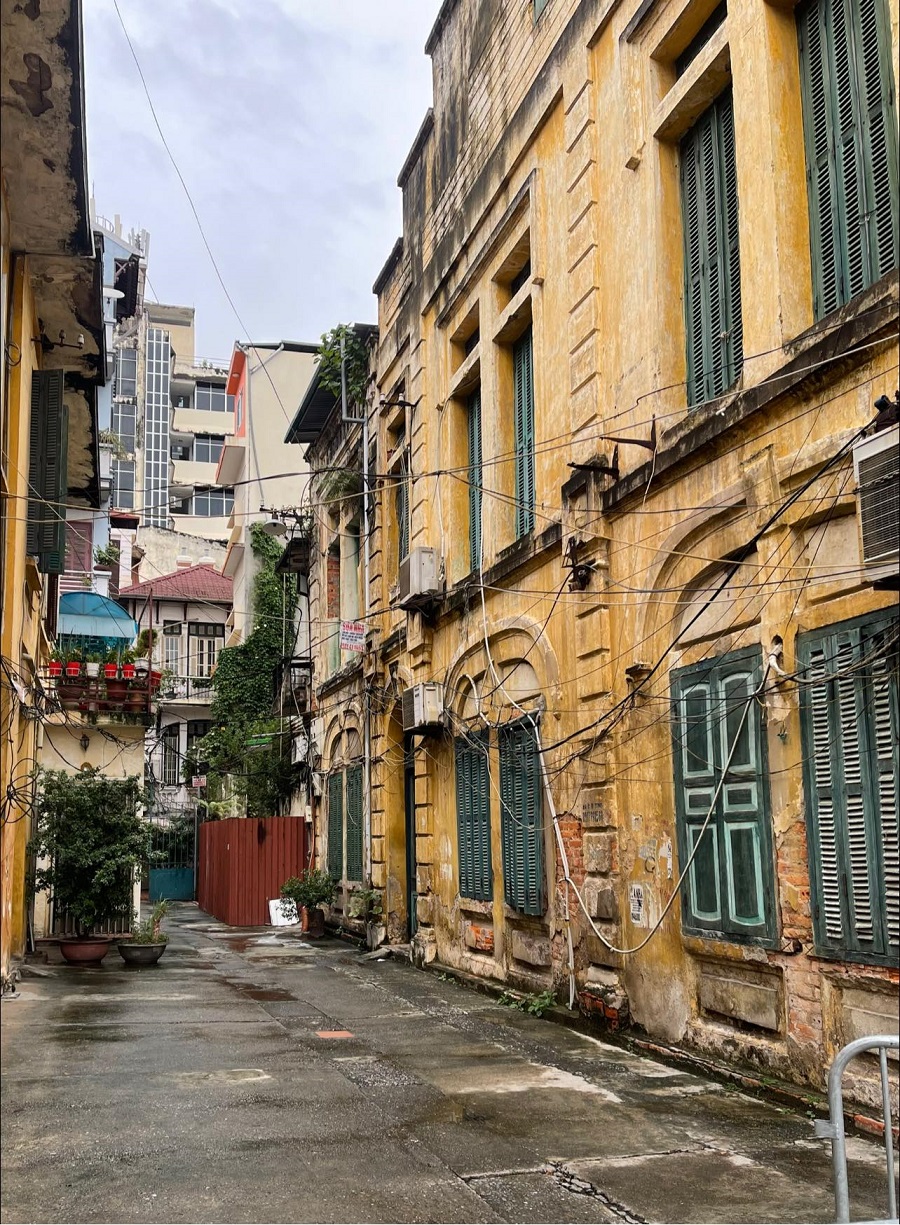
French architecture remains beautiful and represents the architectural style of the period. For a flash check, people can visit the ancient house at 86 Hang Bac Street.
Built in the 1900s, the house retains the elegance of its neo-classical style. It was known as ‘Maison Rouge’ as it was painted in red- a lucky color. Perfectly balanced, two-sided panels couch the central entrance.
Even the addition of half a floor and wires draping out the front don’t blemish the grand old dame. The glamour and intrigue can still be felt as you peek into the hallway to look at the beautifully carved door and original ceiling.
The original resident of 86 Hang Bac, Pham Chan Hung, owned a gold shop and built his first house in 1923 and rebuilt part of it in the 1930s. Today, many families, displaced during the war and allotted space after the victory at Dien Bien Phu in 1954, live in tiny studio apartments which once were the dining halls, living rooms, and gardens of the house.
Hanoi's authorities have designated it a historic building and care will be taken to protect it from the wrecker’s ball. While waiting to see how much more Hanoi can do with its irreplaceable heritage, here is a tip: visit as many of the French architectures as you can, before they become unrecognizable.