Prime land chosen to settle the capitals
In the history of Vietnam, all of the capitals, from Van Lang, Co Loa, Hoa Lu to Thang Long, were located in strategical areas with favourable natural conditions, which could not be found anywhere else.
The founding of the states and the settlement of the imperial capitals are milestones of crucial importance in the history of Vietnam, having been recorded in many early historical books.
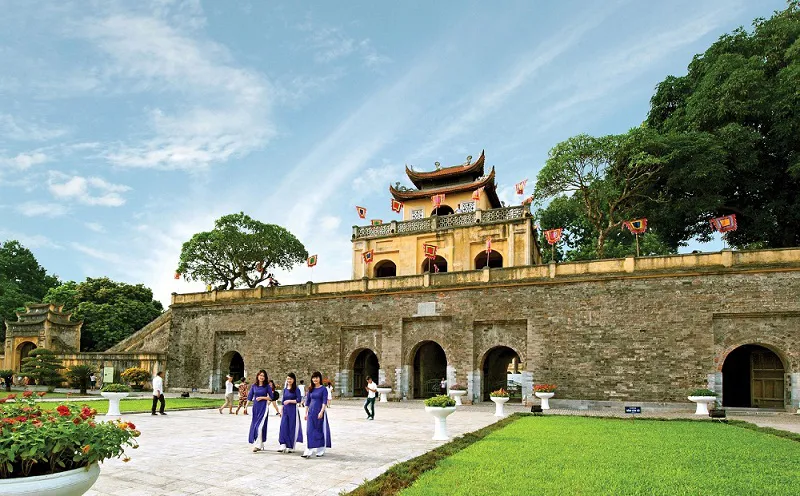
Thang Long Imperial Citadel/ Photo: Pham Hung |
Specifically, the establishment of the State and Capital City of Van Lang in Bach Hac (Viet Tri, Phu Tho) or Co Loa Capital of Au Lac State in Dong Anh (Hanoi) were noted down in Abridged Chronicles of Dai Viet book.
Meanwhile, the establishment of Dai Co Viet State and its capital, Hoa Lu, in Ninh Binh Province, or the settlement of Thang Long capital in the Ly, Tran and Le dynasties, were also recorded in The Dai Viet History Full Book.
Regarding archaeological materials, within the territories of Van Lang and Au Lac states, archaeologists have discovered, researched and built a spectrum of Pre-Dong Son - Dong Son cultures.
In 208 BC, Au Lac state was established on the basis of the succession of Van Lang. However, Co Loa citadel of Au Lac state did not last long. When the state collapsed in 179BC, Co Loa also lost its historical role and the country fell into Chinese rule for over thousand years.
The statue of King An Duong Vuong in the ancient citadel of Co Loa/ Photo: Hanoi Day Tour Travel |
.jpg)
During the 1,000 years of Chinese domination, most regions of the former Au Lac state experienced profound changes, in which the inner city of Hanoi became the largest political center of the Sui-Tang colonial governments. It also became the central point of the struggles against slavery and assimilation such as the Mai Thuc Loan uprisings (713-722), Phung Hung (791) or the great renaissance of the national hero Ngo Quyen, in 938.
During the Dinh (968–980) and Early Le (980–1009) Dynasties, the country remained stable, peaceful, and developed in all aspects in Hoa Lu capital (Ninh Binh).
By the Ly dynasty (1009–1225), right after being crowned king for a year, Ly Cong Uan made a decision to move the capital to Dai La and renamed it Thang Long. In the early years of the Ly Dynasty, the construction of a new citadel was based on the achievements of the Dai La and Dinh - Tien Le dynasties.
The new imprints of the Vietnam as an independent nation had to be established and differ from those of a nation with a-thousand-year Chinese domination; therefore, Ly Cong Uan and the Vietnamese court and militia understood the need to uplift the city of citizens who yearned for freedom and aspired to assert that Vietnam was an independent country in terms of not only administration but also spiritual and artistic aspects.
Thang Long Imperial Citadel/ Photo: Pham Hung |
.jpg)
Traditional planning
In the planning and design of Co Loa citadel, natural topographic conditions were thoroughly researched and exploited in a clever and creative way.
Hoang Giang River was utilised as a moat while lagoons as ports, mounds and hills connected together into circles, which ensured the solidity of the citadel and also helped to save labor. Hoa Lu Citadel itself also has a very unique structure.
While Au Lac capital was planned to be surrounded by water, Hoa Lu capital was sheltered by mountains, forests and Sao Khe River running from the North to the East, Dai Viet state was built on the banks of the Red River that winds around Thang Long citadel from the North to the East. The west and south of the citadel were surrounded by To Lich and Kim Nguu Rivers.
Until the seventeenth - eighteenth centuries, the Nguyen Dynasty built Hanoi citadel in the Vauban style, combing and making the most of the natural conditions. To Lich river was renovated and connected with the north-eastern trench system to supply water for the trench system around the city and then run into the Red River at Giang Khau estuary (around present Cho Gao street).
The river was exploited as a natural moat, transportation and drainage system. Meanwhile, La citadel was both a defensive rampart and a dyke to prevent floods and roads. At present, the remains of La capital is De La Thanh Street, which reveals the multifuctions of the citadel. Like Co Loa and Hoa Lu Citadels, Thang Long Citadel is also planned to take full advantage of natural conditions.
Co Loa Ancient Citadel/ Photo: Motogo |
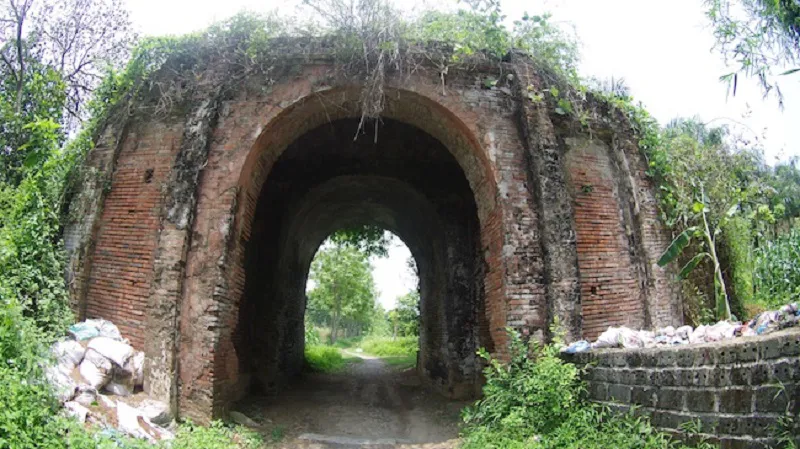
In terms of structure, Co Loa citadel had three ramparts and trenches that were open for roads and waterways. Hoa Lu citadel, with two rings of citadel and moat, was opened with seven doors and water gates.
Thang Long Citadel in the Ly, Tran, Le Dynasties basically maintained the previous Dai La Citadel, consisting of three rounds: Dai La Citadel, Imperial citadel, and forbidden city. There were not many changes in scale but the structure in the citadel rings, particularly the placement of the city gates.
In 1230, the Tran dynasty expanded Dai La citadel and built four more outer gates, while the the Imperial Citadel was further extended to the southwest, consisting of four gates in the East, West, South and North during the Ly and Tran dynasties to the Le So dynasties.
Meanwhile, the scale and position of Forbidden City were almost unchanged through dynasties, from Ly to the end of the Revival Le Dynasties. According to the historical texts, the Forbidden City of Le dynasty contained many layers of doors, among which Đoan Minh (Đoan Môn) gate still remains until now.
The 19th century Hanoi Citadel, built in the Vauban style, is a square between the modern streets of Hung Vuong, Phan Dinh Phung, Phung Hung, and Tran Phu. The citadel opens 5 doors: East, North, West, Southeast and Southwest. Outside the gates are guard posts protruding in the shape of a prison tower and moats.
Thang Long Citadel/ Photo: Pham Hung |
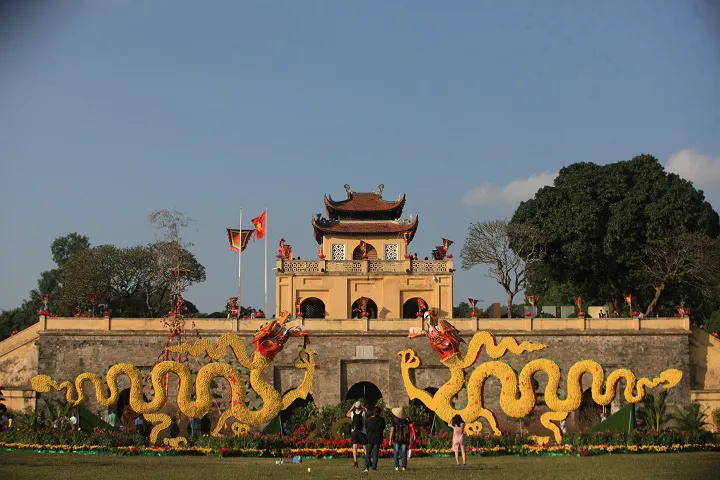
Thus, the citadels of Co Loa - Hoa Lu - Thang Long, in the perspective of geography - history and planning, are the reflection of the rich historical and cultural traditions during many Vietnamese dynasties over the centuries.
Those capitals used to be the national cultural centres, where many regional cultures converged and exchanged. It is particularly rare in the history that many relics that represent a long history of cultures of all three ancient capitals could still be found until today, showcasing the strong vitality of Vietnamese culture.
Particularly, Thang Long Capital, presently Hanoi, has been recognized as a World Cultural Heritage for 10 years (2010 - 2020).