Railway damage accounted for US$1.9 million after severe flood in central Vietnam
Prolonged heavy rain and subsequent floods across the central provinces had forced the railway sector to suspend passenger trains and repair the railway.
THE HANOI TIMES — The Vietnam Railways Corporation (VNR) estimates that the historic floods in the central region and Central Highlands caused around VND50 billion ($1.9 million) in damage to railway infrastructure from Dieu Tri Station in Gia Lai to Nha Trang Station in Khanh Hoa.

Workers repair the railway sections damaged by prolonged heavy rain and landslide. Photo courtesy of the VNR
The flood caused railway suspension for eight consecutive days from November 17 to 25, with 105 passenger trains and 65 cargo trains suspended from operations.
During the train suspension, more than 35,000 free meals were served to passengers on affected trains. The sector has refunded 39,000 tickets, equivalent to VND24 billion ($914,000).
Although the North-South railway line has been repaired since November 25, after eight days of congestion, there are still many slow-running points.
The railway sector has to adjust the passenger train schedule to ensure train safety and to suit actual conditions. Train suspension is notified on passengers’ phones and tickets can be returned at the website: www.dsvn.vn or at the stations.
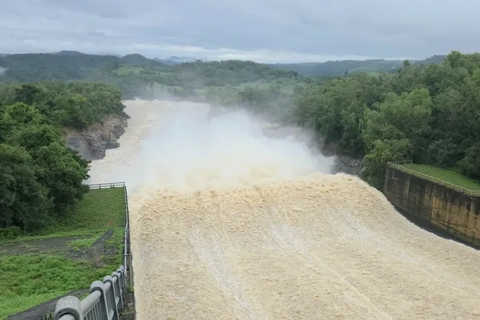
According to the Ministry of Agriculture and Environment, severe flooding has hit provinces in the central region and the Central Highlands, with Dak Lak and Khanh Hoa exceeding historical water levels.
The floods killed or left 106 people missing, destroyed 1,154 houses and flooded 186,000 homes. Transport, irrigation, education and health facilities were also heavily damaged, with initial losses estimated at VND9 trillion ($343 million).