Resolution 15 outcomes: Foundation for Hanoi’s sustainable development
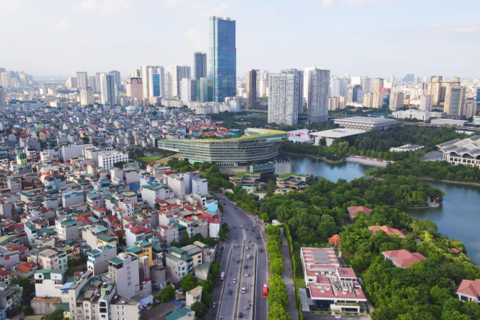
With the expansion of its administrative boundaries, Hanoi has ample space to restructure its socio-economic landscape, harnessing the potential of each area.
In the 15 years since the adjustment of its administrative boundaries, Hanoi has shown tremendous commitment to overcoming challenges and leveraging its resources to achieve significant development strides. This progress has contributed to the country's overall success and positioned itself in rapid and sustainable development.
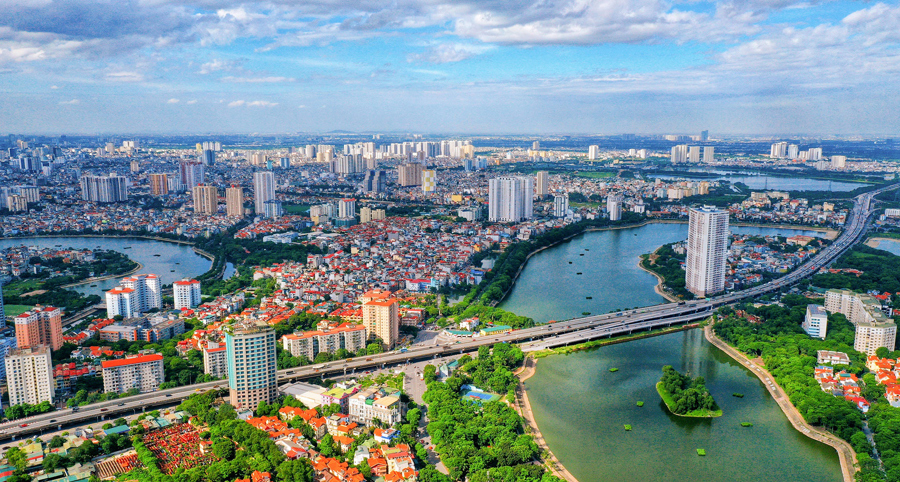
| A corner of Hanoi. Photo: Pham Hung/The Hanoi Times |
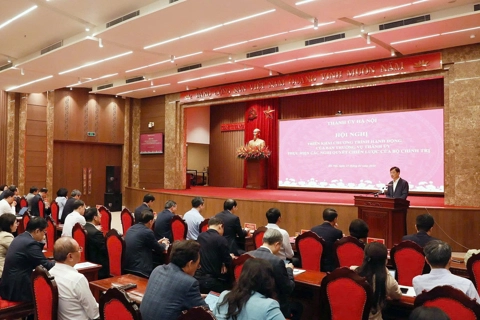
Resolution No.15/2008/NQ-QH12 of the 12th National Assembly on the adjustment of the administrative boundaries of Hanoi and some related provinces is a significant and transformative milestone in the city's development.
This well-considered political and historical decision, driven by the foresight and vision of the Party and the State, aimed not only to build and develop the capital city, but also to enhance its leading position and pervasive influence in the country's development strategy in the era of industrialization, modernization and international integration.
After consolidation in August 2008, Hanoi covered an area of 3,328.89 km2 with a population of 6.23 million, comprising 29 districts, cities, and 577 communes, wards, and communes. Over the 15, the local population has increased significantly and is estimated to be 8.56 million in June 2023, 1.37 times higher than in 2008.
The city now comprises 30 districts, cities, and 579 communes and wards.
Hanoi's ambitions for the period 2021-2025 include the establishment of 3-5 more urban districts, especially Dong Anh and Gia Lam rural districts, with a primary focus on allocating resources for them to meet the criteria for this status by 2023.
With the expansion of its administrative boundaries, Hanoi has ample space to restructure its socio-economic landscape, leveraging the potential of each area. The increase in population and labor resources provides an opportunity to mobilize more human capital, especially high-quality talents, to drive the city's industrialization and modernization, addressing existing shortcomings, imbalances and disparities in economic and social development and urban growth.
This expansion of administrative boundaries has also increased resources for Hanoi's economic, cultural, and social development, laying the foundation for synchronized, comprehensive, rapid, and sustainable growth.
In addition to favorable conditions, Hanoi continues to face unprecedented challenges, including the Covid-19 pandemic, the effects of climate change, the global economic downturn, and the complexity of the global economic-political situation. In addition, the capital's large area and population pose tremendous management pressures, with significant rural demographics representing challenges for focused leadership and direction.
Thanks to the city's efforts, Hanoi's economic scale has grown impressively, reaching VND1,200 trillion (US$50 billion), more than four times the figure in 2008 and accounting for 1/8 of the national GDP (US$409 billion).
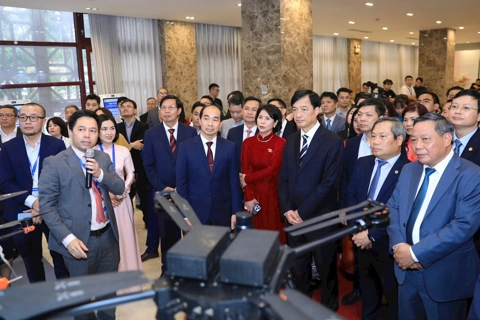
| Electronics production at an industrial cluster in Hanoi. Photo: Thanh Hai/The Hanoi Times |

The city's state budget revenue has shown steady growth, increasing by an average of 8.7% per year. In 2022, Hanoi's total budget revenue exceeded VND300 trillion ($12.67 billion) for the first time, ranking second in the country.
Notably, the city's domestic revenue alone serves as a sustainable source of income, reflecting the strength of Vietnam's main driving force. In the first half of 2023, the city's budget revenue reached VND220 trillion ($9.3 billion), accounting for 64.2% of the estimate, with 94% coming from domestic sources.
At the national level, efforts have been made to develop the knowledge economy and digital economy, with Hanoi leading the way in terms of ICT industry revenue, reaching about VND320 trillion ($13.5 billion). The city is home to about 8,500 information technology enterprises and two-fifths of the country's centralized IT industrial parks. In addition, the Hoa Lac Hi-Tech Park has become a hub for the production of high-tech products and smart devices.
Hanoi is actively using its land resources to develop domestic economic projects and attract foreign investors to invest in industrial parks. In 2021-2023, 13 out of 43 industrial clusters have been approved according to the plan, and efforts are underway to complete procedures for the remaining 30 clusters. The city continues to establish new industrial clusters and calls for investment in its infrastructure in accordance with the plan.
Promoting comprehensive development
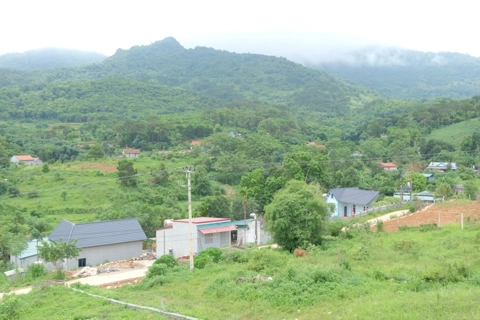
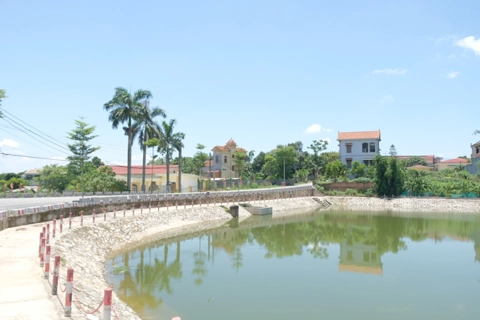
The expansion of Hanoi's administrative boundaries has resulted in districts focusing on the development of disadvantaged regions, thus promoting the equal development of all localities in the city. Special emphasis has been placed on investment in agriculture and rural development.
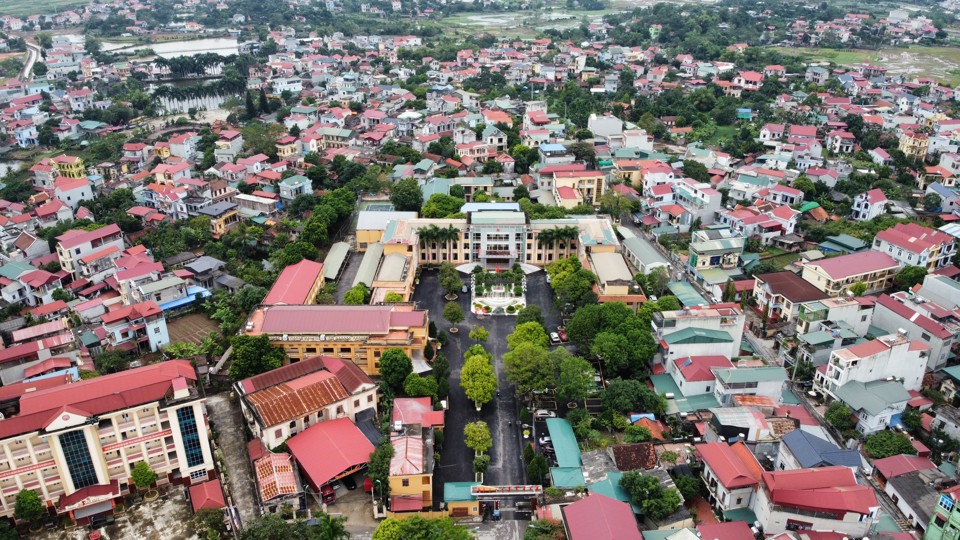
| New-style rural areas in Ba Vi District, Hanoi. Photo: Ngoc Tu/The Hanoi Times |
The standard of living of the people in Hanoi has improved significantly. In 2022, the city's per capita income reached VND141.8 million ($5,991), more than 3.5 times higher than in 2008.
The poverty rate dramatically reduced from 8.43% in early 2009 to only 0.095% of the total population in early 2023, with 16 districts free of poor households.
Most households now have concrete and brick houses. Progress in health care and disease prevention has been remarkable, with all community health stations having doctors instead of only nurses, and the citywide health insurance coverage rate has reached 92.5%.
In the coming period, Hanoi's leaders have emphasized their commitment to maintaining the city's position as one of the country's economic powerhouses.
To achieve this, the city aims to mobilize all available resources and effectively utilize its cultural, scientific, technological, human, and land advantages to promote rapid and sustainable economic growth.
A comprehensive social security system will be developed, aiming at universal coverage and expanding support for social assistance recipients. The city will proactively allocate resources to maximize people's access to basic social services such as healthcare, education, vocational training, legal aid, and housing.
Hanoi will synchronize the development and implementation of mechanisms and policies to transform itself into a leading modern, smart urban center, creating positive spillover effects that connect various urban areas.
In its quest for progress, Hanoi will adopt innovative thinking and strive to become a "Green - Cultural - Smart - Modern" capital, adopting sustainable development practices prioritizing environmental protection, cultural preservation, smart solutions, and modernization.