Reviving Hanoi’s timeless Indochina reliefs
Two nearly century-old sculptures, created by early masters of Vietnamese modern art, have been restored on Hang Long Street, bringing a valuable piece of Indochina’s cultural heritage back into public view.
THE HANOI TIMES — This autumn, two nearly century-old reliefs have reemerged in Hanoi after meticulous restoration, reconnecting the city with a lost chapter of its artistic heritage.Unveiled on the renovated Hang Long Street, the artworks “Agriculture” and “Fishery”, once displayed at the 1931 International Exposition in Paris, now return to the public view in their original setting.
A century-long journey
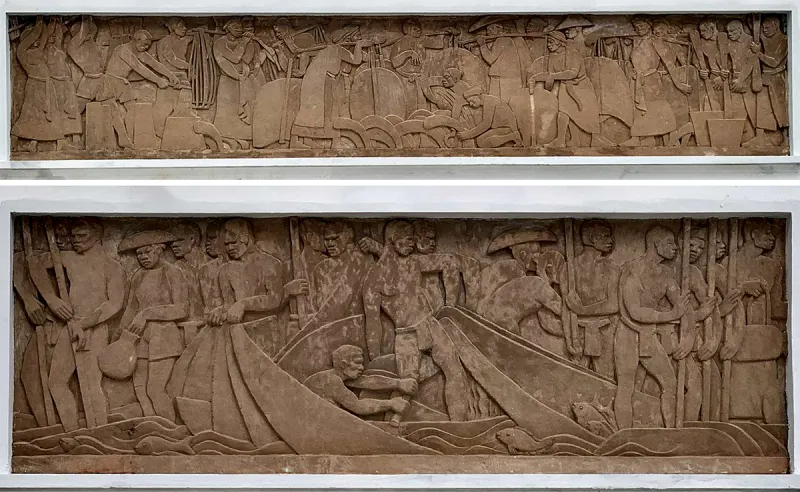
The two striking reliefs, titled “Agriculture” and “Fishery,” adorn the wall of the Fine Arts School of Indochina on the newly restored Hang Long Street. Photo: Dr. Pham Long
In a 2019 announcement, art researcher Dr. Pham Long, the first to unveil the cultural treasures, revealed that the Agriculture and Fishery reliefs were sculpted between 1929 and 1930 by professors and students of the École des Beaux-Arts de l’Indochine in preparation for the 1931 Paris Colonial Exposition.
The works marked a milestone for Vietnamese fine arts, showcasing the early success of the school under its founding director, painter Victor Tardieu (1870-1937), who helped shape modern Vietnamese art.
The first public release of photos evoked emotion among art enthusiasts, moved by the reliefs’ artistic and historical significance and their long years of obscurity, once hidden between two walls and nearly forgotten.
In late 2024, Vietnam Fine Arts Magazine published a complete Vietnamese translation of Tardieu’s original handwritten report on the school’s exhibition in Paris, preserved by the French National Institute for Art History (INHA). Translated by Andrea Tran and Dr. Pham Long, the 10-page document provides rare insights into Vietnam’s early emergence on the global art scene.
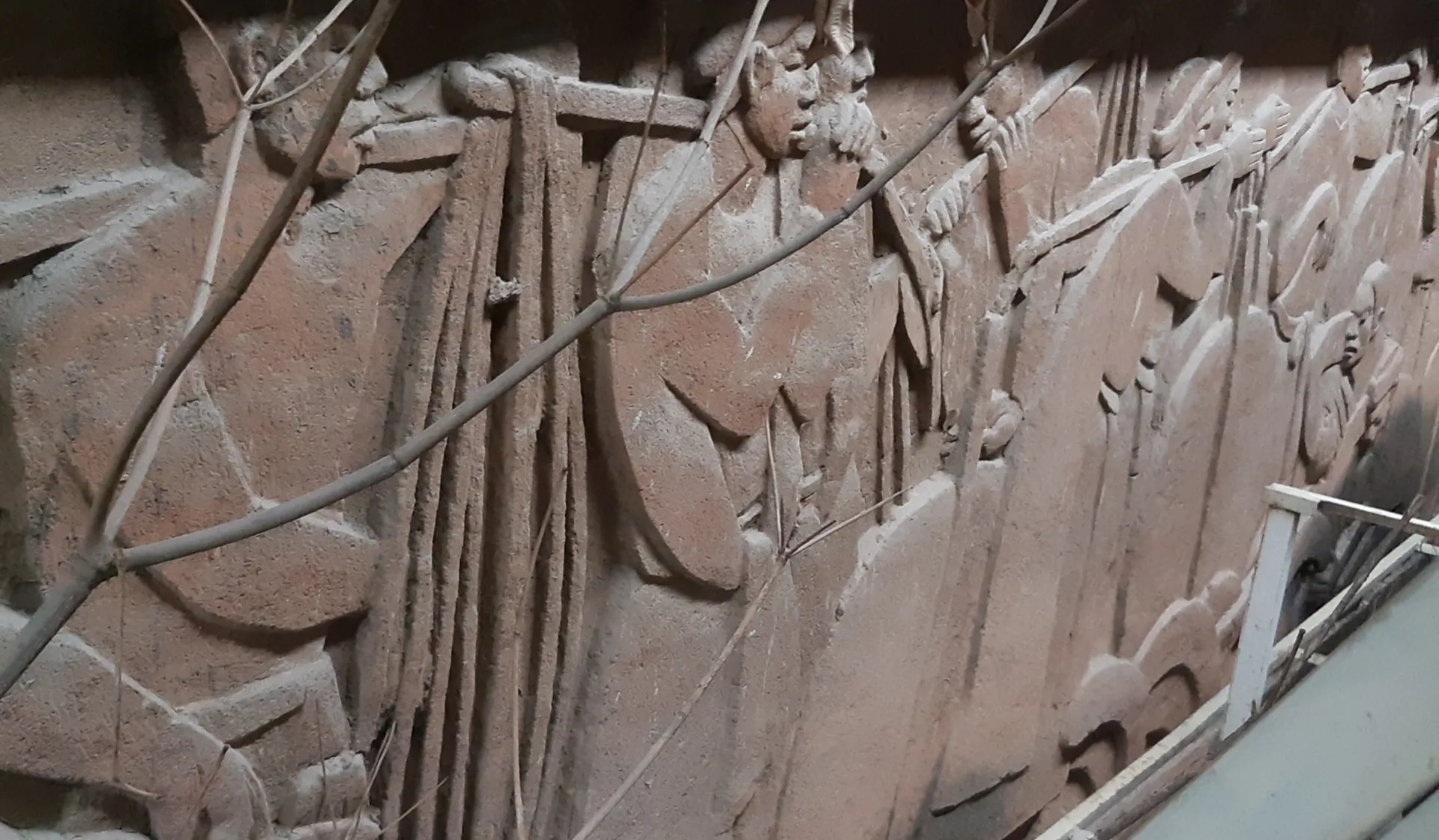
The enduring charm of the “Agriculture” relief. Photo: Pham Luc Museum
The 1931 Paris report highlights major contributions from three sculptors at the École des Beaux-Arts de l’Indochine. A large relief, created entirely in Hanoi, featured four panels by students Vu Cao Dam (Feudal Intellectuals and Mandarins), Le Tien Phuc (The Streets, the Merchants), and Georges Khanh (Agriculture and Fishery). Measuring two meters high and spanning 39 meters, these panels adorned the Grand Hall of the exposition and, as noted by Tardieu, “symbolized Indochina.”
The fate of the complete set remains uncertain. What is known is that Agriculture and Fishery were later installed on the outer wall of the Vietnam Fine Arts School on today’s Hang Long Street, where two empty spaces beside them correspond to the size and arrangement of the missing panels.

King Bao Dai’s visit to the Indochina College of Fine Arts in December 1933. Four bas-reliefs remain intact on the wall. File Photo
Dr. Pham Long notes that the earliest known photograph of the two surviving reliefs appears in a 1933 image capturing Director Victor Tardieu and faculty members welcoming Emperor Bao Dai at the school’s gate, now Tran Quoc Toan Street.
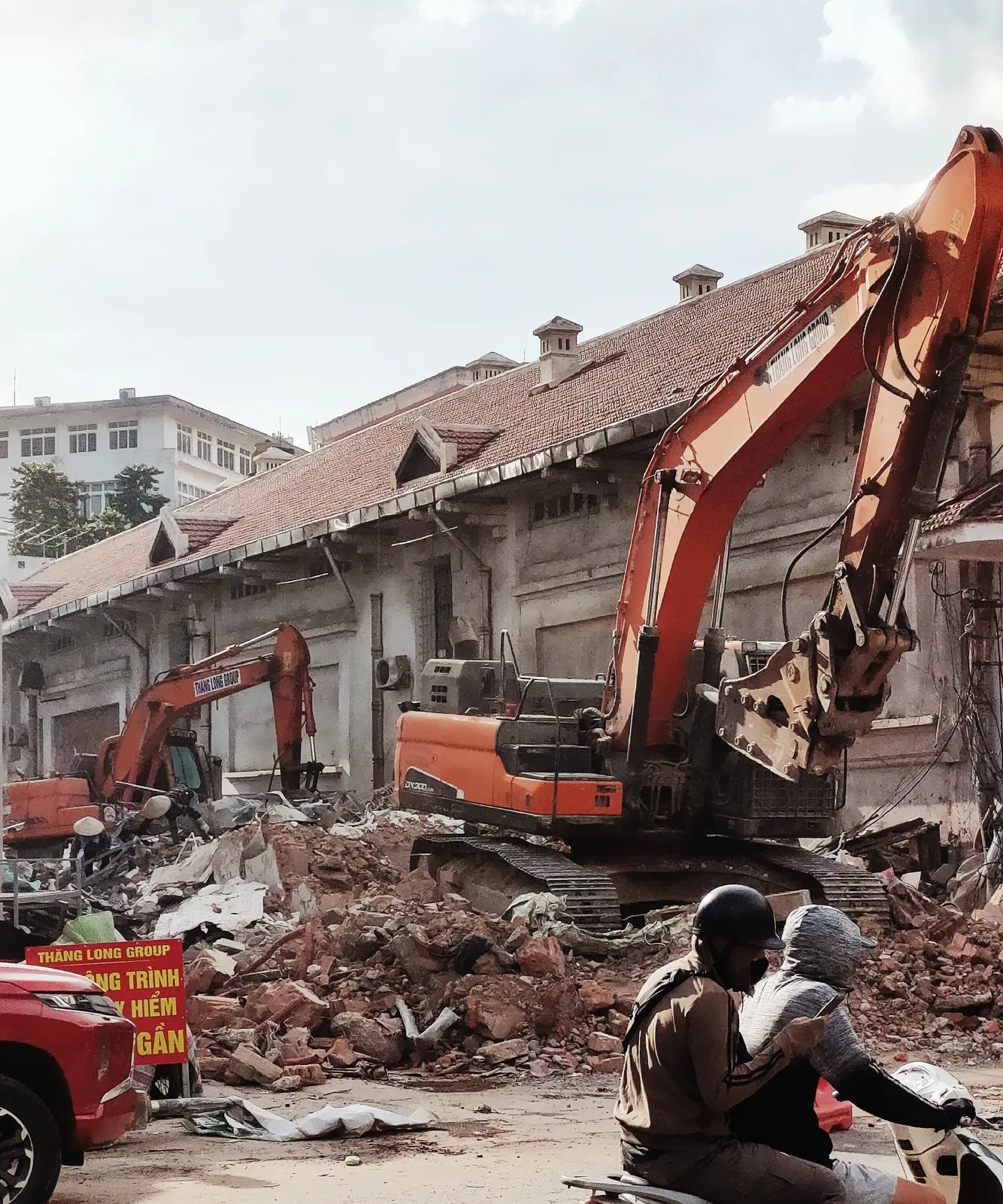
In the 1960s, the section of Tran Quoc Toan Street between Yet Kieu and Le Duan was transferred to the Ministry of Public Security. Now returned to the city and renamed Hang Long Street, the area once again opens to the public, showcasing the newly restored, nearly century-old reliefs that embody Vietnam’s enduring artistic heritage and the passage of time.
Sharing special heritage with the public
The currently opening of Hang Long Street unveils the treasures of the Fine Arts School of Indochina. Photo: Pham Dung
With significant artistic and historical value, the project “Restoring Two Outdoor Reliefs on Hang Long Street” has attracted strong interest from artists, historians and scholars across Vietnam’s fine arts community.
The initiative stems from extensive research by experts, including Dr. Pham Long, Dr. Tran Hau Yen The, painter-curator Nguyen The Son and a team led by sculptor Tran Quoc Thinh.
The restoration unfolded in several stages, beginning with assessment and condition surveys, followed by careful conservation that respected both the artistic and historical integrity of the works. The panels, depicting a farmer and a fisherman, belong to a broader thematic series symbolizing four key social roles in early 20th-century Indochina: the intellectual, the farmer, the worker and the fisherman.
Regarded as a milestone for Vietnam’s art community, the project fulfills the long-held hopes of generations of artists, sculptors, architects and cultural researchers.
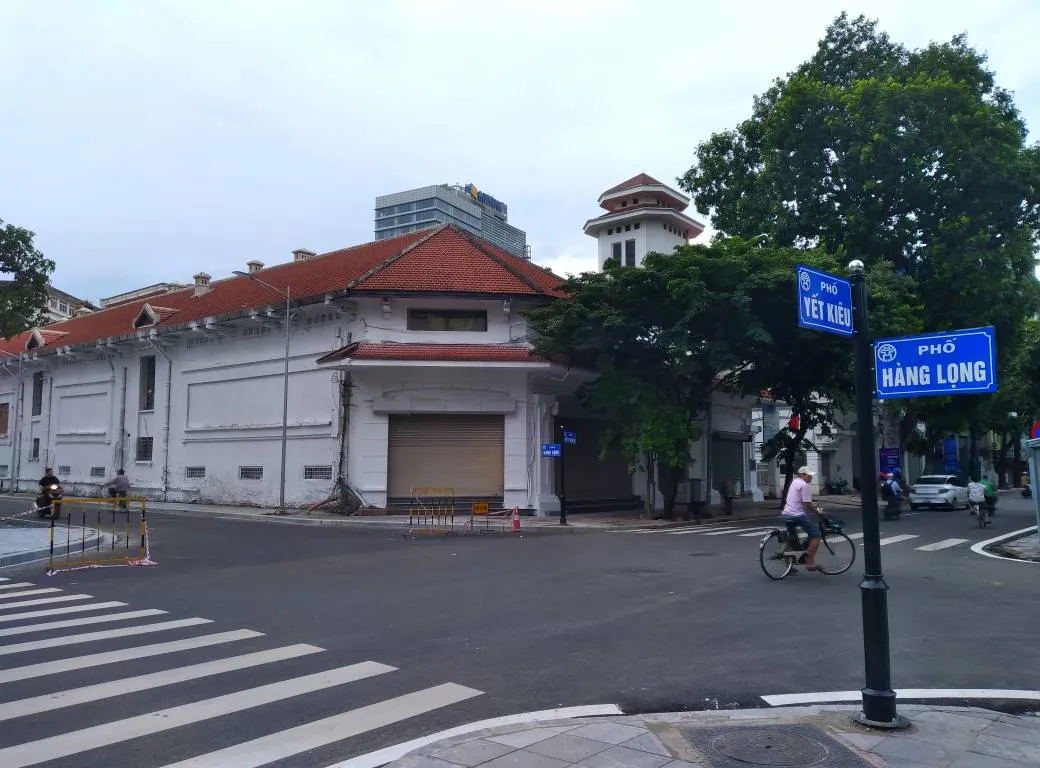
Today, Hang Long Street bears two missing reliefs: “Feudal Intellectuals and Mandarins” and “The Streets, the Merchants.”
Curator Nguyen The Son highlighted the project’s importance in reconnecting the public with early 20th-century Vietnamese art. “These works once stood proudly at a prestigious international exhibition. They offered Europe a glimpse of Vietnamese creativity, and even after nearly a century, their cultural value remains undeniable. It is time that value returns to public consciousness.”
A future for the forgotten panels
As part of the restoration effort, experts are exploring ways to recreate the two missing reliefs, "Feudal Intellectuals and Mandarins" and "The Streets, the Merchants", to complete the original set. While the fate of the originals remains uncertain, curator Nguyen The Son suggested that contemporary sculptors could be invited to create interpretive versions that honor the spirit of the lost works.
He affirmed that “It would be ideal to reunite all four original panels as they were meant to be. But if they remain lost, we can create new works that preserve their thematic unity, connecting the past with the present.”
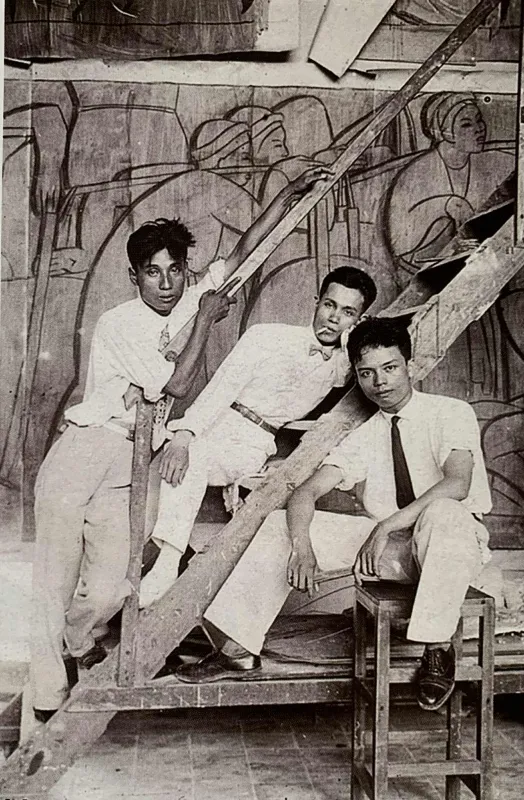
Former students of the Fine Arts School of Indochina, namely (from left) Le Tien Phuc, Georges Khanh and Vu Cao Dam, photographed on June 13, 1930 next to the relief sketches preparing for the 1931 colonial exhibition. File Photo
Dr. Pham Long, who has spent years researching the reliefs, said: “This project is not just about restoring old art. It contributes meaningfully to Hanoi’s vision of becoming a creative city of cultural industries and a capital of peace.”
Beyond its artistic and historical value, the restoration underscores the importance of safeguarding cultural identity amid rapid urbanization. It reaffirms Hanoi not only as a city of heritage but also as a modern cultural center where history is preserved, celebrated and shared.