Savor mountain flavors at Hanoi Spring Fair
Regional dishes from Vietnam’s Northwest, typically found in remote highland markets, are being served at the Hanoi Spring Fair, bringing the food traditions of ethnic minority communities to the capital for a limited time.
THE HANOI TIMES — Visitors slow their steps as steam rises from rows of metal pots at Hanoi Spring Fair, carrying the scent of sticky rice, ginger and star anise, before quietly lining up at stalls offering mountain specialties.

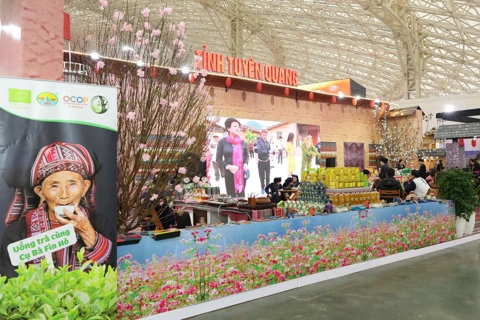
The Spring Fair 2026, including its gastronomy space, attracts large crowds of visitors. Photo: Dan Tri
The scene feels closer to a highland market than an urban fair, as flavors from Vietnam’s northern mountains are brought together on the outskirts of the capital, giving city residents rare access to dishes usually found far from Hanoi.
Held until February 13 at the Vietnam Exposition Center in Dong Anh Commune, the fair showcases culinary traditions shaped by harsh climates, rugged terrain and ethnic minority cultures, bringing once-distant foods within easy reach.
The Hanoi Times finds that together these dishes offer a vivid glimpse into the Northwest’s food culture, where taste and technique reflect both the landscape and the people who live there.
Trau gac bep: Smoked buffalo meat from the hearth
Among the Northwest’s most recognizable specialties is trau gac bep (smoked buffalo meat) preserved in the kitchen, reflecting a food culture shaped by a climate well suited to buffalo raising.
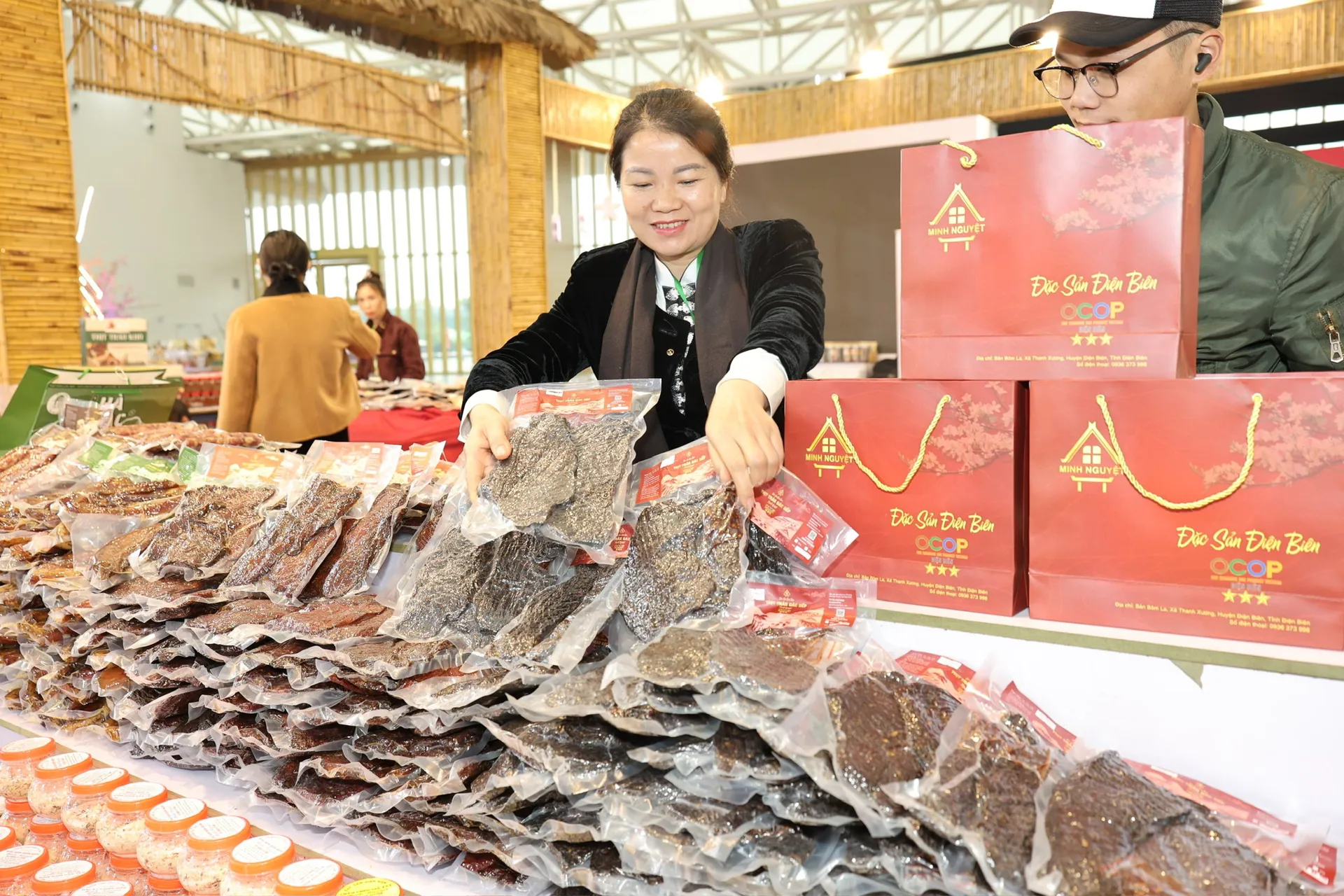
Smoked buffalo meat, typically found in the northern highlands, is available at the Hanoi Spring Fair. Photo: Huy Hoang
The dish emerged from necessity. In earlier times, harsh winters and difficult travel made fresh food unreliable, prompting communities to preserve meat for long-term use. Lean cuts from the buffalo’s muscles are sliced along the grain and seasoned with salt, ginger, chili and mac khen (a native forest pepper).
The meat is then hung above the kitchen fire, where it slowly dries and absorbs smoke during daily cooking. After several months, it develops a dense texture and deep flavor. Typically torn into fibers by hand, trau gac bep is eaten as a snack with rice wine or beer and is often served to guests as a gesture of hospitality.
Thang co: A mountain dish that divides opinion
In markets across the Northwest, a distinctive smell often announces itself before the food comes into view. Rising from large, continuously boiling pots, thang co is difficult to ignore- and, for some visitors, difficult to approach.
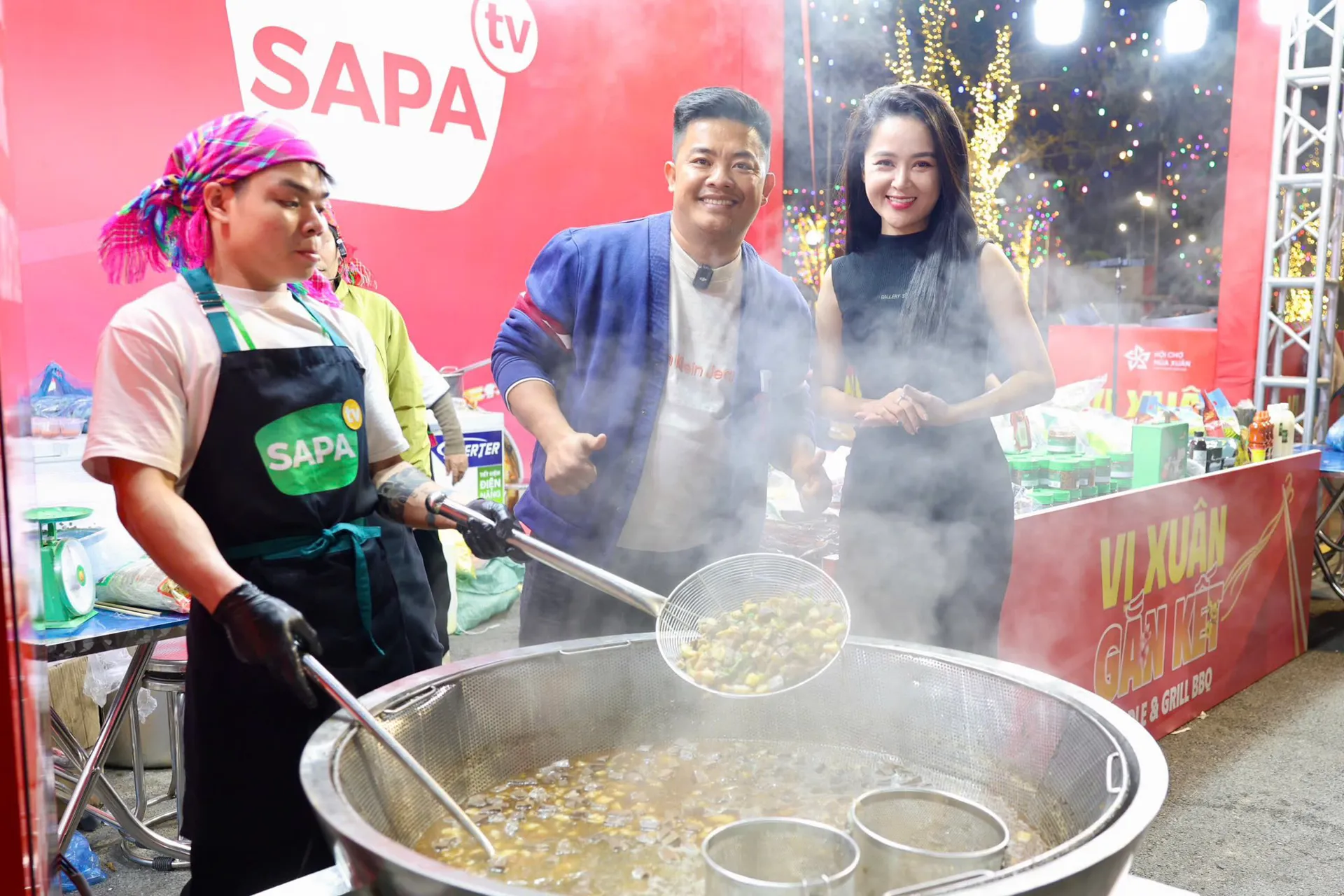
Piping hot thang co, a traditional stew from Bac Ha, is served at the Hanoi Spring Fair and is especially suited to cold weather.
Yet for those interested in regional foodways, thang co (traditionally made with horse meat) is essential. If pho represents Hanoi, thang co is widely regarded as the signature dish of the northern mountains.
The dish dates back more than 200 years among the H’Mong in Bac Ha Commune, Lao Cai Province, before spreading to neighboring areas. According to resident Giang Seo Sau, its name may come from a H’Mong phrase referring to a communal cooking pot.
Traditionally, thang co used horse meat exclusively, with all parts of the animal cleaned, chopped and stewed together. It was prepared only on market days, during festivals or for major community gatherings.
Over time, the dish has evolved. Horse meat is now often replaced or combined with beef, buffalo, pork or goat, while seasoning has become more refined, blending salt, ginger, cardamom, star anise and grilled lime leaves. The strong aroma, once misunderstood, comes from the interaction of spices and animal parts rather than from preparation methods.
Served constantly boiling, thang co is eaten hot and typically paired with local corn wine. Those who try it often find the initial scent quickly gives way to a layered mix of sweet, sour, salty and gentle heat.
Xoi ngu sac: Color, meaning and craft
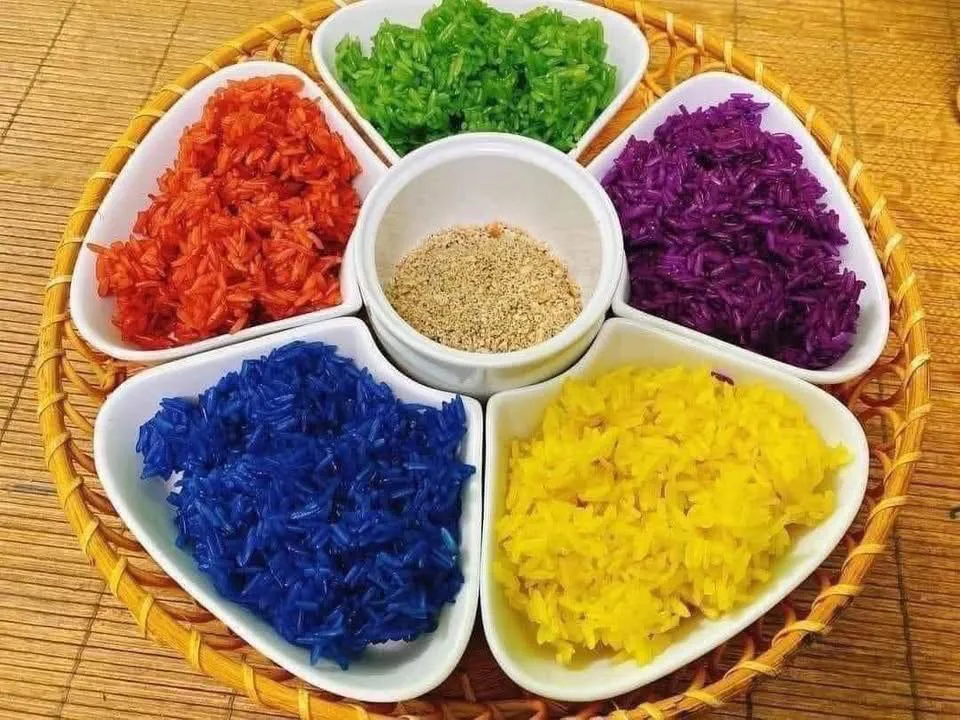
Five-colored sticky rice, fragrant and pleasantly chewy.
Xoi ngu sac, or five-colored sticky rice, is closely tied to ceremonial life in the Northwest. Once reserved for festivals, weddings and important rituals, it now appears more often in daily meals, while retaining its symbolic meaning.
Its five colors reflect yin and yang and the five elements of Eastern philosophy, expressing harmony and solidarity among ethnic minority communities. Shades vary by region, but typically include yellow, green or purple, red, white and black.
Each color carries a message: yellow symbolizes earth and prosperity; green or purple represents homeland, hope and loyalty; red stands for fire and ambition; white signifies purity; and black reflects water and life’s hardships. These tones are also seen in traditional ethnic dress.
The rice is soaked, divided and dyed with extracts from wild leaves, then steamed separately to preserve both color and texture. Among the Tay people, evenly colored rice signals skill and care, while serving xoi ngu sac to guests is a subtle gesture of hospitality.
Com lam: Rice cooked in bamboo
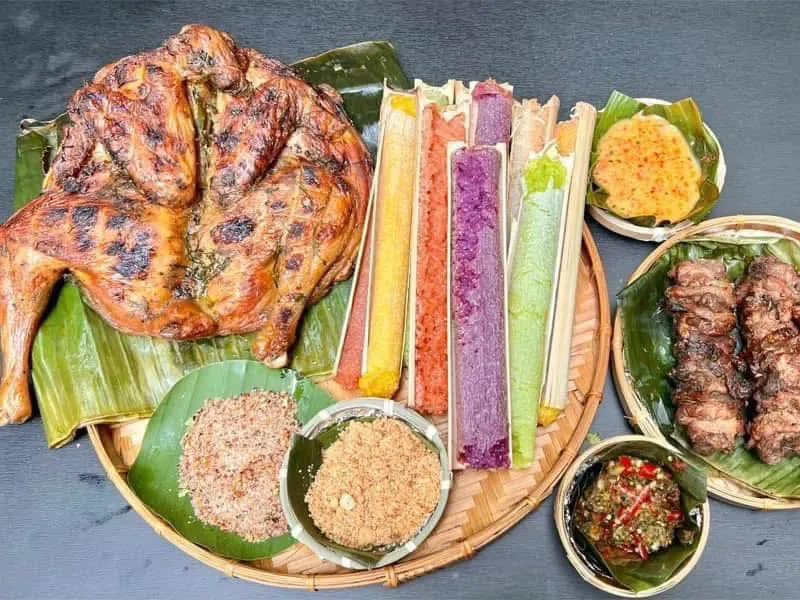
Bamboo-cooked rice is typically paired with sesame salt and grilled chicken or fish.
In mountain villages and markets, com lam (bamboo-tube rice) is a familiar sight, believed to have originated among the Thai ethnic group and remaining central to highland life.
While some legends link the dish to spiritual practices, its origins are largely practical. In rugged terrain where carrying cooking pots was difficult, bamboo and stream water became natural tools.
As a result, young bamboo is used to hold sticky rice, which is sealed with banana leaves and roasted slowly over a fire, with the tube turned to ensure even cooking. The bamboo’s natural moisture steams the rice and adds a light forest aroma.
The outcome is soft, gently sweet rice infused with the scent of bamboo, reflecting how environment and necessity have shaped generations of highland cooking.