Hanoi
Slow university relocation burdens Hanoi's infrastructure
In 2009, the Vietnamese government approved the plan to move universities and colleges out of Hanoi’s downtown by 2025, with a vision to 2050.
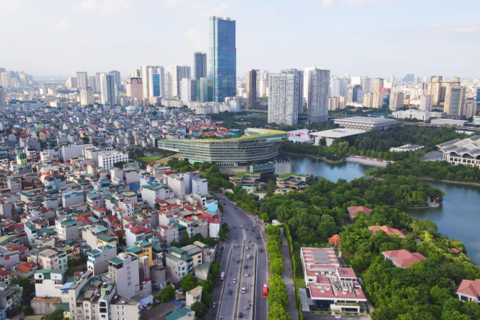
Slow university relocation away from Hanoi's inner city is worsening traffic congestion and environmental pollution, and adds pressure on the city's infrastructure, according to experts.
Currently, Hanoi has 12 universities and colleges subject to being relocated, including Foreign Trade University, Trade Union University, University of Construction, Hanoi Open University, among others.
However, after 10 years of implementation, only Public Health University has been moved out of Giang Vo street, Ba Dinh district.
University relocation is no less urgent than removing polluted industrial facilities in Hanoi away from residential areas.
Traffic congestion in Hanoi has worsened in recent years due to the fast growing population.
Captain Dinh Tien Vu, deputy head of Traffic Police Team No.3 under the Hanoi Department of Traffic Police said that increasing means of transport and the growing number of university students also cause traffic jams.
In the summer, when students from outer provinces return to their homes, congestion decreases significantly, Vu said.
Ten-year policy is still on paper
In 2009, the Vietnamese government approved the plan to move universities and colleges out of Hanoi’s downtown by 2025. One of the goals of the plan is to reduce student density and the number of higher educational institutions downtown.
Accordingly, from 2010 to 2021, the Hanoi Department of Planning and Architecture and the Ministry of Construction would relocate 23 educational institutions, including 12 universities and colleges and 11 other higher educational institutions.
These educational institutions will be relocated in satellite urban areas, such as Gia Lam (with about 250 hectares), Soc Son (600 hectares), Son Tay (300 hectares), Hoa Lac (1,200 hectares), Phu Xuyen (100 hectares), among others.
The Vietnamese government plans to build university townships in a total area of 3,500 – 4,500 hectares in seven suburban districts of Gia Lam, Soc Son, Son Tay, Thach That, Chuong My and Phu Xuyen to house some 40,000 – 51,000 students.
Dr. Dao Ngoc Nghiem, vice chairman of the Hanoi Urban Planning and Development Association, said the higher educational institutions, while unclear of their new locations, still conduct massive enrollment, leading to increased pressure on Hanoi’s transportation infrastructure as a large number of students keep moving into the city’s downtown.
"To relocate universities and colleges out of Hanoi’s center, we must enforce the management and administration of regional zoning, especially in the capital’s area," Nghiem emphasized.
Echoing Nghiem, other experts agreed that relocating educational institutions from downtown is a right policy for their own development in particular and the capital of Hanoi in general.
Currently, Hanoi has 12 universities and colleges subject to being relocated, including Foreign Trade University, Trade Union University, University of Construction, Hanoi Open University, among others.
However, after 10 years of implementation, only Public Health University has been moved out of Giang Vo street, Ba Dinh district.

University of Natural Sciences and University of Social Sciences and Humanities on Nguyen Trai street, Thanh Xuan district, Hanoi. Photo: Pham Hung
|
Traffic congestion in Hanoi has worsened in recent years due to the fast growing population.
Captain Dinh Tien Vu, deputy head of Traffic Police Team No.3 under the Hanoi Department of Traffic Police said that increasing means of transport and the growing number of university students also cause traffic jams.
In the summer, when students from outer provinces return to their homes, congestion decreases significantly, Vu said.
Ten-year policy is still on paper
In 2009, the Vietnamese government approved the plan to move universities and colleges out of Hanoi’s downtown by 2025. One of the goals of the plan is to reduce student density and the number of higher educational institutions downtown.
Accordingly, from 2010 to 2021, the Hanoi Department of Planning and Architecture and the Ministry of Construction would relocate 23 educational institutions, including 12 universities and colleges and 11 other higher educational institutions.
These educational institutions will be relocated in satellite urban areas, such as Gia Lam (with about 250 hectares), Soc Son (600 hectares), Son Tay (300 hectares), Hoa Lac (1,200 hectares), Phu Xuyen (100 hectares), among others.
The Vietnamese government plans to build university townships in a total area of 3,500 – 4,500 hectares in seven suburban districts of Gia Lam, Soc Son, Son Tay, Thach That, Chuong My and Phu Xuyen to house some 40,000 – 51,000 students.
Dr. Dao Ngoc Nghiem, vice chairman of the Hanoi Urban Planning and Development Association, said the higher educational institutions, while unclear of their new locations, still conduct massive enrollment, leading to increased pressure on Hanoi’s transportation infrastructure as a large number of students keep moving into the city’s downtown.
"To relocate universities and colleges out of Hanoi’s center, we must enforce the management and administration of regional zoning, especially in the capital’s area," Nghiem emphasized.
Echoing Nghiem, other experts agreed that relocating educational institutions from downtown is a right policy for their own development in particular and the capital of Hanoi in general.