South Korea’s SK Group eyes green hydrogen project in Vietnam
Such a project utilizes natural gas to produce green hydrogen, with a key focus on using depleted gas fields for permanent storage of CO2 emissions during production.
The SK Group aims to implement a model in Vietnam that utilizes natural gas to produce green hydrogen, with CO2 emissions permanently stored in depleted gas fields.
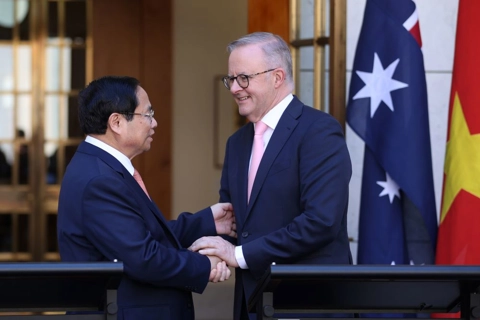
| Prime Minister Pham Minh Chinh during a meeting with SK Group's leaders in Australia. Photos: Nhat Bac |
.jpg)
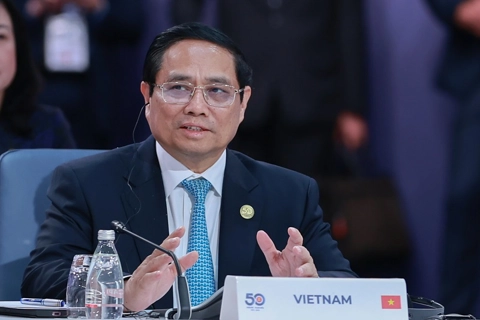
The move was revealed during a meeting between Prime Minister Pham Minh Chinh and executives of the SK Group in Canberra, Australia, during the Vietnamese Government leader’s visit to the country after attending the ASEAN-Australia Special Summit.
SK is one of the largest diversified business groups in South Korea and a major investor in mergers and acquisitions (M&A) deals in Vietnam.
Introducing the Prime Minister to the carbon-neutral LNG value chain, SK's National Director in Australia mentioned that the group has various cross-border projects underway in countries such as South Korea, Australia, and Timor-Leste. These projects utilize natural gas to produce green hydrogen, with a key focus on using depleted gas fields for permanent CO2 storage during production. SK affirms that this project chain can generate clean energy by capturing 98% of emissions.
The SK leadership expressed their desire to implement this model in Vietnam. While the model typically involves the participation of three countries, SK believes that, given Vietnam's advantages, it could be fully realized in one country.
Prime Minister Pham Minh Chinh praised SK's proposal to invest in green hydrogen production projects in Vietnam. He requested SK to provide additional information on the cost of LNG extraction for the project chain in Australia.
After receiving the response, Prime Minister Chinh appreciated the proposed cost and suggested that the group work with the Ministry of Planning and Investment and other relevant agencies to accelerate project preparation. He supported SK in establishing a strategic partnership with the Vietnam Oil and Gas Group (PVN) and encouraged fair competition with other partners.
| The Prime Minister and CEO of Sn Rice Paul Serra. |
.jpg)
Later in the day, the Prime Minister met with Paul Serra, CEO of SunRice, Australia's largest rice producer and trader.
Chinh expressed his hope that SunRice's network and influence would help connect Vietnamese partners with Australian counterparts to enhance agricultural cooperation between the two countries.
He wished SunRice to continue expanding investments and supporting the development of the rice supply chain in Vietnam, transfer technology, cooperate with Vietnamese businesses, and work directly with farmers to stabilize input and output.
The construction of storage facilities is also encouraged to contribute to improving production efficiency, value-added, and the quality of Vietnamese rice products, meeting consumer demands, and participating more deeply in the global supply chain, especially in the halal food industry.
Prime Minister Pham Minh Chinh suggested that SunRice work directly with the Ministry of Agriculture and Rural Development of Vietnam to find partners and implement specific cooperation projects. These projects should bring practical benefits to both sides, especially in participating in the 1 million-hectare high-quality emission rice program in the Mekong Delta.
In addition to rice, the Prime Minister also recommended SunRice to explore expanding its operations to various agricultural products in different regions of Vietnam, such as fruits and aquaculture.
The group should make long-term, stable, and sustainable investments in the spirit of balanced benefits and risk sharing, he said.
SunRice, established in 1950, currently holds around 90% of the Australian rice market share, with over 30 brands and more than 2,000 employees in 50 countries. In 2023, the group's revenue reached approximately $1.64 billion.
In 2008, the group acquired a controlling stake in the rice processing plant in Lap Vo, Dong Thap Province, with a processing capacity of about 260,000 tons of paddy per year. Since 2022, SunRice has been collaborating with the Australian Centre for International Agricultural Research (ACIAR) on the project "Developing a high-quality rice supply chain in the Mekong Delta" with the goal of developing high-yield and high-quality varieties for the international consumer market.
| The Prime Minister and Chairman of EQ Resource Group Oliver Kleinhempel. |
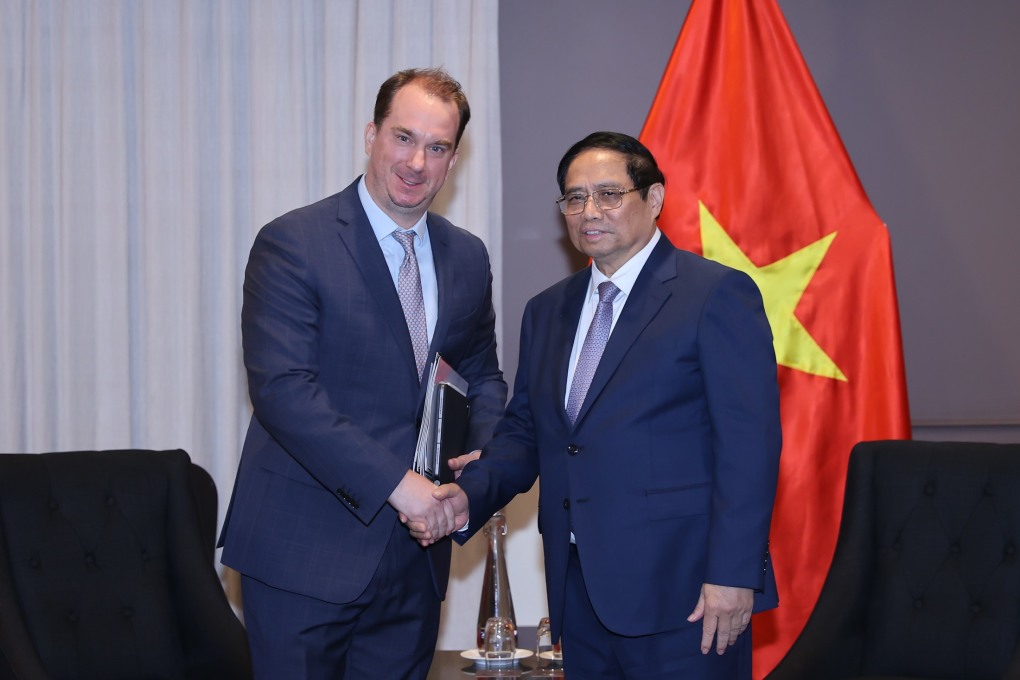
That same afternoon, the Prime Minister met with the leaders of two Australian mining groups, including Ian Jeffrey Gandel, Chairman of ASM Group, and Oliver Kleinhempel, Chairman of EQ Resources Group.
The leaders of these groups expressed their interest in exploring investment directions and opportunities for cooperative development of the supply chain for certain types of minerals in Vietnam.
Chinh emphasized that developing the mineral industry is a strategic task that requires resources and modern technology to fully unleash existing potential. Mineral projects need to be implemented with advanced technology, deep processing, not selling raw ore, adding value to minerals, and integrating Vietnamese enterprises more deeply into the global supply chain while protecting the environment.
"The Government is committed to creating favorable conditions for foreign businesses to invest efficiently and sustainably in Vietnam," he said.