Hanoi
Splendid gates mark ancient West Lake villages
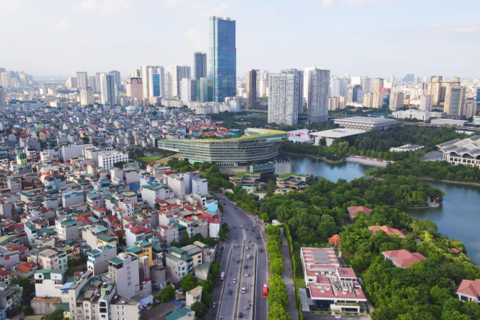
Located in Tay Ho district and running along the West Lake`s southern bank, Thuy Khue street has preserved its typical rural Vietnamese features of ancient pagodas and village gates.
Previously, the villages around Thuy Khue street were collectively referred to as Ke Buoi. Rapid urbanisation in recent times has brought many changes to the city, and Ke Buoi is no exception. The whole area has put on a modern coat, with high-rise buildings and villas continuing to replace old village houses and gardens.
However, the days of old are still preserved in the village gates which stand among the modern houses dotting the street. The moss-covered roofs of the temples and communal houses, together with the rough trunks and foliage of horse mango and Bodhi trees, have produced the ancient look of Thuy Khue street.
If you take a ride along this street, starting at Buoi Market, the first village gate will appear on your left. Thuy Khue street has the largest number of village gates in Hanoi, clustered mainly on the section of the street near Buoi Market and Lac Long Quan street. The gates are spaced a few metres apart in some areas, while some others are found dozens of metres away.
Interestingly, none of the gates look alike. Some have been recently restored, while others have preserved their ancient look and faded colours.
Despite their differences, the village gates on Thuy Khue street have created a unique rural space in the big city. Each has been given a short but intimate name, such as Gieng, Hau or Chua. These gates bear the history of generations of residents, stretching back thousands of years. Some of the gates and the villages they lead to are up to 10 centuries old, such as the villages of Yen Thai, An Tho and Dong Xa.
On each gate, on either side, one can find two columns of engraved phrases in Han script.
One of the most beautiful gates in Hanoi leads to Yen Thai village, where the ancient red brick-paved path is still preserved and kept clean. The 200m path was built with funds donated by villager Thong Thao and has been kept in its original condition by the other villagers, despite the introduction of electricity and water systems in the village in recent years.
Another special gate on Thuy Khue street is Nghe, shaded by a large ancient banyan tree. The gate was built in the traditional style, with one main door, two secondary doors (which are now concealed) and a roof. This image of a mossy gate next to an ancient banyan tree is intrinsically Vietnamese, arousing a strong sense of nostalgia and familiarity in Vietnamese people around the world.
According to the elderly, the doors of all the village gates on Thuy Khue street were once opened at the crack of dawn to announce the start of a new day and would be closed at dusk.
Many of the gates have been restored and embellished; for example, Hau Gate was restored in 1998, and Ho Khau Gate was embellished and became a site for a marketplace every morning.
Behind each village gate stands an alley gate. Although they are much smaller, alley gates still exist to clearly demarcate the borders of different hamlets.
Guarded by these traditional gates to each village, the original rural lifestyle, perfectly preserved by the elderly for years, continues on unabated.
"Everyone recognizes the name of my hometown when I tell them that I'm from Buoi village," 80-year-old Nguyen Van Tai said proudly.
"Native Buoi villagers have a unique soft voice, which is different from the voice of a native Hanoian," he continued.
"Speaking of Thuy Khue street, people often think about Ke Buoi and, especially, Thuy Khue village. The village was in former Thuy Chuong precinct – one of 36 precincts of the Thang Long Citadel (presently Hanoi) during the Le Dynasty (1427-1789), which was famous for its weaving and wine producing trades. My family also used to produce lotus-scented wine for generations," Tai said.
Although they have never been officially recognised as national relics, the village gates hold a special position in the hearts of villagers. No matter where they go, the villagers of Ke Buoi are always welcomed by the village gates when they return, and they have always felt very proud of this part of their national heritage.
However, the days of old are still preserved in the village gates which stand among the modern houses dotting the street. The moss-covered roofs of the temples and communal houses, together with the rough trunks and foliage of horse mango and Bodhi trees, have produced the ancient look of Thuy Khue street.
If you take a ride along this street, starting at Buoi Market, the first village gate will appear on your left. Thuy Khue street has the largest number of village gates in Hanoi, clustered mainly on the section of the street near Buoi Market and Lac Long Quan street. The gates are spaced a few metres apart in some areas, while some others are found dozens of metres away.
Interestingly, none of the gates look alike. Some have been recently restored, while others have preserved their ancient look and faded colours.
Despite their differences, the village gates on Thuy Khue street have created a unique rural space in the big city. Each has been given a short but intimate name, such as Gieng, Hau or Chua. These gates bear the history of generations of residents, stretching back thousands of years. Some of the gates and the villages they lead to are up to 10 centuries old, such as the villages of Yen Thai, An Tho and Dong Xa.
On each gate, on either side, one can find two columns of engraved phrases in Han script.
One of the most beautiful gates in Hanoi leads to Yen Thai village, where the ancient red brick-paved path is still preserved and kept clean. The 200m path was built with funds donated by villager Thong Thao and has been kept in its original condition by the other villagers, despite the introduction of electricity and water systems in the village in recent years.
Another special gate on Thuy Khue street is Nghe, shaded by a large ancient banyan tree. The gate was built in the traditional style, with one main door, two secondary doors (which are now concealed) and a roof. This image of a mossy gate next to an ancient banyan tree is intrinsically Vietnamese, arousing a strong sense of nostalgia and familiarity in Vietnamese people around the world.
According to the elderly, the doors of all the village gates on Thuy Khue street were once opened at the crack of dawn to announce the start of a new day and would be closed at dusk.
Many of the gates have been restored and embellished; for example, Hau Gate was restored in 1998, and Ho Khau Gate was embellished and became a site for a marketplace every morning.

Voi Phuc (Kneeling Elephants) Communal House (Dinh) in Thuy Khue Street
|
Guarded by these traditional gates to each village, the original rural lifestyle, perfectly preserved by the elderly for years, continues on unabated.
"Everyone recognizes the name of my hometown when I tell them that I'm from Buoi village," 80-year-old Nguyen Van Tai said proudly.
"Native Buoi villagers have a unique soft voice, which is different from the voice of a native Hanoian," he continued.
"Speaking of Thuy Khue street, people often think about Ke Buoi and, especially, Thuy Khue village. The village was in former Thuy Chuong precinct – one of 36 precincts of the Thang Long Citadel (presently Hanoi) during the Le Dynasty (1427-1789), which was famous for its weaving and wine producing trades. My family also used to produce lotus-scented wine for generations," Tai said.
Although they have never been officially recognised as national relics, the village gates hold a special position in the hearts of villagers. No matter where they go, the villagers of Ke Buoi are always welcomed by the village gates when they return, and they have always felt very proud of this part of their national heritage.