Surge in food poisoning calls for urgent safety measures
Recently, there have been several food poisoning outbreaks across the country, mainly from food sold to children from stalls outside school gates, causing concern and anxiety among parents.
There have been several recent cases of food poisoning, which have been attributed to the consumption of food from eateries and street vendors in the vicinity of schools. These incidents included one case in Ho Chi Minh City, one in the southern province of Lam Dong, and two in Nha Trang City in the southern province of Khanh Hoa, where one student died.
In response, Hanoi has implemented the "Hygiene Control of Food Sold by Street Vendors around Schools" model in Trang Tien and Hang Trong wards (Hoan Kiem District).
| Students eat at stalls near the school. Photos: Tran Thao |
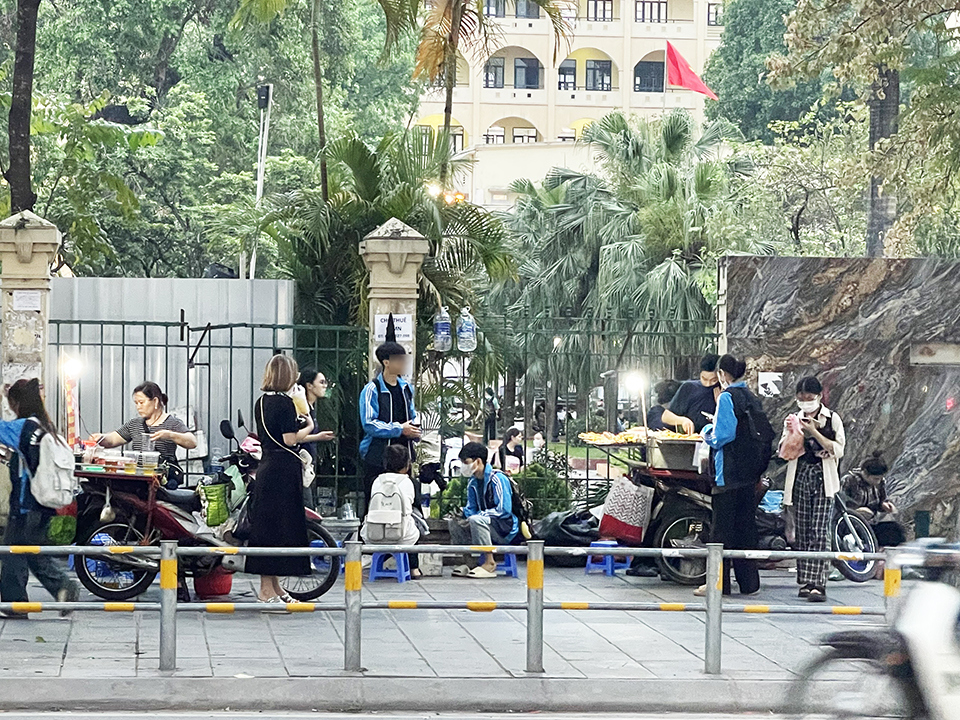
Nguyen Quoc Hoan, Deputy Chairman of the Hoan Kiem District People's Committee, said the model would be applied to food and street vendors around school gates, especially Tran Quoc Toan Primary School, Trang An Primary School, Thang Tam Kindergarten, Hoan Kiem Secondary School, Tran Phu High School and some streets including Nha Chung, Nha Tho, Ly Quoc Su, Quang Trung and Nguyen Khac Can.
Pham Thi Diem, Deputy Chairwoman of the Ba Dinh District People's Committee, said that to ensure effective implementation of the model, the district has asked educational institutions to strengthen communication with students and parents on food safety and hygiene.
She added that the district authorities are focusing on inspecting and taking strict action against food and street vendors who do not comply with food safety and hygiene regulations, as well as preventing summer diseases in public and private educational institutions.
"Ba Dinh has nearly 50,000 students studying in the district's schools. No cases of food poisoning have been reported in recent years," Diem said.
Hanoi is the first among Vietnam's provinces and cities to implement such a model to control food safety and trace the origin of food in restaurants and street vendors, said Dang Thanh Phong, Head of the Hanoi Food Sub-Department, adding that this model also raises awareness among students and parents about food safety and hygiene by recommending qualified and safe food outlets.
"If the implementation is successful, the city will evaluate the model for further expansion," he said.
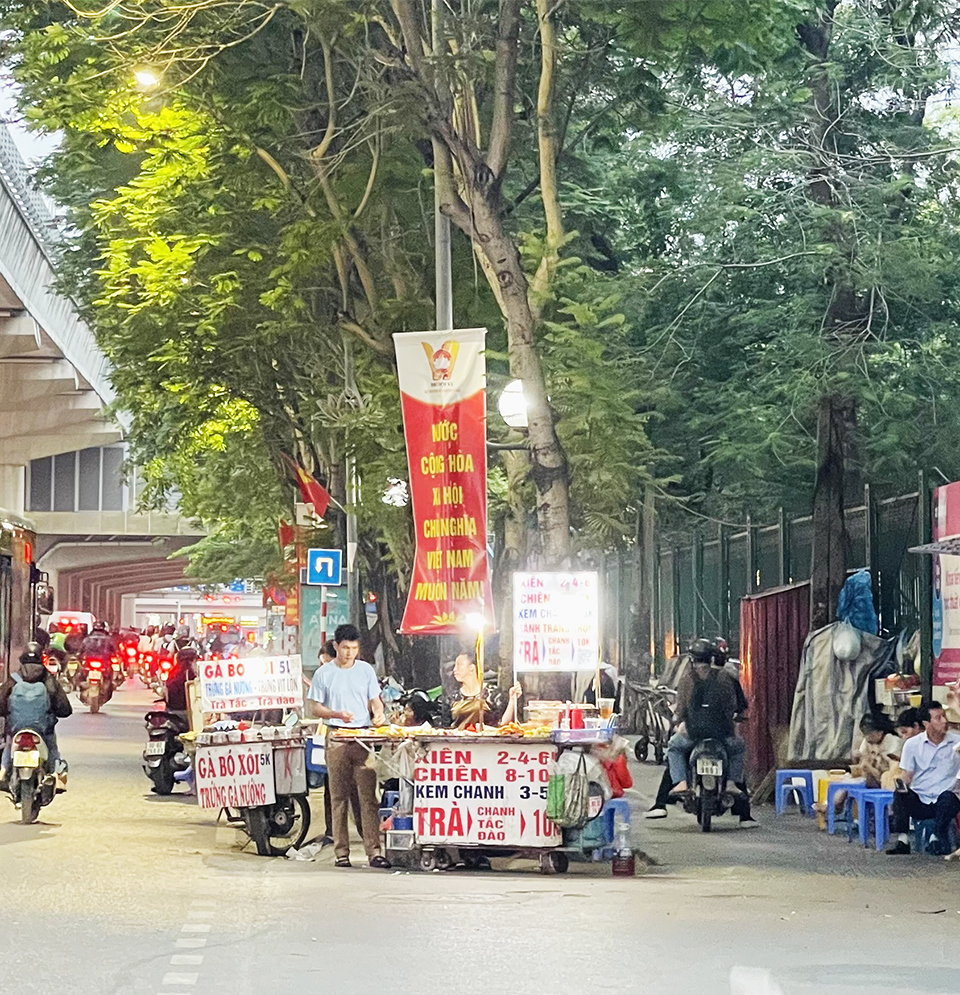
| A food stall where street vendors operate without meeting food safety and hygiene standards. |
According to the Ministry of Health (MoH), there were 16 cases of food poisoning nationwide in the first quarter of 2024, resulting in three deaths and 659 people being affected (almost three times more than in the same period last year).
The recent back-to-back food poisoning outbreaks are due to the hot weather, which favors the growth of disease-causing bacteria, especially those that cause gastrointestinal illness, the ministry said.
The problem is further exacerbated by inadequate processing and storage of food ingredients and the failure of certain food production and processing facilities to comply with food safety and hygiene regulations.
Nguyen Hung Long, Deputy Director of the Food Safety Department under the Ministry of Health, has raised serious concerns about food safety in Nha Trang, a beach city in Khanh Hoa Province. Since the start of 2024, the city has reported five food poisoning cases, with a troubling four of these incidents linked to food sold near schools. One of these cases tragically resulted in a fatality.
This alarming issue extends beyond Nha Trang; across the country, food safety around schools remains a critical problem. The presence of food vendors close to educational institutions poses risks for students, who may be unaware of unsafe food practices.
The rising number of food poisoning incidents underscores the urgent need for stricter food safety regulations and enforcement, especially in areas frequented by children. Authorities must enhance inspections and implement robust strategies to ensure that food sold near schools adheres to safety standards. Addressing these concerns is vital for safeguarding the health and well-being of students and creating a safer food environment in educational settings nationwide.
Strengthening inspection
To ensure food safety and prevent food poisoning, the MoH's Vietnam Food Administration called on relevant authorities and localities to strengthen inspection and supervision of food safety and hygiene.
This includes a focus on ready-to-eat meal processing plants, school canteens in industrial areas, schools, food vendors and street vendors, and bottled and packaged drinking water.
The agency also said tough action was needed, including the suspension of businesses that fail to meet food safety requirements.
In addition, the agency promotes transparency by publicly disclosing the results of investigations into violations committed by organizations and individuals involved in food production and trade. This serves as a timely warning to the community and fosters accountability.
In addition, the health sector is advising parents to be more cautious when buying food for their children before sending them to school.
The current hot weather exacerbates the problem, creating optimal conditions for harmful bacteria to thrive and significantly increasing the risk of gastrointestinal infections due to food poisoning.
Associate Professor Dr. Truong Tuyet Mai, Deputy Director of the National Institute of Nutrition, highlights the immediate danger of consuming unsafe food, noting that the preservatives, additives, and colorings in items sold near schools often lack safety guarantees. These substances pose long-term health risks to students.
Dr. Nguyen Trong Hung, Head of the Adult Nutrition Counselling Department at the National Institute of Nutrition, warns that food of unclear origin can cause acute symptoms such as abdominal pain, diarrhea, and food poisoning. Long-term consumption can disrupt metabolic processes and increase the risk of chronic diseases like cardiovascular issues, diabetes, and obesity. Additionally, chemical residues, pesticides, and growth hormones in food can accumulate in the body and potentially lead to cancer.
Local experts also point out that many street food items are high in salt, sugar, and unhealthy fats, which can negatively impact students' physical development. To address these risks, authorities must implement more rigorous inspections and enforce regulations strictly. Furthermore, healthcare professionals emphasize the importance of educating families about safe food practices.