Temple of Literature inspired paintings on display
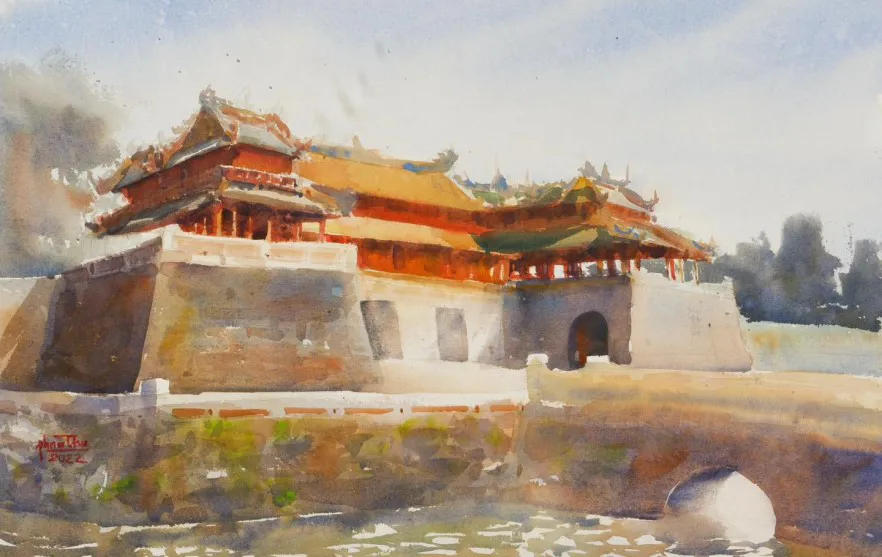
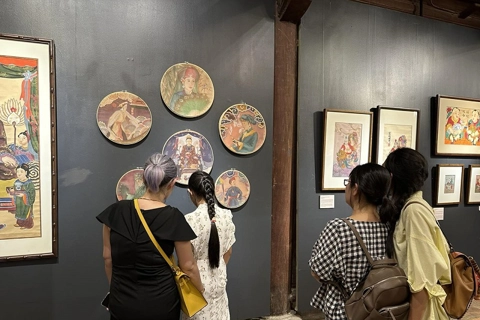
Watercolors of the Temple of Literature are among 50 paintings on display in Ho Chi Minh City to raise funds for poor children.
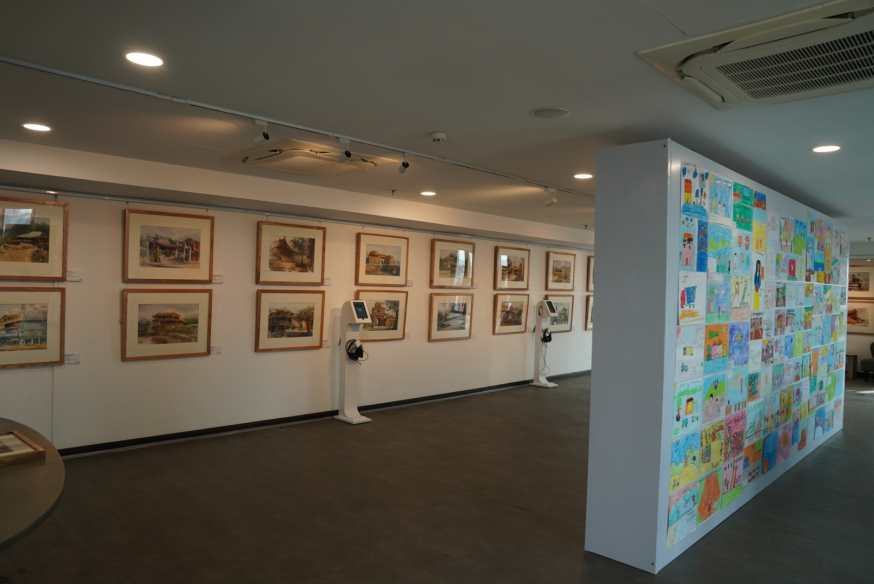
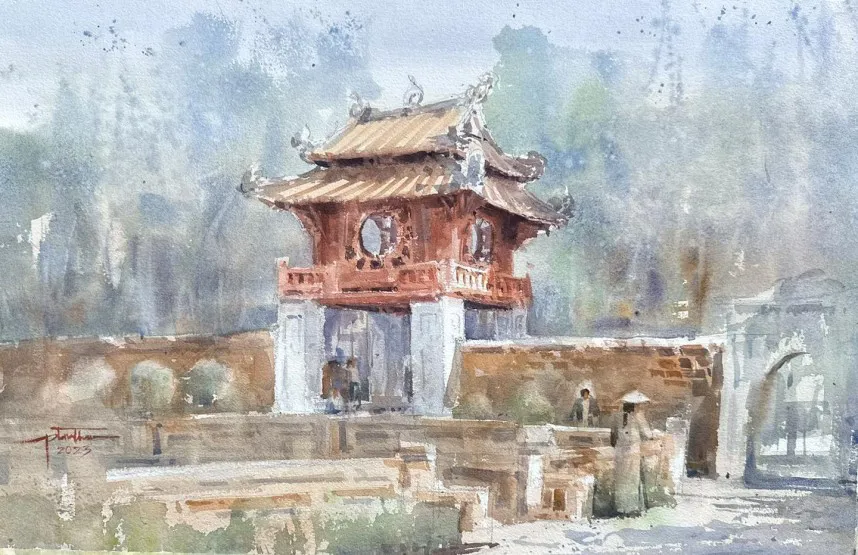
Van Mieu (Temple of Literature) watercolors are displayed at EM Exhibition to help raise funds for poor children.
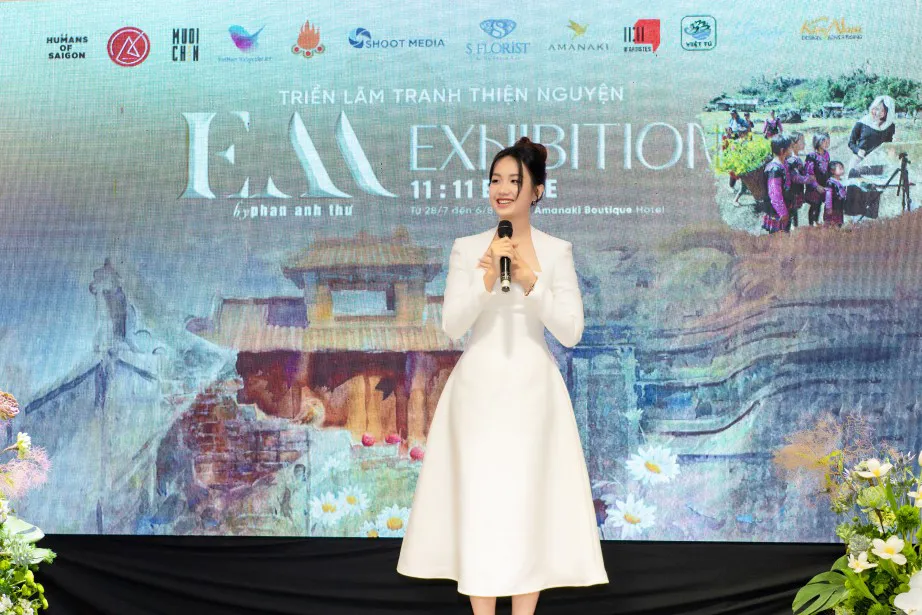
It's a project by young artist Phan Anh Thu, who is using 100% of the proceeds from the sale of the paintings and her art book Thu thenh thang (Thu Timeless Travel) to raise VND600 million (US$25,000) to build a school for children in mountainous areas of the Central Highlands.
Thu said the Temple of Literature is a remarkable national monument with a unique architectural masterpiece called the Khue Van Pavilion. This structure was built during the Nguyen Dynasty and is considered a symbolic representation of Vietnamese literature and education.
| The exhibition consists of 50 paintings. Photo: The Hanoi Times |
According to painter Thu, though small, the Khue Van Pavilion exudes simplicity and elegance, reflecting on Thien Quang Tinh (Heavenly Clarity Well). It is surrounded by ancient trees, and in the distance is a square lotus pond. The Khue Star (Legs Mansion, one of the twenty-eight mansions of the Chinese constellations) represents wisdom, scholarship, and literature.
Therefore, the Khue Van Pavilion, which embraces the beauty of the Khue Star, represents the apogee of intellectual achievement and emphasizes the timeless truth inscribed on the steles of Van Mieu: "Virtuous talents are the essential elements of a nation."
| Painter Phan Anh Thu wants to use art to raise funds for poor children. Photo: The Hanoi Times |
What makes up Khue Van's aesthetics are the round windows that vividly depict the sparkling image of the Khue Star in the sky, resembling the aura of virtuous talents that radiate the beauty of intellect and knowledge.
In addition to Van Mieu's paintings, the exhibition features about 50 works selected from more than 500 paintings by artist Phan Anh Thu. Each work tells its own story, depicting diverse scenes from urban to rural areas, spanning the length of the country, associated with places such as the Northwest, Hanoi, Hue, Hoi An, and Ho Chi Minh City.
| Phan Anh Thu paints at the Temple of Literature, Hanoi. |
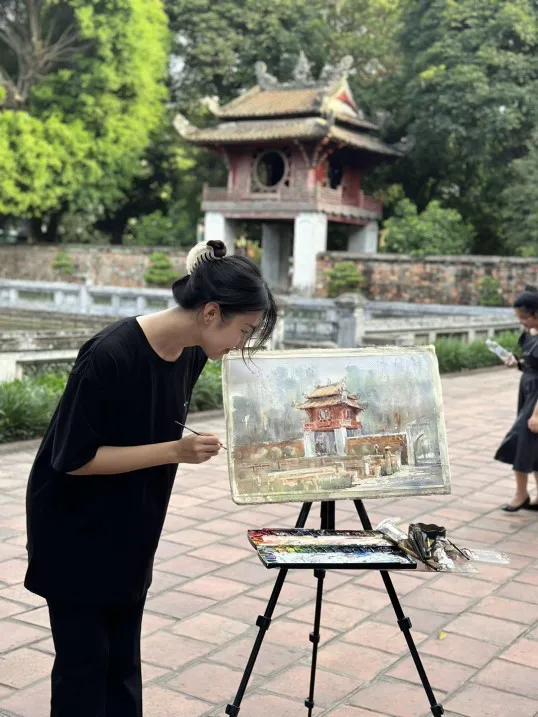
Talking about the journey of making hundreds of paintings across the country, especially in remote areas, Phan Anh Thu said that she had witnessed the hard life of children in the highlands.
Beyond the manipulation of color, artist Phan Anh Thu also shared her thoughts on each work in the art book.
Art critic Ly Doi said that with the art book, the artist is no longer an illustrator but has had the opportunity to assert her name with brush strokes, creativity, and a never-before-seen story.
The exhibition will run until August 6 at AMANAKI Hotel, 10 Nguyen Dang Giai, Thu Duc City, Ho Chi Minh City.
| Temple of Literature. |
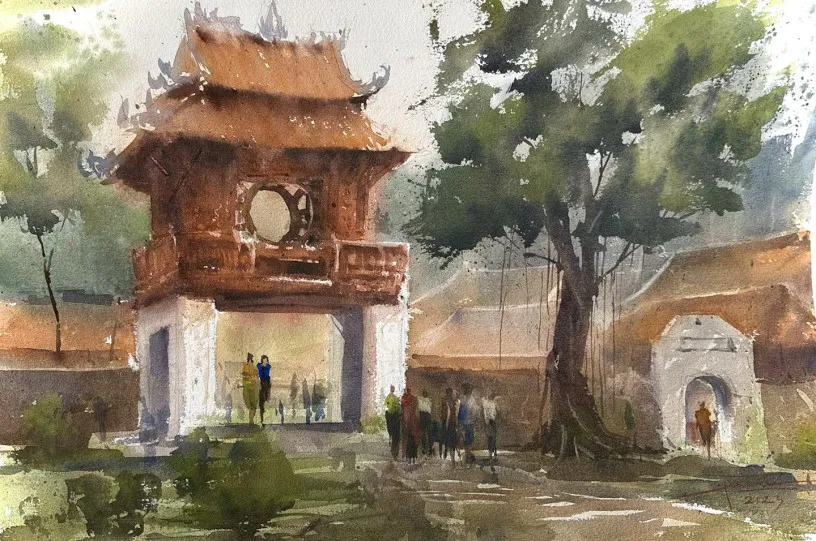
| Khue Van Cac, a symbol of Hanoi. |
| Ngo Mon Gate in the ancient capital of Hue. |