The craft village that earns living by hammering in the capital
Despite the rapid pace of urbanization, craftsmen in the outskirt district of Hanoi are still striving to preserve their hundred-year-old traditional trade.
Located beside the busy VinHomes Smart City urban area, west of Hanoi, Phu Thu Village in Tay Mo Ward, Nam Tu Liem District appears to be immune to urbanization.
| Duong Thi Thu Huong, a villager of Phu Thu Village in Tay Mo Ward, Nam Tu Liem District of Hanoi introduces her family's products. Photo: Tri Thuc Tre |
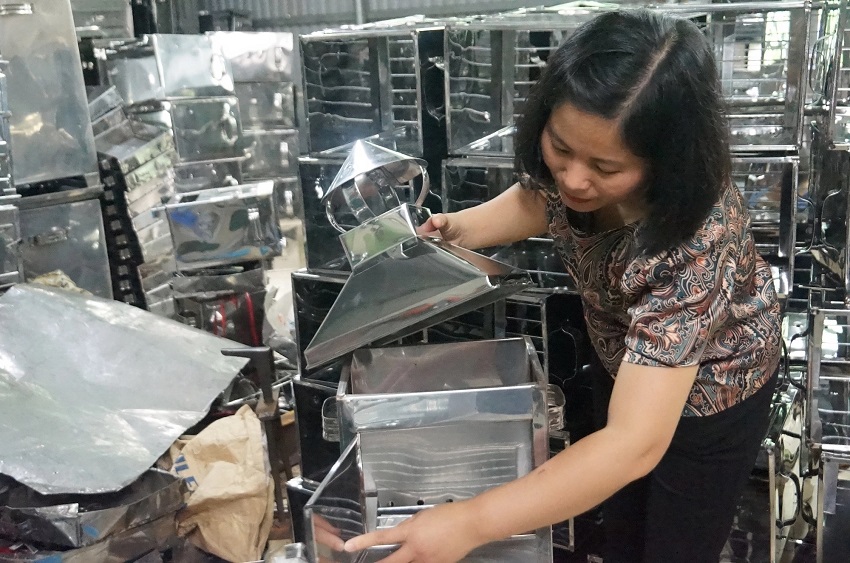
In the village, there are still peaceful tiny alleys and weathered old houses that are kept intact as treasures. Above all, no matter how life has changed, the people here are still passionate about their traditional handicraft of metalworking. For them, the hammer sounds are not only standing for the sustainability of their livelihood but also the rhythm of life and echoes from the past.
Tay Mo used to be a purely agricultural ward with over 300 hectares of arable land, of which only about 10% still remains, due to a series of urbanization projects, particularly the construction of Thang Long Avenue. As a result, many households in Phu Thu Village decided to turn back to metalworking - the tradition that had somehow disappeared.
Just passing the village gate, visitors will hear the rattle of machinery and tools, the clang of finished products being loaded on trucks, as well as the chats and laughter of the workers, customers and shippers. Day by day, these noisy yet familiar sounds echo throughout the roads and alleys here. Metalworking has befriended the villagers’ lives for so many generations that Phu Thu is dubbed ‘The Village that hammers money out’.
We were lucky to have a chance to interview Duong Thi Thu Huong, a native of Phu Thu Village who is working at the Vietnam Cinema Department. The locals call Huong the village's ambassador that spreads the cultural values of the countryside.
| The products of the trade village of Phu Thu. Photo: Tri Thuc Tre |
.jpg)
Huong recalled: “In the old days with limited means of transport, grannies and mommies had to get up early, carry metal trunks, pails or watering cans using shoulder poles and ride a bus to Hang Thiec Street for selling. They also hawked the goods across 36 streets without any computing devices or invoices. On the afternoon bus ride, they would return with food and drinks... Even now I can still remember the happy feeling of ‘waiting for mom to come back from the market’...”
In the first cultural village of Tay Mo Ward today, each household specializes in one metal item, such as clothing trunks, file cabinets, flower pots, water scoops, pails, watering cans, rainwater drains, baking molds, furnaces, joss paper furnaces, hanging water tank or AC ventilation fan… The price also varies accordingly.
Visiting Duong Ngoc Cuong's workshop, we found young workers immersed in their tasks. "I am the third generation practicing this business, having been engaged in this traditional craft for more than 30 years. My family receives orders for metal trunks to store personal items, money or betel leaves and areca nuts. The finished products are transported daily to Hang Thiec Street in Hanoi's Old Quarter," said the 51-year-old man.
| The simple tools to create these such meticulous metal products. Photo: Tri Thuc Tre |
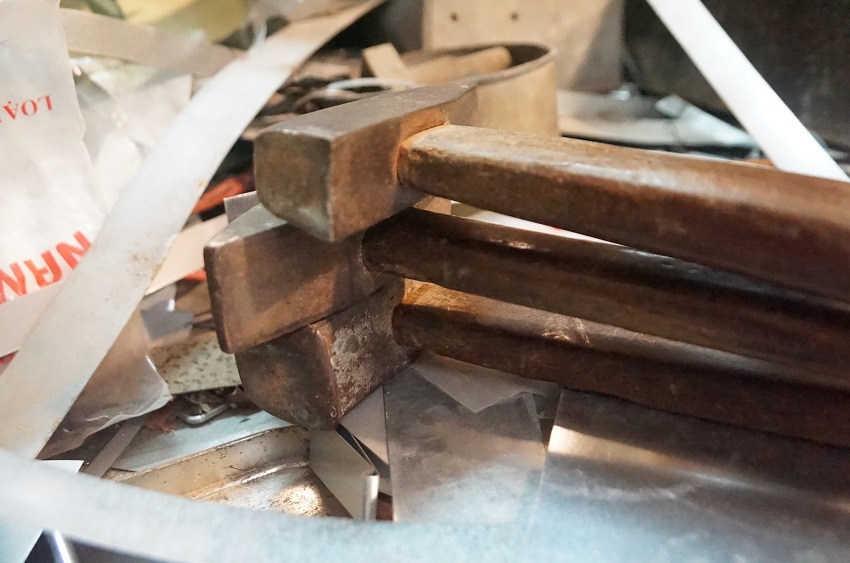
The workshop owner added that, in this era of modern technology, machines are helping people improve productivity, but some manual steps are still irreplaceable. For example, the edges of metal products still require handling by hand to ensure the best quality. In fact, metal goods made in Phu Thu are not only known in Hanoi, but traders from other provinces also often come to source their supplies here.
The home of 63-year-old Nguyen Thi Thuy, meanwhile, is considered the largest producer of brown paper ovens in the village. She told us that the metalwork households on Old Quarter streets such as Hang Non and Hang Thiec also come from Phu Thu. As for herself, Thuy has been engaged in this traditional craft since she was just over 10 years old, earning a steady income and raising her children.
Of course, no pain, no gain. “This work requires using bare hands to accurately feel the shapes of the products, so injuries caused by direct contact with thin metals are inevitable," said Nguyen Hoang Mai, 48, a worker at a tin box manufacturing facility. However, everyone in Phu Thu still loves the work. For them, as long as they hear the hammering sounds, the craft of their forefathers is still preserved.
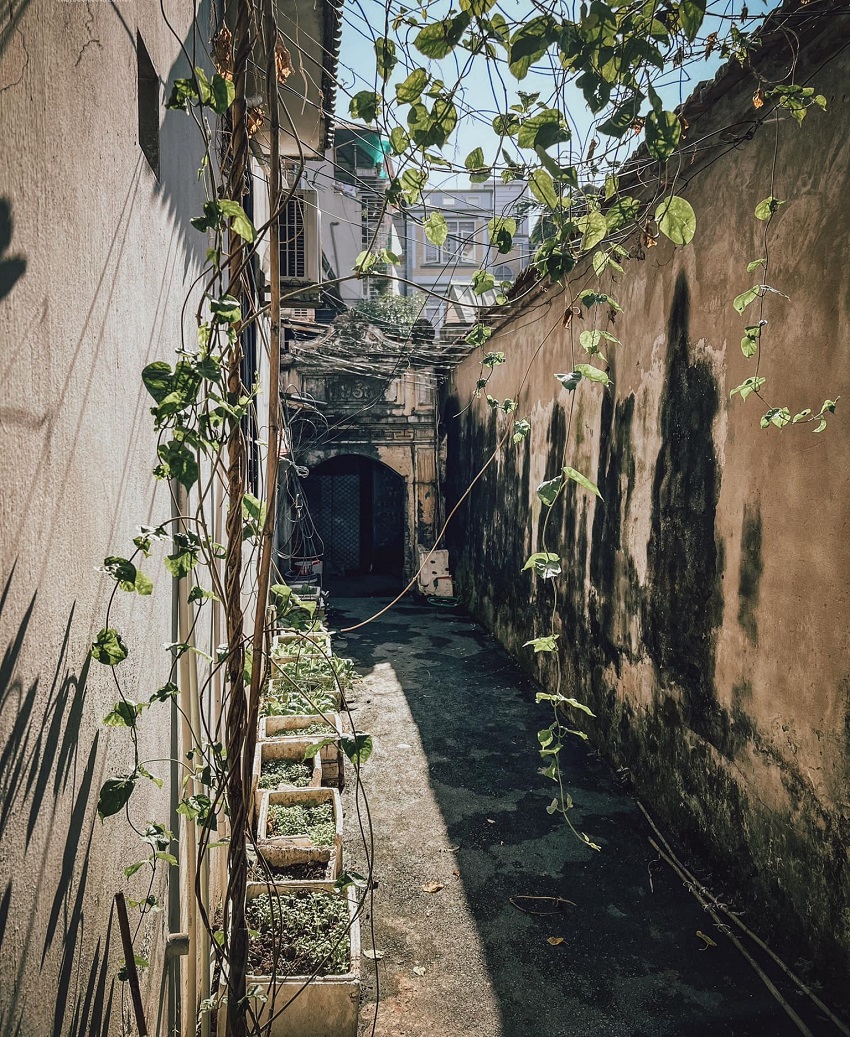
| The rustic beauty of Tay Mo Village or today's Tay Mo Award in Nam Tu Liem District, Hanoi. Photo: Nguyen Nguyen |

According to Nguyen Dang Cuong, Vice Chairman of the Tay Mo Ward People's Council, the promotion and inheritance of metalworking not only boosts the local household economy. It is also estimated that handicrafts create jobs for about 50% of Phu Thu's working-age residents, both men and women. As a result, the area's social ills stemming from land requisition for urban development are mitigated.
Nowadays, Tay Mo Ward is encircled by many arterial thoroughfares and bustling urban areas, while modern lifestyles can be seen in every nook and cranny. Fortunately, an old-fashioned Vietnamese village is still there, with banyan trees, river piers, a communal house yard, sacred lineage halls, mossy alleys, and - most importantly - sincere people holding on to their traditional craft, leaving a lasting impression on visitors to the west of the Thang Long - Hanoi Capital.
| A typical gate of houses in Tay Mo Award in Nam Tu Liem District, Hanoi. Photo: Nguyen Nguyen |
| The ancestor worshipping ceremony in Tay Mo Award, Nam Tu Liem District, Hanoi. Photo: Bui Hung |