TOD-modeled railroad projects: Long term solution for urban planning and development
Hanoi aims to have 10 metro lines totaling 417 kilometers by 2035.
The Transit Oriented Development (TOD) model may become the most appropriate way to develop sustainable cities in Vietnam. Lawyer Nguyen Hung Quang, Vice President of the Vietnam Society of International Law and President of the Vietnam International Commercial Mediation Center (VICMC), talks to Hanoimoi newspaper about the model and its impact on urban development.
How will the amended Capital Law facilitate Hanoi's transformation into a city of modernity, high-quality living and comprehensive socio-economic growth?
The draft amended Capital Law deals with the regulatory framework for urban and housing development in Hanoi, focusing on the planning, management, and development of urban areas, transport networks, and mass infrastructure. The Impact Reporting Study shows that Hanoi intends to focus resources on comprehensive, modern, efficient socio-economic infrastructure.
| The elevated Cat Linh-Ha Dong railway in Hanoi. Photo: Hai Linh/The Hanoi Times |
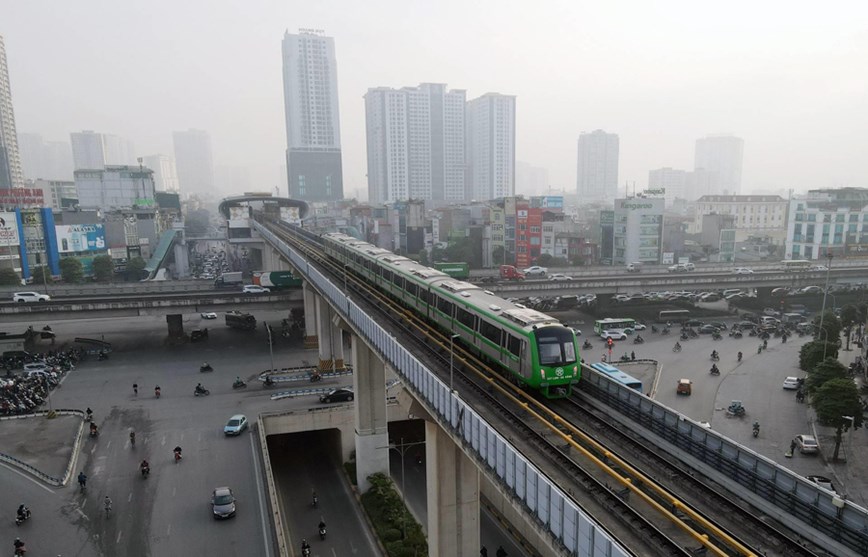
Hanoi plans to build satellite cities and urban areas. It also hopes to adopt the TOD model, with strict management of high-rise buildings and an increasing population in the city center.
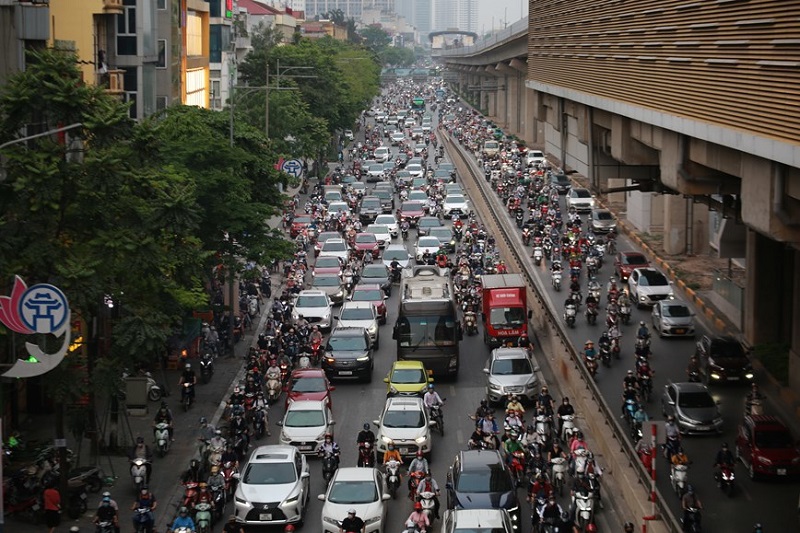
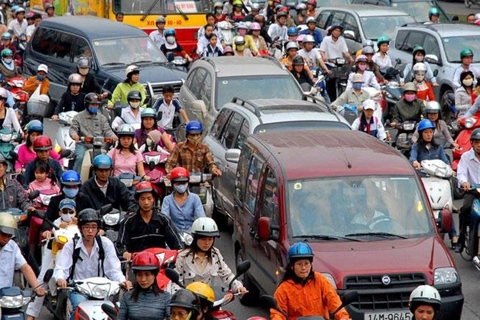
TOD is a new concept in Vietnam, but it is a suitable solution to help big cities like Hanoi develop urban road systems and mass transit networks. The model gets people used to walking about 400 to 800 meters to a public transport stop, thus relocating the population in urban districts to suburban areas, increasing land values there, and narrowing the gap in living standards between metropolitan and suburban areas. It can increase public transport ridership, reduce traffic congestion and accidents, and promote sustainable urban development.
The authorities will take the urban railway as the spearhead of public transportation and urban development, won't they?
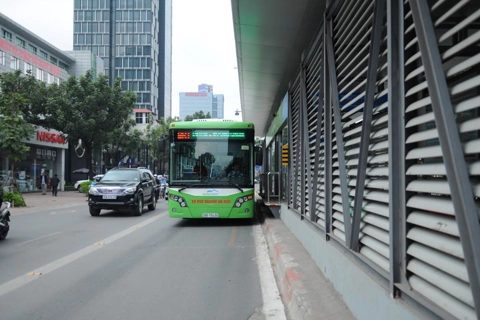
Many countries have adopted the model as a long-term solution to urban development problems such as traffic congestion and pollution. In Vietnam, legislators have advised the government to test the model in major cities such as Hanoi and Ho Chi Minh City, starting with the construction of the urban railway.
What is the solution provided by the amended capital law to attract private investment in TOD-based urban railway construction?
A railway project under the TOD model and existing laws requires many subordinate projects, such as route development, station construction, urban planning, and operation. In practice, private investors are highly interested in potentially profitable projects and leave the profitless ones to the government.
If investors find that it will take them a long time to recoup their capital or suffer losses in implementing the project, they will not be willing to invest in it.
I see that the amended Capital Law will bring a new framework that can address the drawbacks of the existing rules so that a TOD-style project will become more attractive to private investors. If a private investor bids for a TOD project, he will be responsible for implementing all the project components, and the government will be the supervisor to ensure that the project components are implemented properly.
If the amended Capital Law is passed, the TOD model will be the key to helping Hanoi solve the problems of financing its investment projects in the spirit of "shared benefits, shared risks". Then, the development of all metro lines and suburban housing projects will be accelerated, allowing the capital to become a smart, civilized city without traffic problems.
Thank you!
Policy revision required to adopt TOD model in Vietnamese urban planning TOD is an urban development model that takes the urban railway as the backbone, integrated with residential, office buildings, and shopping malls within a radius of 800-1,000 meters. In Europe, the US, and China, many measures have been taken to implement TOD projects, including public-private partnerships (PPP).
Because these gigantic rail projects require huge amounts of resources, it often takes contractors about 15-20 years to complete one. These railways are poorly connected to other facilities in the city, making it difficult for passengers to reach the stations and reducing the social benefits of the projects. Under the current regulations, it's almost impossible and unfeasible for Hanoi and Ho Chi Minh City to complete the construction of more than 600 kilometers of light rail in 12 years. Hanoi authorities need to study and adopt the TOD model in the construction of urban railways for the city's sustainable development under four conditions. First, lawmakers in the National Assembly need to revise and improve laws on land management, urban planning, investment, construction, real estate trading, and public-private partnership (PPP). Second, the government and ministries should develop appropriate policies so that TOD projects can be adapted to the specific conditions of each Vietnamese locality. The model needs to be tested in Hanoi and Ho Chi Minh City to learn the lessons and solutions. Thirdly, cities must develop their own TOD policy and consider it the center of sustainable urban development, focusing on all areas, not only the transport system. In addition, local authorities must review the development plans of urban railway projects and adopt the TOD model to develop stations and depots so that the facilities are integrated with other infrastructure. Fourth, central and local governments should develop policies encouraging private investors to participate in TOD projects in the spirit of "shared benefits, shared risks." Hanoi needs to integrate the TOD model into its amended Capital Law to improve future development projects. Nguyen Phi Thuong, Secretary of the Ung Hoa District Party Committee, Hanoi |