

Tong Duy Tan Street shines as Hanoi’s vibrant late-night culinary hotspot
At nightfall, Tong Duy Tan transforms into a bustling dining corridor where Hanoi’s flavors meet the city’s nightlife.
THE HANOI TIMES — As night falls, Tong Duy Tan Street in Hoan Kiem Ward comes alive with steam rising from soup pots, skewers sizzling on grills and diners crowding makeshift tables along the sidewalk.
For years, the street has been Hanoi’s iconic late-night food street, where eateries stay open until dawn. Students, shift workers and taxi drivers often stop by for pho ga (chicken noodle soup), xoi (sticky rice) or grilled skewers after midnight.
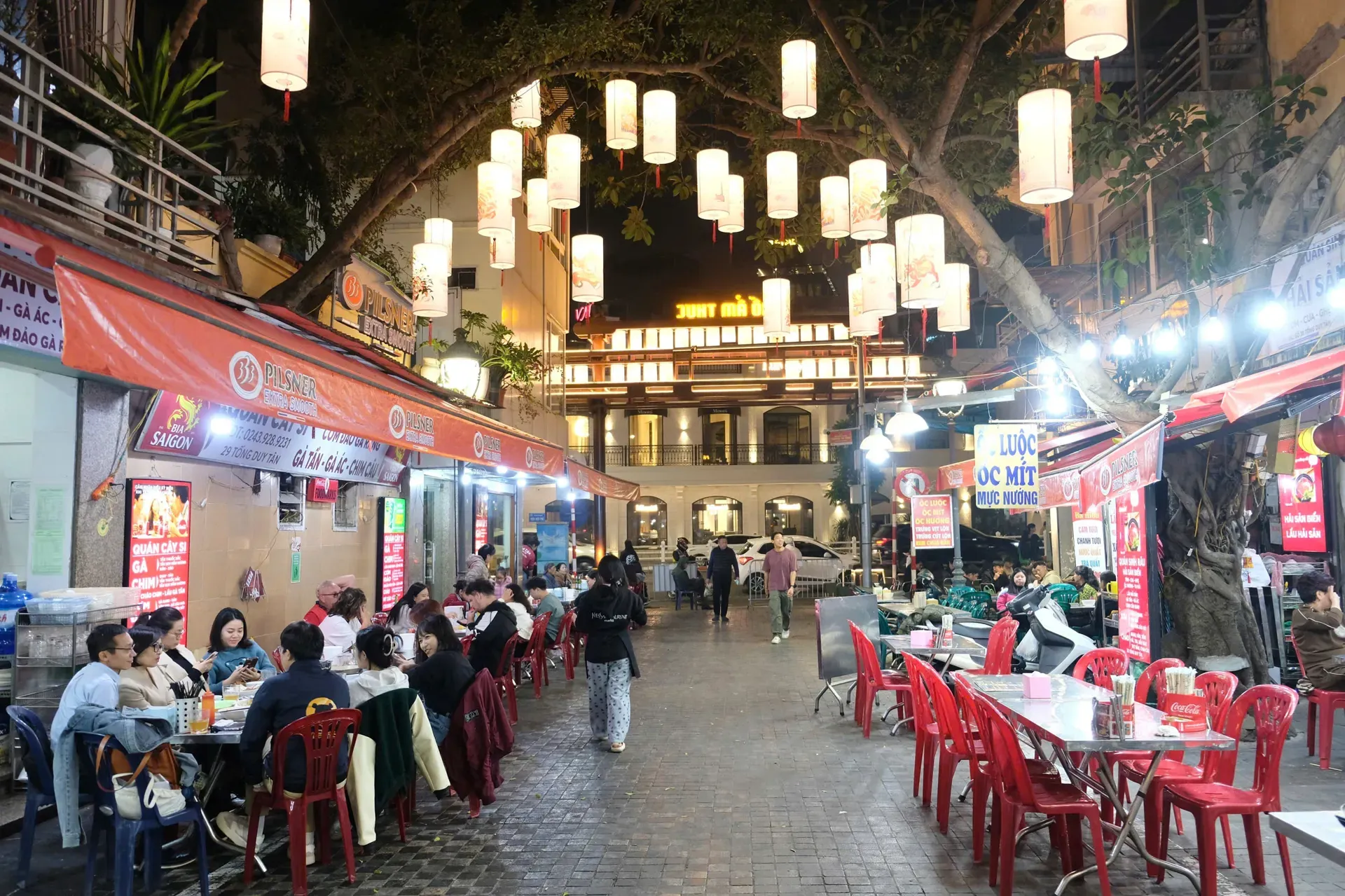
The scene at Tong Duy Tan Food Street. Photos: Cam Tu/The Hanoi Times
In the past, the 200-meter stretch was famous for its chicken market and busy eateries, such as Ky Dong steamed rolls at No.11, com rang (fried rice) and herbal chicken stew stalls.
Over time, Tong Duy Tan became a beloved dining spot for Hanoians. Many joked that if you didn’t know what to eat, you should come here – because this street offers everything, from traditional Vietnamese dishes to modern treats for foreign visitors. Menus now feature specialties from all three regions of Vietnam.
Food options range from Hanoi classics like bun thang (noodle with slices of chicken, fried egg and pork sausage) and pho ga to student favorites such as fried cheese sticks and bubble tea. Prices stay affordable, from VND30,000 to VND100,000 (US$1.2–$4), making the street welcoming to families, students and night-shift workers alike.
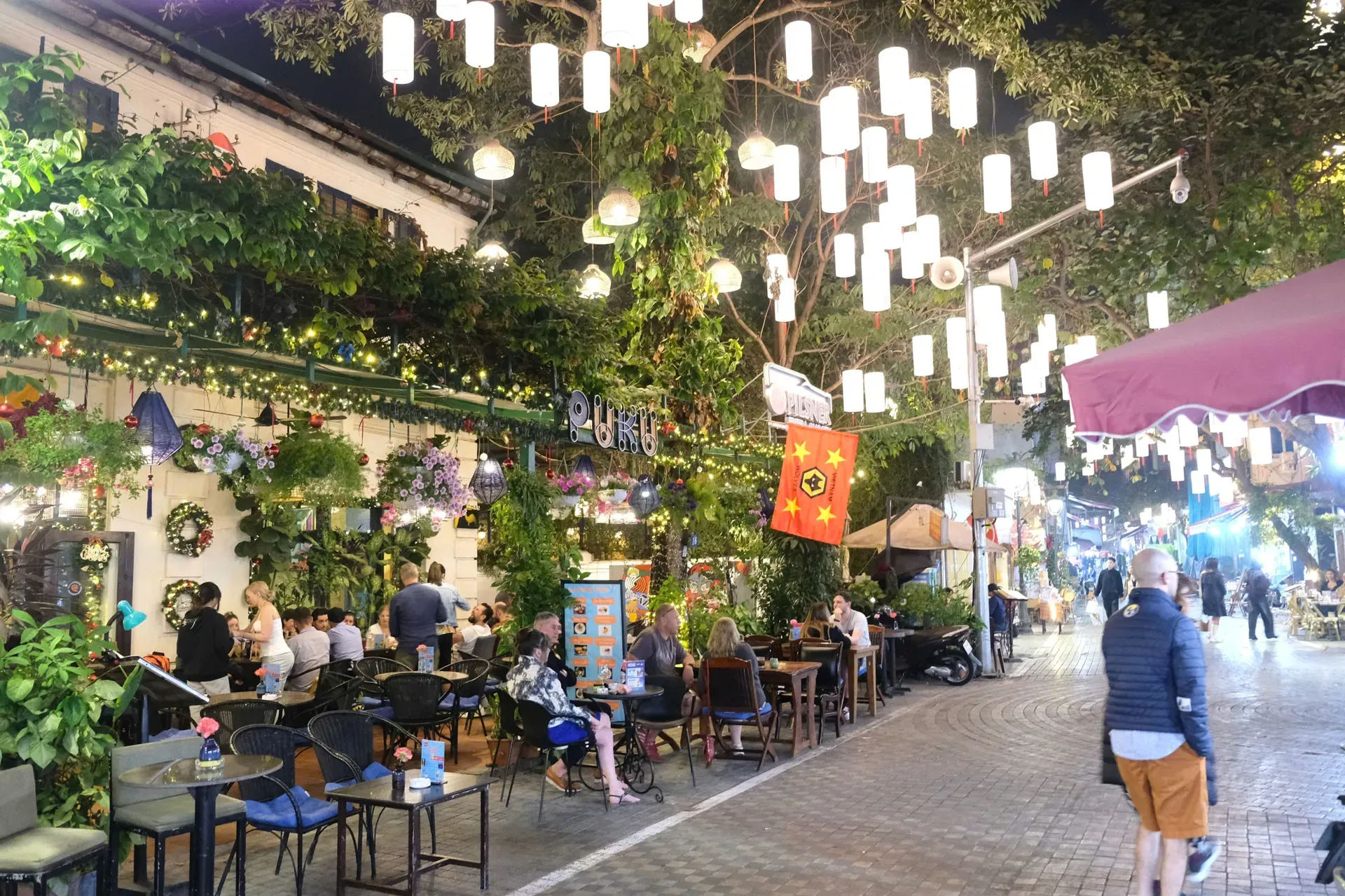
A café on Tong Duy Tan Street attracts many international visitors.
Emily, a 28-year-old traveler from the United States, first heard about the street from her hostel receptionist, who called it “Hanoi’s kitchen that never sleeps.” Curious, she decided to visit.
“At first it was overwhelming,” she told The Hanoi Times. “It was noisy and full of smells I didn’t know. But when a vendor waved me over to try xoi ga (sticky rice with chicken), it felt like the start of my night.”
Later, she shared fried nem ran (spring rolls) with several local students and was surprised by the fair prices. “I didn’t feel like a tourist anymore – I felt like part of the city,” she added.
Pierre Dubois, a tourist from France, said the experience was more than just eating.
“Food is the easiest way to connect with people. When I asked about a dish, the seller explained its story. I left with both a full stomach and a memory to share,” he said.
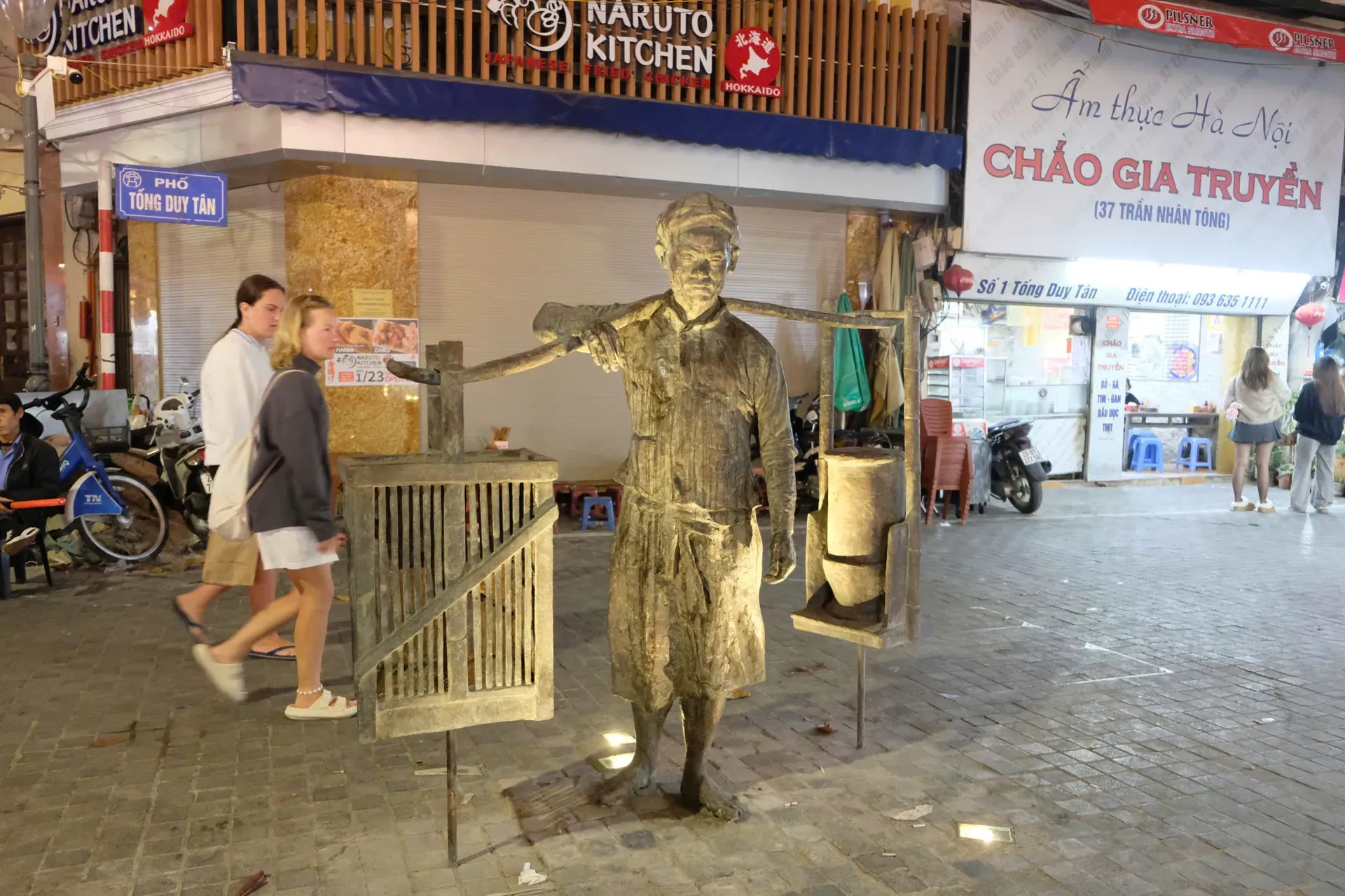
The statue “Pho-Carrying Man” is placed at the square on Tran Phu axis.
The street also attracts many international students. Joo Ji Cheul, a Korean student in Hanoi, often brings his friends for weekend dinners.
“I like this street because it serves every taste,” he said. “Each of us can choose our own dish – pho, grilled chicken and sweet soup. We can also hop from stall to stall and try everything. It feels like a food festival every weekend.”
For many Hanoians, Tong Duy Tan holds memories across generations. Some couples first visited as students, sharing bowls of ga tan (herbal chicken stew) late at night.
“I brought my wife here before we got married,” said Hung Pham, a longtime customer. “Now we have two children, but we still come back to remember those early days.”
Vendors say food quality has improved as well. Kitchens are cleaner, hygiene checks are stricter and prices remain fair.
“We know many foreigners come here,” said a noodle shop owner. “But locals still pay the same. Fair prices keep everyone coming back.”
Better urban and landscape planning
The street also stands out for its architecture and layout. The narrow facades, neon signs and old eateries remain, while the noise and motorbike horns are gone. The cleaner, safer space makes families and tourists feel at ease.
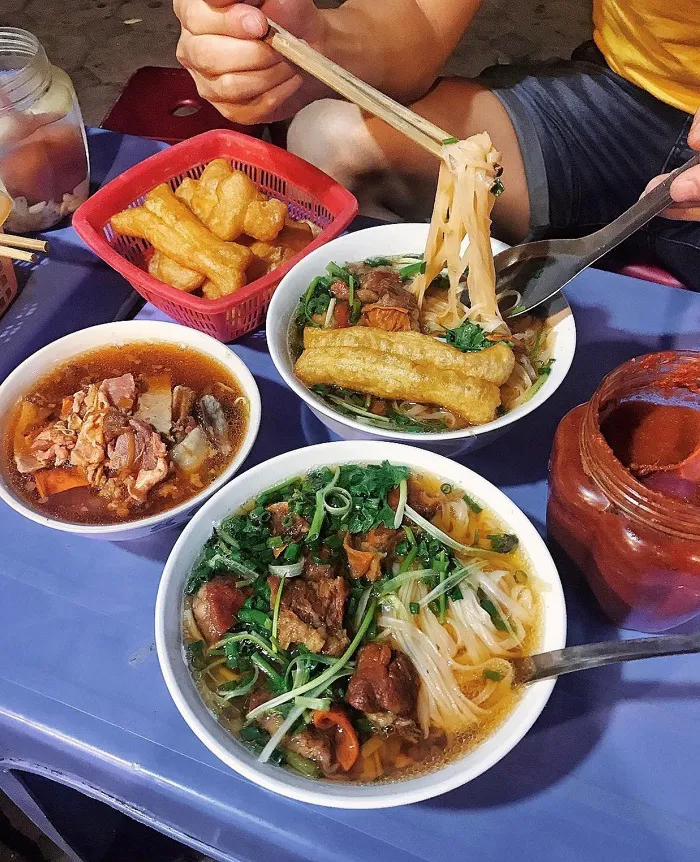
Bowls of steaming noodle soup with beef and fried dough sticks served late at night in Tong Duy Tan Street, Hoan Kiem District. Photos: Vietnamnet
Hoan Kiem Ward authorities have worked to upgrade and beautify the area, turning it into one of Hanoi’s most appealing destinations. Once a late-night spot for locals, Tong Duy Tan now welcomes travelers from around the world.
In 2002, Tong Duy Tan and Cam Chi were chosen as Hanoi’s official Food Streets. Since then, the area has grown with more restaurants, cafés and vibrant activities day and night. On January 10, 2025, it officially reopened as a weekend pedestrian food zone, bringing new energy to the capital’s night economy.
At both ends of the street, two welcome gates greet visitors – one inspired by the gate of the ancient Thang Long Citadel, the other by the old tube houses of Hanoi’s 19th-century Old Quarter paintings by artist Bui Xuan Phai.
The renovation also features a bronze statue of a “pho vendor” at the Tran Phu square area, depicting a man with a shoulder pole, carrying a steaming pot on one side and a neatly arranged ingredient cabinet on the other. The 1.6-meter statue honors pho, Vietnam’s intangible cultural heritage and the people who made it famous.
Nguyen Minh Chau, a resident of Hoan Kiem, told The Hanoi Times that the changes made a big difference. “Before, motorbikes made it crowded and hard to enjoy. Now we can stroll, sit with friends and eat without the chaos,” he said.
Students welcome the transformation. “We used to come here after studying,” said Hoang Anh, 22, from Hanoi University. “Now it’s even better with walking space and music. We meet new people all the time.”
Visitors with vehicles can park at the state-run lot on Phung Hung Street, just a short walk away. From Tong Duy Tan, it takes only minutes to reach Hoan Kiem Lake, the Opera House and the Old Quarter.
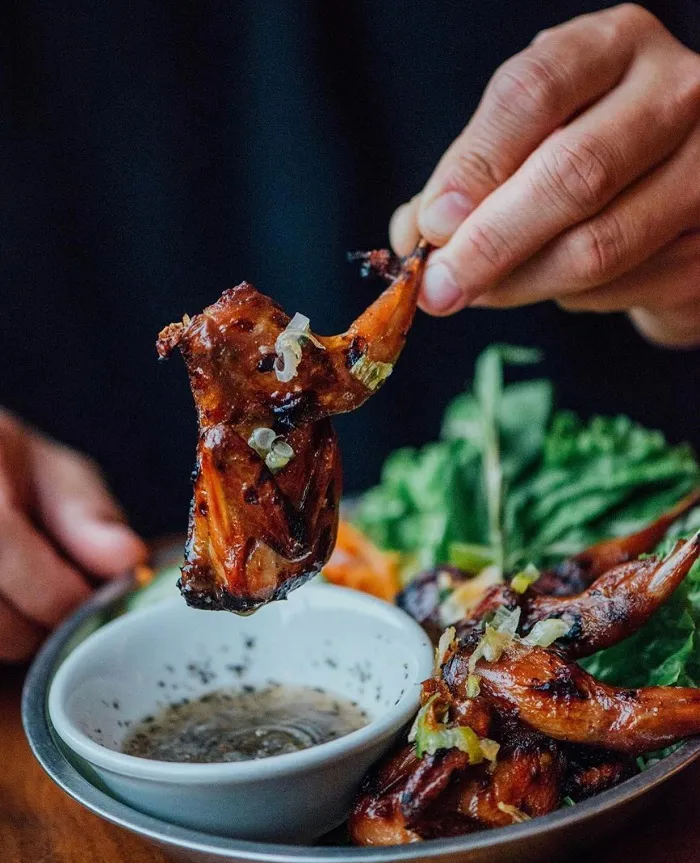
Vendors are equally optimistic. “We invested in better lighting and tables when we heard about the plan,” said Tran Van Phuc, who runs a grilled chicken stall. “Now more families come and tourists ask about recipes. Business has never been better.”
These efforts have enhanced Tong Duy Tan’s charm and reinforced Hanoi’s image as a living symbol of culture and cuisine. The renewed energy of the street is helping drive sustainable growth for the city’s tourism and local economy.







