Hanoi plans 10,000-hectare urban megacity with world-class stadium
The stadium’s design draws inspiration from Dong Son bronze drums and the Lac bird motif, symbolizing Vietnam’s aspiration to rise.
THE HANOI TIMES — Hanoi is planning a 10,000-hectare urban megacity anchored by a world-class stadium named the Trong Dong (Dong Drum) Stadium, designed to seat about 135,000 spectators, potentially making it the world’s second-largest stadium by capacity.
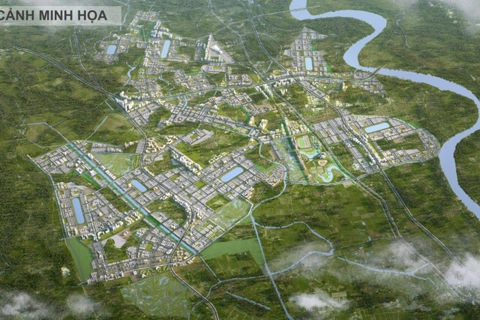
Details of the project are outlined in the 1:500 zoning plan for Zone B of the Olympic Urban Area, issued by the Thuong Tin Commune People’s Committee and currently open for public consultation. The plan defines major functional zones and infrastructure components intended to support the development of the large-scale urban complex.
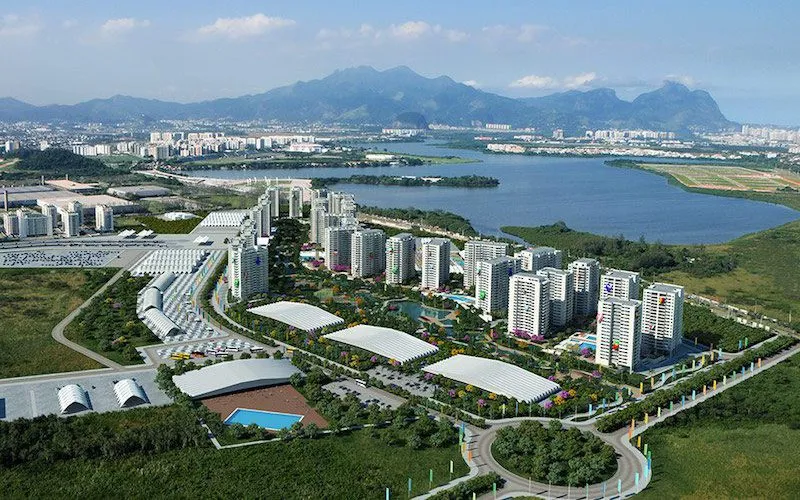
The design of the Olympic Urban Area project.
The overall study area of the urban project spans about 16,000 hectares, with roughly 10,000 hectares earmarked for development.
Zone B spans more than 3,118 hectares across Thuong Tin, Tam Hung, Thuong Phuc and Dan Hoa communes and is designed to accommodate a population of about 186,760. The zone allocates over 1,700 hectares for residential use, including townhouses and villas of three to four floors and apartment buildings of up to 21 floors, housing more than 13,000 residents.
Additional components include public squares, shopping centers, hotels, hospitals and resorts ranging from mid-range to high-end to meet accommodation needs for athletes and visitors.
The centerpiece of Zone B is the Trong Dong Stadium, planned on a site of more than 48 hectares with a capacity of 135,000 spectators. According to the project brief dated December 9, the stadium’s design draws inspiration from Dong Son bronze drums and the Lac bird motif, symbolizing Vietnam’s aspiration to rise.
Based on data from the International Olympic Committee, the largest stadium in the world remains the Rungrado 1st of May Stadium in Pyongyang, North Korea, with 150,000 seats. The venue was commissioned in 1989 and renovated in 2014.
In Vietnam, the largest stadium is currently My Dinh National Stadium with a capacity of around 40,000 seats, while Cantho Stadium previously held the record before its capacity was reduced from over 50,000 to about 30,000 after renovation. In October, construction began on the PVF Stadium in Hung Yen with a planned capacity of 60,000 seats on a 5.5-hectare site.
Beyond the stadium, Zone B will also include a Global Aquatic Arena, envisioned as a landmark of ecological and technological architecture.
Overall, the Olympic Urban Area is set to become one of the largest urban developments in Hanoi and nationwide. The city aims to develop a modern eco-urban area and a regional and international sports hub capable of meeting standards for hosting the Asian Games and the Olympic Games.
Globally, sports urban areas are defined as integrated developments that combine international-standard sports facilities with residential neighborhoods. These complexes also include commercial, entertainment and tourism functions, with notable examples such as Dubai Sports City in the UAE, Aspire Zone in Qatar and Melbourne and Olympic Park in Australia.
At present, land prices in southern Hanoi remain lower than those in the western and eastern parts of the city due to limited large-scale projects. The southern area also retains a larger land reserve compared with other parts of the capital.