Hanoi commits US$230 million to curb urban flooding
Emergency construction orders are essential to address urgent needs, including water pollution control, a stable, clean water supply, increased flows for the To Lich River and improved urban landscapes and living conditions.
THE HANOI TIMES — The Hanoi Department of Construction has proposed the issuance of 10 emergency construction orders with an estimated investment of VND5.5 trillion (US$232 million) to swiftly address urban flooding citywide.
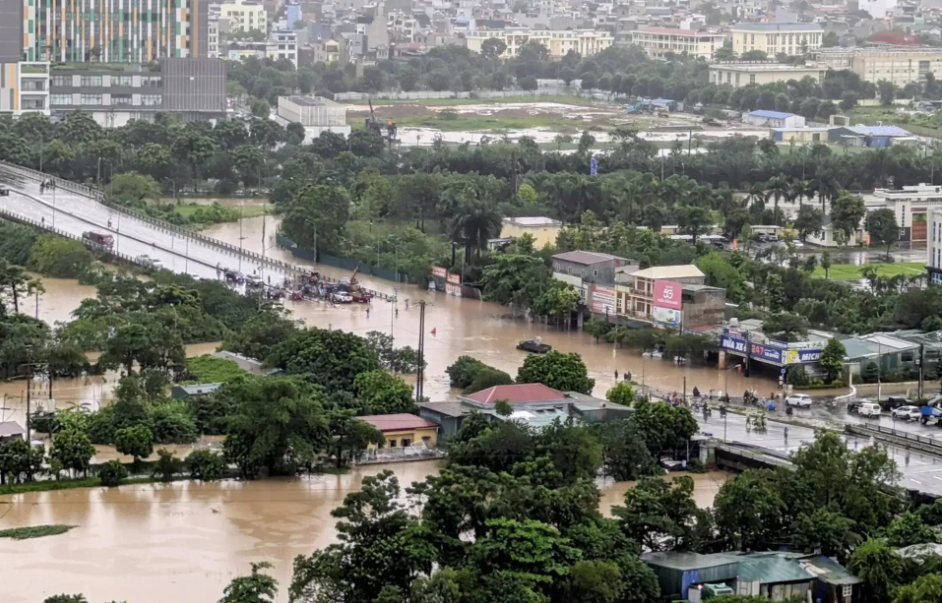
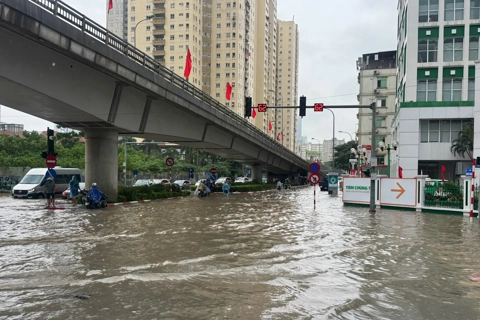
Road 70 near Nga Bridge in Xuan Phuong Ward, Hanoi, was deeply flooded during the 2025 rainy season. Photo: Quy Nguyen/The Hanoi Times
In recent months, Hanoi has experienced widespread and prolonged flooding caused by storms.
Post-storm flooding has had severe impacts, including major traffic disruption as many roads were deeply inundated, leading to prolonged congestion and vehicle damage.
It has also seriously affected daily life by restricting movement, isolating residential areas and causing significant property and economic losses.
Severe flooding has resulted from fragmented and delayed investment in drainage systems and key discharge infrastructure. Of the inner-city area of about 313.19 square kilometres, only around 77.5 square kilometers within the To Lich basin are equipped with drainage systems, which accounts for just 24.7%.
Investment in discharge outlets and pumping stations has lagged. The required total capacity for the Ta Day area is 811.5 cubic meters per second, while the current urban drainage capacity is about 164.5 cubic meters per second, or 20%.
The Yen Nghia pumping station has a capacity of 120 cubic meters per second, but has not operated at full capacity. The constraints include a lack of regulating lakes, incomplete sections of the La Khe canal and limited discharge to the Day River during high water levels.
The Lien Mac headworks, with a capacity of 170 cubic meters per second, is under construction, while drainage for urban areas outside the inner city remains dependent on water levels in the Nhue River.
At the same time, regulating lakes approved under existing plans has not been implemented in a coordinated manner. The total planned area for regulating lakes is about 5,405 hectares, while the existing area is around 1,010 hectares or 18.7%.
Investment and management of drainage systems in some new urban areas have also lacked coordination.
Internal drainage networks have been built but are not fully connected to area-wide systems.
Ground elevations in newly developed areas are inconsistent with surrounding levels, and some developments sit lower than adjacent areas, causing rapid surface runoff during heavy rain and leads to localized flooding as discharge outlets and pumping stations have yet to be built.
To respond promptly to storm-related disaster risks, the city needs to strengthen drainage capacity and ensure effective system connectivity.
The municipal People’s Committee will strengthen oversight, prioritize investment resources and streamline procedures to keep projects on schedule. Main components are expected to be largely completed before the 2026 storm season.
Based on project scale and characteristics, the city has designated two implementing agencies: the Technical Infrastructure and Agricultural Construction Investment Project Management Board for seven projects and the Hanoi Technical Infrastructure Management Center for three projects.
|
These projects include:
|