Hanoi launches AI-powered traffic control center for traffic violations
The system automatically detects common violations, significantly reducing the need for traffic police to be deployed directly on the streets while improving accuracy and transparency in traffic management.
THE HANOI TIMES — The Hanoi Public Security Department on December 13 put the Hanoi Traffic Control Center into operation, beginning the handling of administrative violations for certain traffic safety offenses through electronic monitoring.
According to Hanoi Traffic Police, the AI-based traffic monitoring system uses advanced cameras with 8-megapixel resolution and frame rates of up to 50 frames per second, automatically analyzing image data and storing it on 20 servers and a centralized system with a maximum data retention period of 75 days.

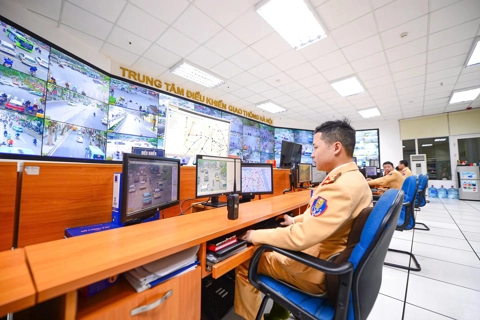
The center is equipped with three systems, including a road traffic safety violation management system, a real-time adaptive intelligent traffic signal control system and a public order and security management system. Photos: Pham Cong/The Hanoi Times

This center serves as the command hub for the 1,837 AI cameras installed across Hanoi recently.

The specialized AI camera system supports the detection of up to 28 types of traffic safety violations.

The image shows a violating vehicle detected by an AI camera.

The system’s goal goes beyond issuing post-event penalties and aims to ease congestion, modernize infrastructure, enhance state management capacity and promote a more civilized urban lifestyle.

The specialized AI camera used for violation monitoring can zoom in clearly on violations from long distances.

The launch of the AI camera system in December marks an important step in the digital transformation roadmap of the Hanoi Traffic Police.
Lieutenant Colonel Dao Viet Long, Deputy Head of the Hanoi Traffic Police Division, said that compared with conventional surveillance cameras, AI cameras can analyze and process images directly at the device level, enabling faster and more accurate detection of traffic safety violations as well as situations related to public order and security.
Once fully operational, the system will strongly support officers in command, supervision and enforcement tasks. AI cameras can automatically count traffic flows, connect with and adjust traffic signal cycles in real time to reduce congestion and accurately capture and transmit violation data to the command center.