Traditional handicraft products tell cultural story of capital
In recent years, traditional crafts have faced many challenges requiring experts and state agencies to find solutions.
Hanoi has recognized the important role of developing traditional handicrafts in the socio-economic development of the city.
Thang Long-Hanoi is the gathering place of craftsmen from all over the country, earning it the fame of "the land of hundreds of crafts". It’s a driving force to promote the development of other cultural industries. However, in the current context, traditional crafts are facing many obstacles, requiring the efforts of researchers and regulators to find solutions.
Difficulties surround traditional craft
According to Pham Tuan Long, Chairman of the People's Committee of Hoan Kiem District, the district, located in the heart of the ancient Thang Long Citadel and today's Hanoi capital, is a convergence of talents from all over the country. Today's street names bear the imprint of industries: Lo Ren (blacksmith), Hang Thiec (tinsmith), Hang Bac (silversmith), and Thuoc Bac (herbal medicine).
Each handicraft object carries the imprint of the natural and social environment, along with the skill and soul of the craftsman, and, more broadly, the creativity of the whole community.
In recent years, traditional crafts have faced many hurdles, including competition from industrially manufactured products, low-priced imported commodities, lack of human resources inheriting the trade, problems of raw materials, and limited marketing and consumption.
| Bronze carving is a traditional trade of the capital. Photo: The Hanoi Times |
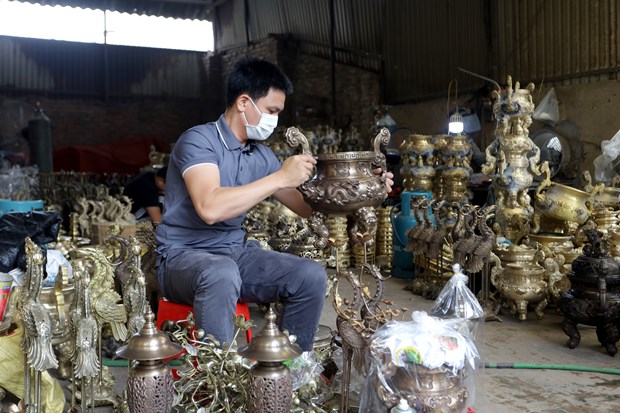
Craft activities on numerous streets have been reduced as a result of urbanization, as evidenced by the increased number of commercial shops not related to the local traditional trade. Currently, there are only 40 jewelry shops on Hang Bac Street, 35 traditional medicine shops on Lan Ong Street, and 40 silk shops on Hang Gai Street, down by half since the 2013 survey.
Long said that traditional crafts need to develop links between craftsmen, designers, investors, and entrepreneurs.
“To make handmade products for tourist gifts, production must be based on traditional core values," Long said, stating the importance of product introduction, trade promotion, eye-catching designs, and the tastes of domestic and international consumers.
With the experience in preserving and promoting the profession of Hang Trong folk painting, Dang Minh Tuan, Chairman of the People's Committee of Hang Trong Ward, said: "The process has been held from time to time to introduce an overview of the heritage. It’s not a sustainable solution to revive the painting genre.”
The reasons include a lack of human resources, support policies, and funding sources.
Artisan Dang Van Hau finds new materials to make to he products last for long. Photo: VNA |
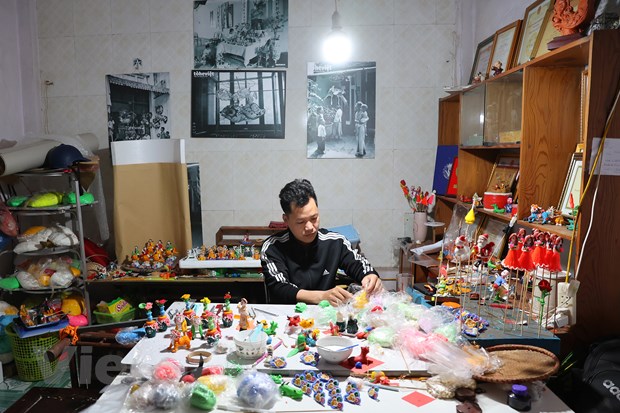
To he (toy figurines) maker Dang Van Hau, 38, in Phu Xuyen District, Hanoi said that the local traditional craft is gradually disappearing.
“To he making is most prosperous during Tet and summer festivals. At other times of the year, there is so little work that the artisans have to turn to another profession to make a living. Gradually, when such a profession becomes stable, they no longer want to return to their traditional craft," said artisan Dang Van Hau.
Refresh the heritage story
To find solutions to raise the bar for handicraft products, the Vietnam Cultural Heritage Association and the Hoan Kiem District People's Committee held a seminar on "Hanoi Traditional Crafts - Creativity for Development" on April 7.
| Nguyen Viet Nam of Tired City talks at the seminar. Photo: Ngo Minh |
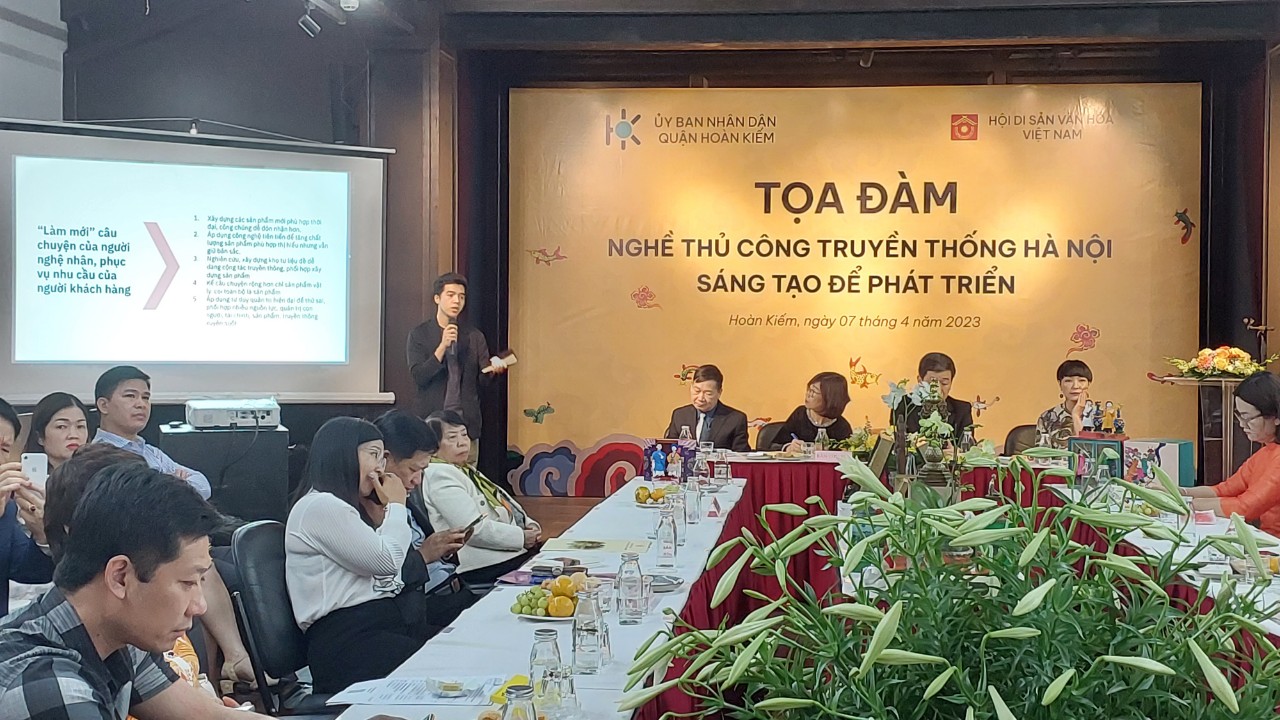
Many way-outs have been identified, such as: expanding the role of design and creativity in developing handicrafts; seeking to link stakeholders in the creation process; enhancing marketing and communication, among others.
Speaking at the seminar, artisan Dang Van Hau said that he had successfully created materials with high durability and bright colors. The toy figurines are not only ingeniously designed, but can also "tell" many stories about Vietnamese folklore and become favorite souvenirs.
He is working with the Vietnam Cultural Heritage Association to develop to he products into souvenirs that can last for decades.
“I was helped with packaging design, product demonstration, marketing, and sales, so I could focus on my creative expertise,” the artisan said.
For the cooperation between artisans and businesses, Nguyen Viet Nam, the creative director of the "Tired City" brand, said that it is a way to creatively tell the story of tradition.
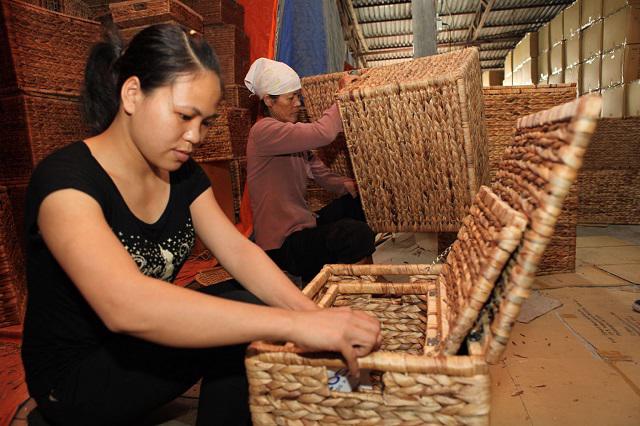
| Rattan weaving is a traditional trade of Phu Vinh Commune, Chuong My District, Hanoi. Photo: Le Nam/The Hanoi Times |
It is necessary to put the customer at the center and pay attention to their needs with a series of questions, including the story behind the product must contain value and pride in national culture.
“We need to research and build stories that we can tell about handmade products. In addition to products such as to he, paper fans, conical hats and lacquerware, the story surrounding them is also considered the quintessence of traditional craft," said Nam.
Sharing the same view, Vice President of the Vietnam Cultural Heritage Association, Dr. Le Thi Minh Ly emphasized the importance of building a heritage database in a scientific way, with a unified management method, easily accessible, creating favorable conditions for the creative community to experiment, practice new creations, bring new values to the heritage.
“By integrating heritage stories into traditional crafts, we can create greater value for the national culture covered in souvenirs for international visitors,” said Le Thi Minh Ly.