14TH NATIONAL CONGRESS OF THE COMMUNIST PARTY OF VIETNAM
Log in
Hanoi

UNESCO approves Vietnam's dossier on the preservation of the Imperial Citadel

The Imperial Relic is one of Hanoi's major tourist attractions, as it was the political center of Vietnam for more than 1,000 years.

Vishal Sharma, Chair of the UNESCO World Heritage Committee, said this week that Vietnam's proposals for the conservation and development of the central sector of the Thang Long Imperial Citadel have been approved.

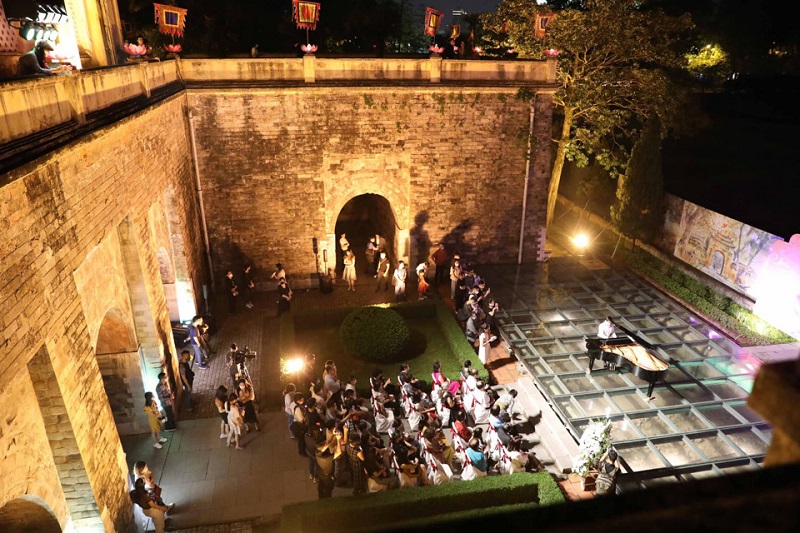
Thang Long Imperial Citadel night tour. Photo: Lam Thanh/The Hanoi Times

At its 46th working session in New Delhi, the World Heritage Committee commended Vietnam for its achievements and compliance with its obligations since the inscription of the Citadel on the World Heritage List in 2010. The approved dossier aims to restore the space and main hall of the Kinh Thien Palace, a central relic within the citadel.

Deputy Minister of Foreign Affairs Ha Kim Ngoc, Chairman of the Vietnam National Commission for UNESCO, highlighted Vietnam's cooperative and responsible spirit in working with the World Heritage Centre and the International Council on Monuments and Sites (ICOMOS), saying: "This cooperation is in line with the World Heritage Convention and aims to enhance the universal value of heritage."

Ngoc described the approval of the dossier as a tribute to the late Nguyen Phu Trong, general secretary of the Central Committee of the Communist Party of Vietnam, who championed the preservation of the citadel.

Lazare Eloundou Assomo, Director of the World Heritage Center, underscored the global significance of the dossier, which addresses new issues in heritage development.

He praised it as a model for cooperation between member states, UNESCO, and advisory bodies, and an example for preserving world heritage.

During the Committee session, Ngoc met with UNESCO Director-General Audrey Azoulay, World Heritage Committee Chair Sharma, and ICOMOS leaders.

They expressed their condolences on the passing of General Secretary Trong and praised Vietnam's contributions to UNESCO. They urged Vietnam to continue its leadership in heritage conservation and sustainable development.

The Imperial Citadel of Thang Long in Ba Dinh District, Hanoi has been a political and cultural center for over a millennium. It was built in the early 11th century during the Ly Dynasty and expanded by successive dynasties.

The remains of the citadel include important structures such as the Doan Mon Gate, the Flag Tower, and the Kinh Thien Palace.

In 2010, the Citadel was inscribed on the UNESCO World Heritage List for its universal value and cultural significance. It remains a key site for archaeological research and heritage conservation.
Reactions:
Share:
Trending
Most Viewed
Related news
Ba Dinh District: Land of historical relics

Ba Dinh District: Land of historical relics

18 Aug, 22:57

As one of the first four core districts of Hanoi, Ba Dinh District is of indisputable importance to the capital and the country as a neuralgic political and administrative center.

Hanoi health sector targets digital leap under new Party resolution

Hanoi health sector targets digital leap under new Party resolution

Hanoi sets 2026 as a breakthrough year for healthcare reform, accelerating digital transformation, restructuring hospital networks and tightening food safety management under Politburo Resolution 72.

Hanoi launches state-backed innovation hub to drive digital economy

Hanoi launches state-backed innovation hub to drive digital economy

The new innovation center is designed to connect policy, technology and talent, aiming to accelerate digital transformation, support startups and position the capital as a global testing hub for emerging technologies and creative industries.

ASEAN youth showcase climate innovations at Hanoi exhibition

ASEAN youth showcase climate innovations at Hanoi exhibition

Young innovators from Vietnam and across ASEAN presented practical climate solutions in Hanoi, highlighting grassroots initiatives tackling plastic waste, renewable energy and sustainable livelihoods.

Hanoi issues action plan to implement 14th Party Congress resolution

Hanoi issues action plan to implement 14th Party Congress resolution

The goal is to turn policies into outcomes under the principle of “less talk, more action, effective results to the end, all for the capital and its people.”

ASEAN youth chart next phase of climate action in Hanoi

ASEAN youth chart next phase of climate action in Hanoi

Home to more than 680 million people, many in vulnerable coastal and low-lying areas, ASEAN is on the front line of climate change, facing rising seas, fiercer storms, prolonged droughts and accelerating biodiversity loss that endanger the region’s economic resilience and social stability.

Hanoi launches sweeping overhaul to unlock state economy growth

Hanoi launches sweeping overhaul to unlock state economy growth

Hanoi has unveiled an ambitious five-year plan to reform governance, mobilize public assets and restructure state enterprises, aiming to turn the state economy into a powerful engine of sustainable growth.

Hanoi puts people first in implementing four strategic Party resolutions

Hanoi puts people first in implementing four strategic Party resolutions

Hanoi launches comprehensive action plans to implement Politburo Resolutions 71, 72, 79 and 80, prioritizing people-centered reforms in education, healthcare, culture and state economic development.

Vietnamese families blend Tet travel trends with enduring traditions

Vietnamese families blend Tet travel trends with enduring traditions

More young Vietnamese families choose travel over staying home during the Lunar New Year holiday, seeking fresh experiences while keeping core traditions intact.