[Uniqueness of Hanoi's craft villages] Trach Xa villagers: Born to be skillful 'ao dai' tailors
Knowhow of a perfect Vietnamese traditional ‘ao dai’ comes to the tailors in Hanoi's suburb village almost naturally, contributing to enhancing the beauty of the Vietnamese women.
For hundreds years, many generations of tailors in Trach Xa village have contributed to preserving and promoting the charm of the traditional Vietnamese costume.
Hundreds-years-old craft village
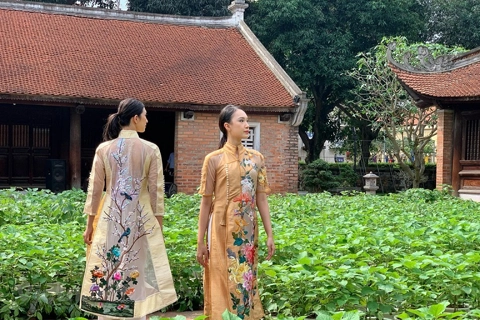
| Charming Vietnamese girls in ao dai dress. Photo: Thanh Hai |

Legend has it that Emperor Dinh Tien Hoang fell in love with a beautiful girl of Trach Xa during his visit to the village. She became his wife and used her creativity to make outfits for the royal court.
Trach Xa Village in Ung Hoa District, 60km away from Hanoi’s center, has been well known for hundreds of years for specializing in traditional ao dai making. But artisan Nghiem Van Dat says that the mother of this trade is Nguyen Thi Sen, who was very young when her sewing skills were put at the service of the royal family during the Dinh Dynasty from 968 to 980.
Later, she returned to her native village of Trach Xa and taught the villagers the art of embroidery and the making of sophisticated attire, such as dresses or clothing for the kings and queens for different rites.
It is an interesting detail about Trach Xa that since the early days, the villagers ply their trade away from home. They used to take their tools of measuring tape, needle, threads, and scissors with them across the country.
“When I was only 10 or 11 years old, my parents carried me along while making ao dai for rich families,” recalled Van Dat.
Among all the destinations, Hanoi attracts the majority of Trach Xa tailors. If someone visits Trach Xa today, he will probably find an almost deserted village. Young and old, men or women, all go to Hanoi to open tailor shops or work for other Trach Xa people.
Skilled tailors
| Artisan Nghiem Van Dat, Trach Xa ao dai-making village. Photo courtesy of the artisan |
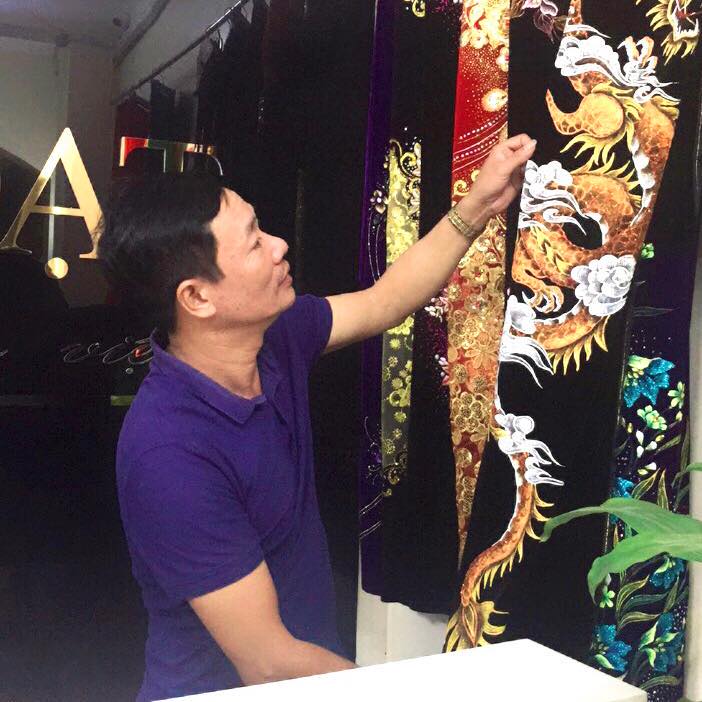
Today, Nghiem Van Dat, the owner of Ao Dai Tien Dat - Trach Xa tailoring shop in Chua Boc Street of Hanoi is considered one the village’s most successful ao dai tailors in the capital city. He acquired the know-how of picking up needles, cutting, embroidering since his young childhood.
Dat, also Chairman of Trach Xa Craft Village Association, opened his own ao dai shop in the street specializing in fashion in Hanoi a dozen years ago. Today, at the age of 60s, he's still wrapped up every day sewing and creating graceful and beautiful ao dais. His children are now also following the tradition.
Though they have been living and working in Hanoi their whole life, Trach Xa Ao dai tailors never forget their home village. All over the city, any shop is added with the word Trach in its name surely belongs to someone from Trach Xa. Names like Phuc Trach, Vinh Trach, and My Trach can be found in Cau Go, Luong Van Can, and Kham Thien streets.
According to local artisans, tailoring ao dai is a delicate and elaborate traditional profession that requires the ingenuity and patience of the artisans.
| A Hanoian in ao dai tailor-made by artisan Nghiem Van Dat. Photo: June Studio |

“It takes the tailor’s many efforts and meticulousness to make a beautiful ao dai,” said artisan Nghiem Van Dat. “The first step deciding the beauty of the ao dai is choosing the fabric. The fabric must be a little bit heavy and decumbent. Its surface must be smooth with fine patterns that perfectly suit the wearer.
After the customer chooses a suitable fabric, the tailor from Trach Xa village will proceed to cut and sew the ao dai. Ao dai shaping is considered the most difficult step. The tailor skillfully arranges the motifs on the fabric, so that when being worn by the customer, the ao dai will have the most harmonious patterns with eye-catching colors.
Honoring the beauty of Vietnamese women
What makes Trach Xa shirt beautiful is the cutting and sewing technique.
The tailors of Trach Xa village have their own secrets on their cutting technique that has been passed down from generation to generation. The impeccable expertise of making the cuts largely decides the quality of an ao dai. It’s an art that requires special attention as well as the skill of the tailor. The ao dais made by Trach Xa tailors suit the whole body of the women, honoring the curves that nature bestows on them.
| The ao dai was made by artisan Van Dat. Photo: Ao dai Tien Dat - Trach Xa |
.jpg)
For ao dai making process, the sewing is mainly done by hand, and the use of machines is out of the question.
“Trach Xa ao dai is precious because most of the making process is mainly manual with hand-stitching and hand-embroidering,” said Nguyen Thi Thu Hong, a client of Ao dai Trach Xa from Hanoi.
“I often order my traditional attires at ao dai-making shops whose owners are from Trach Xa village. I was convinced by the gorgeous and sophisticated dress made by them. Their hand sewing helps refine the curves of the ao dai, highlighting the body of the wearer,” she said.
According to artisan Van Dat, through many ups and downs of time, for hundred years, Trach Xa village’s ao dai tailoring is still maintaining its identity and developing well.
Dat reveals that before the Covid-19 pandemic, he sometimes met dozens of ao dai orders in a week from foreign female tourists. Whether they are from Japan, Korea, China, America, or the UK, all feel moved and happy to wear a custom-made ao dai hand-made by Trach Xa villagers.
The women's bespoke tailoring of Trach Xa village has been put on the international sartorial map by its modest inhabitants, who create the charming and elegant dress with passion and skills passed on through generations.