Unknown story of revolutionary base of the Viet Minh’s cultural front
The house of Duong Viet Tien’s family is an invaluable spiritual treasure and a source of pride for the people of Hanoi, for its indispensable role in the success of the August General Uprising in the capital.
THE HANOI TIMES —
In May 1941, President Ho Chi Minh decided to establish the Viet Minh Front, advocating the creation of organizations under the name National Salvation to unite people from all social strata and patriotic political groups, rallying the entire population to rise and seize power.
In February 1943, Party General Secretary Truong Chinh drafted the Outline of Vietnamese Culture. Following the spirit of this document, the National Salvation Cultural Association was founded in April 1943, attracting many renowned cultural and literary figures, such as playwright Hoc Phi and celebrated writers and journalists Nguyen Huy Tuong, Nam Cao, Nguyen Hong, To Hoai, Nguyen Dinh Thi, and Thep Moi, among others.
As the association’s original base on Pho Duc Chinh Street was compromised, its operations moved to the home of engineer Duong Quang Tri and his wife, Luu Thi Huong, the younger sister of diplomat Luu Van Loi (1913-2016) in Vinh Tuy village, Hanoi.
In the five-room tiled house, the association hosted numerous thematic talks that drew the attention of intellectuals, cultural figures, and ordinary citizens. The association launched the Tien Phong (Vanguard) newspaper and published many books by leading poets and writers such as Xuan Dieu and Hai Trieu.
By 1944, as the Viet Minh movement grew stronger, the National Salvation Cultural Association also expanded its influence. Many cultural activists and communist fighters who had escaped from prison stayed for long periods in Tri's house, where Tri and Huong provided food, shelter, safety, and secrecy.
The house, located near a French military outpost, faced constant danger. At a time when hardship was widespread and many people died of hunger, the house became a steadfast refuge and sustaining for members of the Cultural Association.
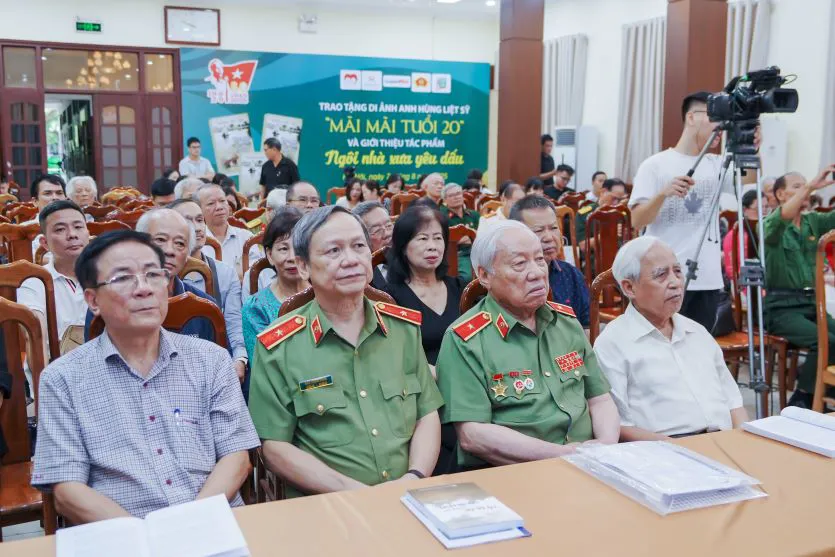
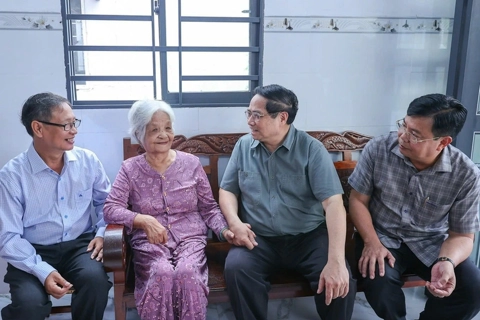
Veterans are touched to hear story about Duong Quang Tri's family.
In the days leading up to Hanoi’s General Uprising, Tri’s family and association members worked tirelessly to prepare red and yellow cloth for national flags, banners, and slogans, as well as microphones and loudspeakers for the August 19 rally. The association also helped build the podium and decorate the entire Ba Dinh flower garden area for the September 2, 1945, ceremony, where President Ho Chi Minh read the historic Declaration of Independence.
In later years, many senior revolutionaries of the Cultural Association returned to visit the house, recalling the days when Tri and Huong sheltered them and served simple but heartfelt meals.
At the outbreak of the August Revolution in 1945, Duong Quang Tri was working at the Bach Mai Radio Transmission Station, a Morse code relay between Hanoi, Saigon, and Paris built by the French in 1912. It was then one of the most advanced facilities in Indochina and Asia, and it later became the first broadcasting site of the Voice of Vietnam after the August Revolution.
As chief of the transmission shift, Tri, together with patriotic technicians, successfully broadcast President Ho Chi Minh’s Declaration of Independence to the world.
In December 1946, Tri and his colleagues at Bach Mai station transmitted a special broadcast carrying the “National Resistance Order” from Minister of National Defense Vo Nguyen Giap. Soon after, the station was destroyed by French forces.
In 1947, Tri was transferred to the radio communications unit of the Party Central Office, operating in the Viet Bac war zone. After peace was restored, he and his family returned to Hanoi, where he served as a logistics officer at the Ministry of Foreign Affairs until his retirement.
The historic house at No. 8, Alley 120, Vinh Tuy Street, was burned down by French troops after the outbreak of the nationwide resistance war on December 20, 1946. After the liberation of Hanoi in 1954, Tri’s family returned from Viet Bac and built a thatched house on the old foundation. From this home, they endured the nation’s fierce wars and the hardships of the post-war subsidy period, raising their children to adulthood.
Today, after many changes in the capital, the house, now numbered 96 Nguyen Van Vien Street, Vinh Tuy Ward, Hanoi, has been officially recognized as a historical site by the Hanoi People’s Committee.
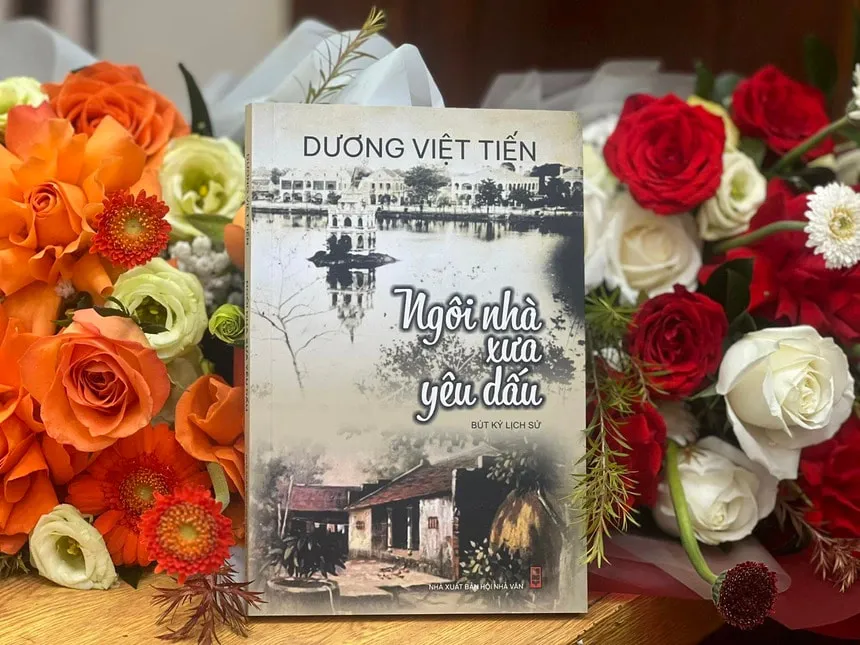
A book written by Duong Viet Tien, son of Duong Quang Tri.
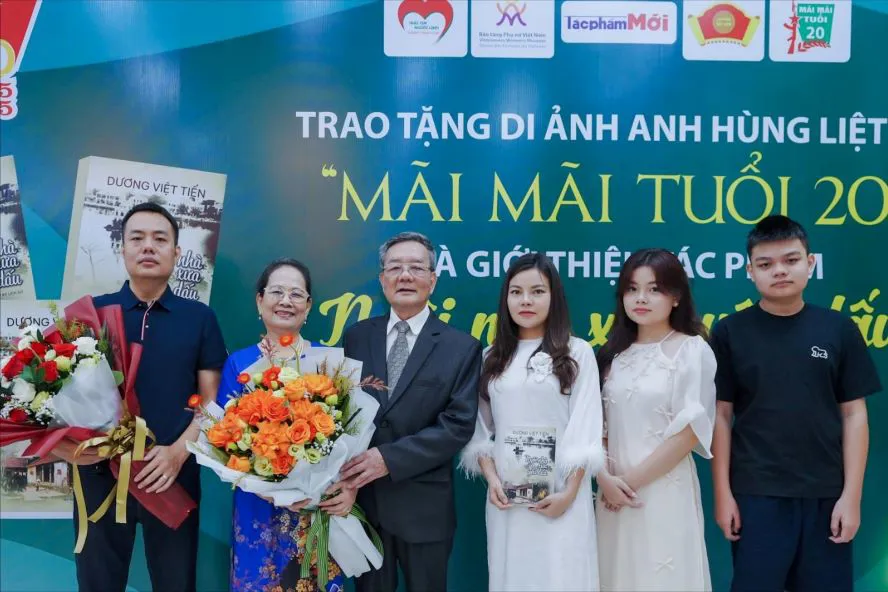
Duong Viet Tien, the son of Duong Quang Tri and Luu Thi Huong, has recounted the story of his family’s home in the recently released book Beloved Old House. The book is not a personal or family memoir, but a proud history of a lineage that made a significant contribution to the nation’s resistance against foreign invasion.
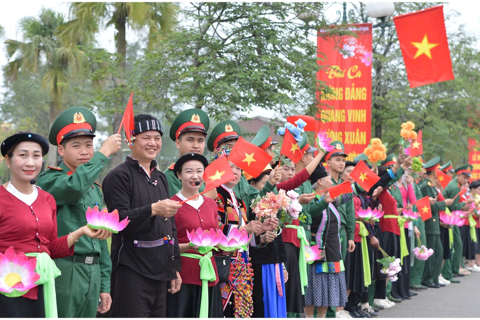
Recently, Tien’s book and his family story were announced in Hanoi during a ceremony hosted by the Soldiers’ Hearts organization.
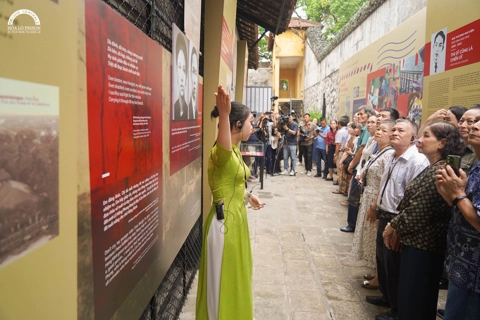
Artists of the organization restored portraits of some martyrs and revolutionary veteran Duong Quang Tri, the owner of the historic residence, with an aim to pay tribute to those who devoted themselves to the national revolution.