Upcoming Capital Law to help Hanoi address pollution issues
Hanoi magnetizes a substantial labor force from cities and provinces across the country, putting a strain on urban infrastructure.
With a population of more than eight million, Hanoi faces infrastructure, traffic, and environmental challenges that threaten severe pollution. The city is now actively formulating strategies and pooling resources through amendments to the Capital Law to tackle these issues.
| A corner of Hanoi. Photo: Hai Linh/The Hanoi Times |
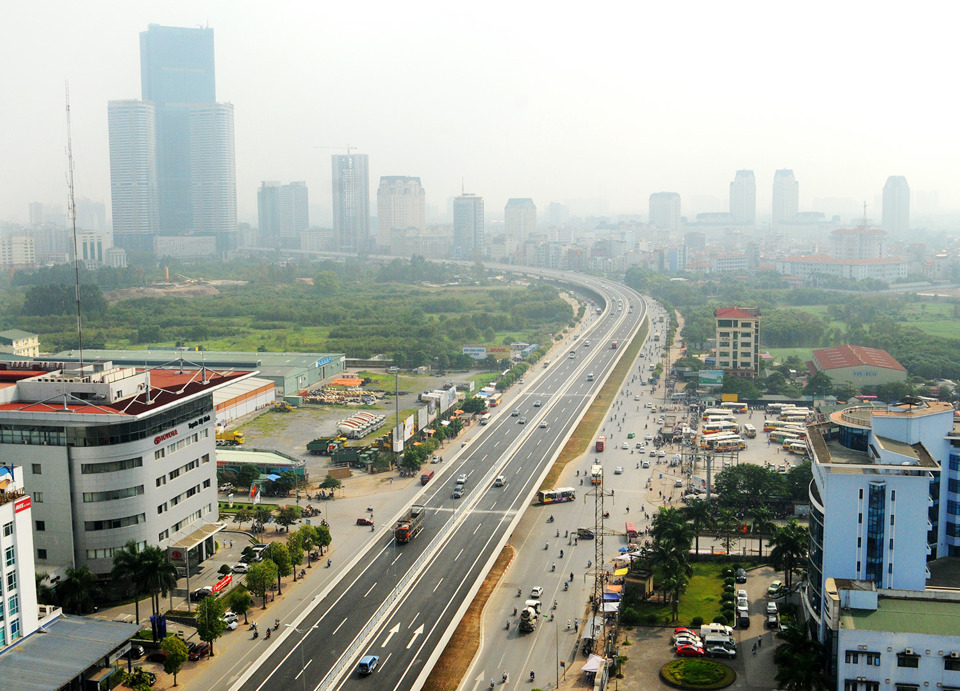
Being the economic and political nucleus of Vietnam, Hanoi magnetizes a substantial labor force from cities and provinces across the country, putting a strain on urban infrastructure. Concurrently, the rapid pace of urbanization is causing severe environmental degradation in the capital. Recent statistics indicate that Hanoi has a population density of 2,398 people per square kilometer, a staggering 8.2 times higher than the national average.
Dr. Nguyen Quoc Phi, a lecturer at the University of Mining and Geology, suggested that this situation poses a formidable challenge for local authorities seeking to balance urban development with environmental protection.
Despite the enactment of the 2012 Capital Law, which proposed various objectives, solutions, and provisions, there remain notable shortcomings and limitations in the realm of environmental protection and waste management, Phi said.
Worryingly, around 7,000 tons of household waste are generated daily, of which 10-15% is left uncollected or untreated, often dumped in canals or vacant lots throughout the city.
Moreover, Hanoi grapples with a daily wastewater volume of approximately 320,000 cubic meters, of which one-third is industrial wastewater. Most of Hanoi's rivers, including To Lich, Kim Nguu, Lu, Set, and Nhue, have deteriorated to a "dead" state, significantly affecting the residents' quality of life.
While Hanoi authorities have implemented measures like source-segregated solid waste disposal and piloted Japanese nanotechnology to clean the To Lich River, the widespread adoption of these initiatives remains constrained by limited resources and personnel.
Challenges related to air pollution, noise, and soil contamination further exacerbate the situation. Since 2017, environmental management agencies have imposed penalties on 6,025 facilities for environmental violations, amounting to over VND63 billion (US$2.6 million) in fines.
The Department of Construction's inspectors have also penalized more than 53,000 projects for causing environmental harm, resulting in nearly VND100 billion ($4.1 million) in fines. Despite these efforts, Hanoi's air quality has yet to improve significantly.
New solutions on the horizon
Lawyer Nguyen Hung Quang, Vice Chairman of the Vietnam Society of International Law, highlighted that the issue of environmental protection and pollution reduction has been integrated into many provisions of the proposed amended Capital Law. For instance, the Drafting Committee has included several provisions to facilitate Hanoi's expansion of its urban railway network.
"With this strategy, it is clear that once the law is enacted and implemented, the use of private vehicles in urban areas will decline. This will facilitate the development of satellite urban areas equipped with comprehensive technical and social infrastructure. It will also allow the gradual relocation of certain government offices, hospitals, universities, and polluting factories from the city center. Consequently, air pollution, specifically, and environmental pollution in central urban areas, in general, will be significantly reduced," Quang emphasized.
Additionally, the amended Capital Law strengthens measures to enforce the provisions of the 2020 Law on Environmental Protection. These measures include increasing penalties for administrative violations in the environmental domain and designating Hanoi as a low-emission region with stringent protection measures and standards.
Environmental protection in the capital is also addressed in agricultural and rural development regulations. These regulations feature measures to support and invest in the development of modern agriculture and rural areas, enabling farmers to meet the requirements of the new era.
Commenting on these policies, Phi from the University of Mining and Geology emphasized the need to grant the Hanoi People's Council the authority to establish low-emission zones tailored to the capital's unique conditions.
Specific requirements within the amended Capital Law entail restrictions on certain types of production, business activities, transportation means, and construction projects that have the potential to cause pollution. He noted that these entities must either limit their operations or adhere to enhanced environmental standards and regulations that go beyond the standard norms.
The impact assessment report of the amended Capital Law and various studies show that environmental pollution in Hanoi is partly attributed to neighboring areas, such as regional air pollution and contamination of rivers flowing through Hanoi, such as the Nhue and Day rivers.
Hence, the mechanism and policy of "linking and developing the Capital Region to transform it into a fast-growing, socio-economically sustainable, green, civilized and dynamic area that will become key region" will ensure coordinated efforts to address long-term environmental issues and promote synchronization between Hanoi's policies and measures and those of the provinces in the Capital Region.
"The overarching goal is to bridge the "gap" in environmental protection and work towards building a green, clean, beautiful, and sustainable capital," Phi concluded.