Hanoi
Urgent restriction of private vehicles
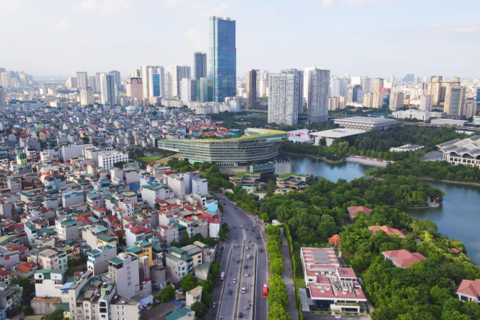
Hanoians have agreed for a long time that the city’s the infrastructure development has not kept pace with the rapid increase in the number of transport vehicles.
Rapid development of private vehicles
During the last few years, responsible agencies have strived to reduce the traffic congestion by improving the infrastructure or ugrading the transportation system. From 2003 to 2011, the city’s relevant agencies suggested that motorcycles can run on odd or even days depending on the last numbers of their license plates except Saturday and Sunday. However, the majority of the public did not support such policy.
The rapid urbanization together with massive increase in the number of private vehicles have rendered difficulties to the efforts to reduce congestion. From 2011 to 2016, the number of cars increased by 10% and motorcycles by 6.7% each year. As of now, the City has more than 5 million motorcycles, nearly 500,000 cars of all types, over 1.2 million bicycles and over 1.1 thousand electric bicycles . Meanwhile, for many years, even though the transportation infrastructure has been ceaselessly invested in and renovated (3.8% per year) but so far it has been unable to meet the circulation demand of the rising number of vehicles. The rapid expansion of the city’s private vehicle fleet not only puts pressure on the road infrastructure but also pollutes the living environment. According to the Director of the Department of Transport Vu Van Vien , in the first three months of 2017, Hanoi had 47 days of which pollution exceeded the permitted standards. The excessive number of vehicles on the roads is blamed for the pollution.
Consistent with the objective
According to the private vehicles restriction proposal, motorcycles will be banned on Hanoi’s city center by 2030. From now till that date, Hanoians will have 13 years to gradually phase out motorbikes and get used to different means of transport. This proposal has been questioned, focusing on alternatives to motorcycles once two-wheelers are banned.
Unlike other past proposals, this one has met with much softer criticism. Dr. Luong Hoai Nam, who was objected for suggesting to ban motorbikes in Hanoi and Ho Chi Minh city 4 years ago, said that people are now more open to the change.
That a city’s policy has received less criticism is partly thanks to the efforts of the City’s agencies in persuading the people on the necessity to reduce private vehicles. On the other hand, the conviction on the city’s authority is also the reason for less criticism. Despite many economic challenges, Hanoi always has always favored the transport infrastructure and pubic transport investment. Thus, the goal for public transport to meet 50-55% of commuter demand by 2030 is believed to be feasible. In addition, the City is putting all effort to develop urban railways, the Bus Rapid Transport (BRT) and a network of stations to create an efficient multi-modal transport system. Dr. Luong Hoai Nam and other transport experts stated that it is important for Hanoi and Ho Chi Minh city to be consistent with the strategy of reducing private vehicles in urban areas.
According to survey jointly conducted in 21 heavy traffic spots in Hanoi in July 2016 by the Transport Development and the Strategy Institue (TDSI), cars amount to 14.38% of total vehicles and cover up to 42.18% street area. Motorcycles make up 43.62% areas of the streets, while the rest are of buses and other vehicles. So, private vehicles currently use up 85.8% areas of streets. If there is no significant change to this situation, by 2020, the whole city will be heavily congested. –Pham Hoai Chung, Head of the Urban Transport Development Centre of TDSI.
During the last few years, responsible agencies have strived to reduce the traffic congestion by improving the infrastructure or ugrading the transportation system. From 2003 to 2011, the city’s relevant agencies suggested that motorcycles can run on odd or even days depending on the last numbers of their license plates except Saturday and Sunday. However, the majority of the public did not support such policy.

Congestion on Thai Ha Street
|
Consistent with the objective
According to the private vehicles restriction proposal, motorcycles will be banned on Hanoi’s city center by 2030. From now till that date, Hanoians will have 13 years to gradually phase out motorbikes and get used to different means of transport. This proposal has been questioned, focusing on alternatives to motorcycles once two-wheelers are banned.
Unlike other past proposals, this one has met with much softer criticism. Dr. Luong Hoai Nam, who was objected for suggesting to ban motorbikes in Hanoi and Ho Chi Minh city 4 years ago, said that people are now more open to the change.
That a city’s policy has received less criticism is partly thanks to the efforts of the City’s agencies in persuading the people on the necessity to reduce private vehicles. On the other hand, the conviction on the city’s authority is also the reason for less criticism. Despite many economic challenges, Hanoi always has always favored the transport infrastructure and pubic transport investment. Thus, the goal for public transport to meet 50-55% of commuter demand by 2030 is believed to be feasible. In addition, the City is putting all effort to develop urban railways, the Bus Rapid Transport (BRT) and a network of stations to create an efficient multi-modal transport system. Dr. Luong Hoai Nam and other transport experts stated that it is important for Hanoi and Ho Chi Minh city to be consistent with the strategy of reducing private vehicles in urban areas.
According to survey jointly conducted in 21 heavy traffic spots in Hanoi in July 2016 by the Transport Development and the Strategy Institue (TDSI), cars amount to 14.38% of total vehicles and cover up to 42.18% street area. Motorcycles make up 43.62% areas of the streets, while the rest are of buses and other vehicles. So, private vehicles currently use up 85.8% areas of streets. If there is no significant change to this situation, by 2020, the whole city will be heavily congested. –Pham Hoai Chung, Head of the Urban Transport Development Centre of TDSI.