US veteran dedicates life to healing war wounds
American painter and war veteran David Thomas has traveled many times to Vietnam to heal from past traumas and use art to raise his voice against the war.
One day in late April, American artist and war veteran David Thomas and I strolled along Nguyen Thai Hoc Street, Hanoi where the Vietnam Fine Arts Museum was exhibiting his latest works.
He said that walking was very beneficial for someone suffering from Parkinson's like him. The disease was a result of his exposure to Agent Orange during his army service in the Central Highlands in 1969.
As we walked, we talked about the old days when he set foot in Vietnam for the first time and fell in love with the country for the rest of his life.
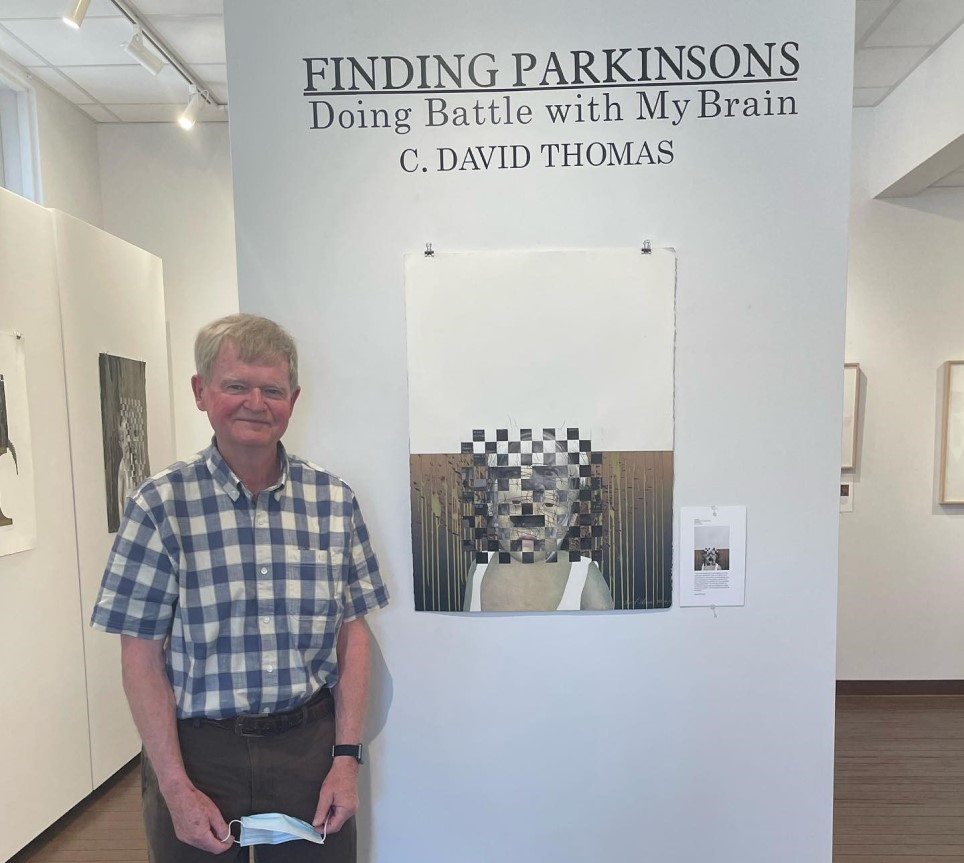
| David Thomas at his exhibition in Danang in April. Photo courtesy of David Thomas |
The war is not over
- You came to Vietnam for the first time in the war. Recalling those days, how do you feel?
In June 1968, after graduating from Portland Art School, I joined the Army. From April 11, 1969 to March 22, 1970, I was stationed in Pleiku, Buon Me Thuot, Kon Tum, South Vietnam. My job was to drive a jeep and draw blueprints. I also drew and photographed many of the children who surrounded my jeep whenever I stopped.
What I miss most are the curious children from the Central Highlands who surrounded the jeep and fiddled with my radio. At that time I was very happy to play with them. In the group, I was especially close to a girl who was deaf and dumb. There is no language barrier at all, we "speak" with our hands.
At that time, I just went on a mission. Later, the more I thought about it, the more I felt sorry and tormented for the children who grew up in a bad situation. When I returned to America, what I remembered most was the smiles of the children.
When people talk about Vietnam, they think of the war, but I discovered other beauties of the country and its people. It's beautiful souls full of poetry, longing for peace, and resilience to overcome all the difficulties of war.
I do not participate in anti-war protests in the streets. Instead, I paint many pictures of Vietnamese children, reflecting the devastation the Americans have caused in that country.
- What did you think when you heard about the reunification of Vietnam on April 30, 1975?
I'm glad the war is over. The Vietnamese people now have the peace they deserve after centuries of struggle because they were invaded by many countries. I think of the children in the Central Highlands forest, they will be able to go to school and live a normal life.
The war is over, but the reality is that its consequences linger. The legacy of Agent Orange that I suffer from is one example. Millions of Vietnamese are also victims of this deadly weapon. This generation may be healthy, but will their descendants carry the consequences? Unexploded ordnance is still in the ground, which can cause accidents and injuries to people.
So, in a way, the shadow of the war is still there. That's why I'm still creating, to tell people about it.
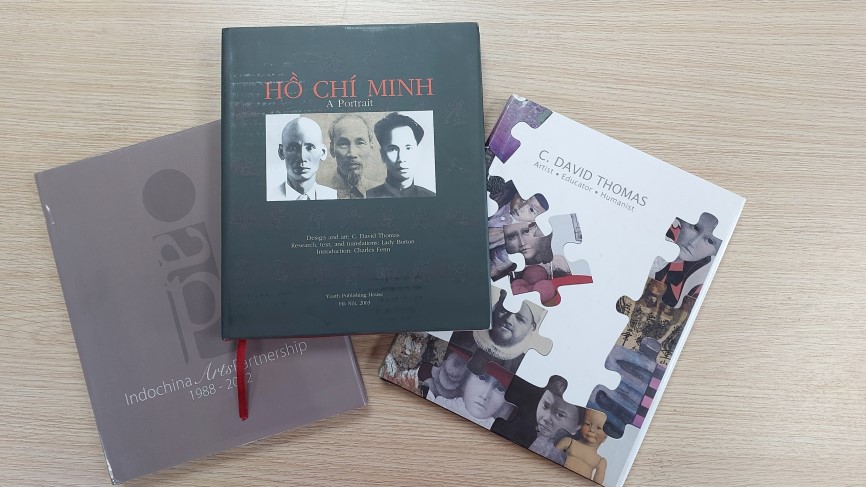
| Some books by David Thomas about Vietnam. Photo: Ngo Minh/The Hanoi Times |
Little did I know that I would spend the rest of my life trying to ease the pain caused by the American War there, to educate Americans here about the real tragedy of our invasion of Vietnam, and to humanize the people we had dehumanized in order to kill and poison them. I have been invited into the homes of our former enemy many times only to learn how much we have in common, not that which divides us. We have laughed and cried together and shared many beautiful memories and hopes for the future.
I also became fascinated with Vietnam’s great leader Ho Chi Minh and painted over fifty portraits of him and made an artist’s book and trade book about his life and country.
A year later, in the summer of 1988, I founded the non-profit Indochina Arts Association (IAP) to create a bridge between the two countries' culture, art, and people-to-people diplomacy. I want Americans and the world to know that Vietnam is a wonderful country, with great people.
| Exhibition "David Thomas and Friends" opens at the Vietnam Fine Arts Museum. Photo: Ngo Minh/The Hanoi Times |
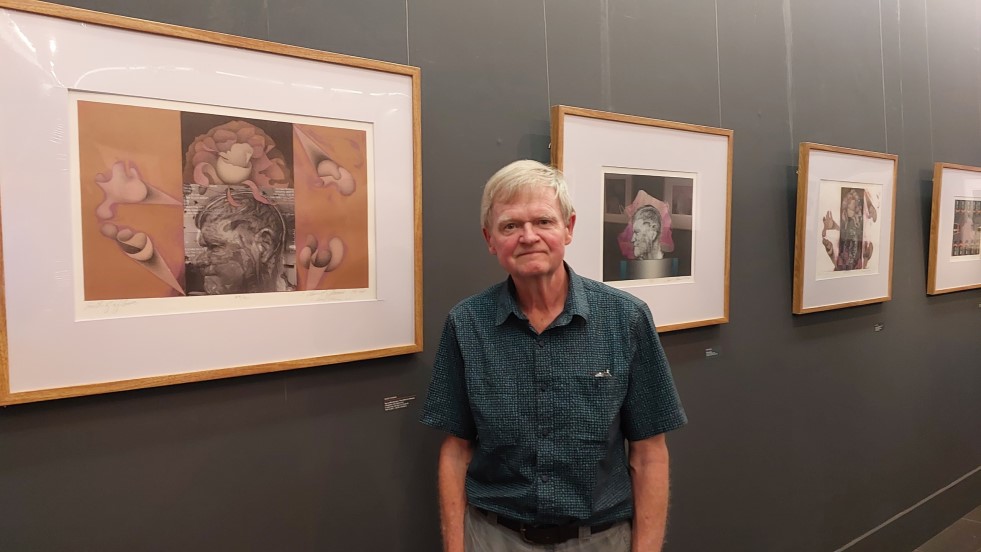
- Why did IAP stop in 2019?
Yes, IAP has connected many Vietnamese and American artists, organized many exhibitions showing the artistic perspectives of artists from both countries, and also brought dozens of Vietnamese artists to the US for exhibition, exchange, and study. Since then, I have had confidants such as painter Le Huy Tiep, painter Phan Cam Thuong... But this is a non-profit organization that needs to raise funds to operate. In 2019, I am old and have Parkinson's disease, so I decided to stop doing IAP.
-In what way has this disease been a hindrance to your artistic work?
In 2015, I was diagnosed with Parkinson's disease, possibly caused by exposure to Agent Orange during the war.
During a year in the Central Highlands, I never really paid much attention to why nothing grew in that rich volcanic red soil. I did know that my unit was also responsible for killing the vegetation a hundred yards on either side of the roads we were building and at all work sites. This was done primarily to remove jungle growth where snipers and enemy soldiers could hide. We were told this would keep us safe.
Although I was assured by my superiors that this poison only killed plants and was harmless to humans, I always doubted it.
On December 14, 2020, I saw my brain for the first time after an MRI scan. So I decided to use these images to create graphic works about the consequences of war. So, will this illness hinder me or become material for me to continue being creative? Time will tell.
Thank you for your time!