Van Dinh bets on community tourism to grow cultural industries
Positioned at the southern gateway of Hanoi, Van Dinh is charting a community-based tourism strategy that places culture, cuisine and local experience at the heart of sustainable development.
THE HANOI TIMES — Community-based tourism has become the central development orientation of Van Dinh Commune, aiming to unlock its cultural and culinary strengths while contributing to the expansion of Hanoi’s cultural industries.
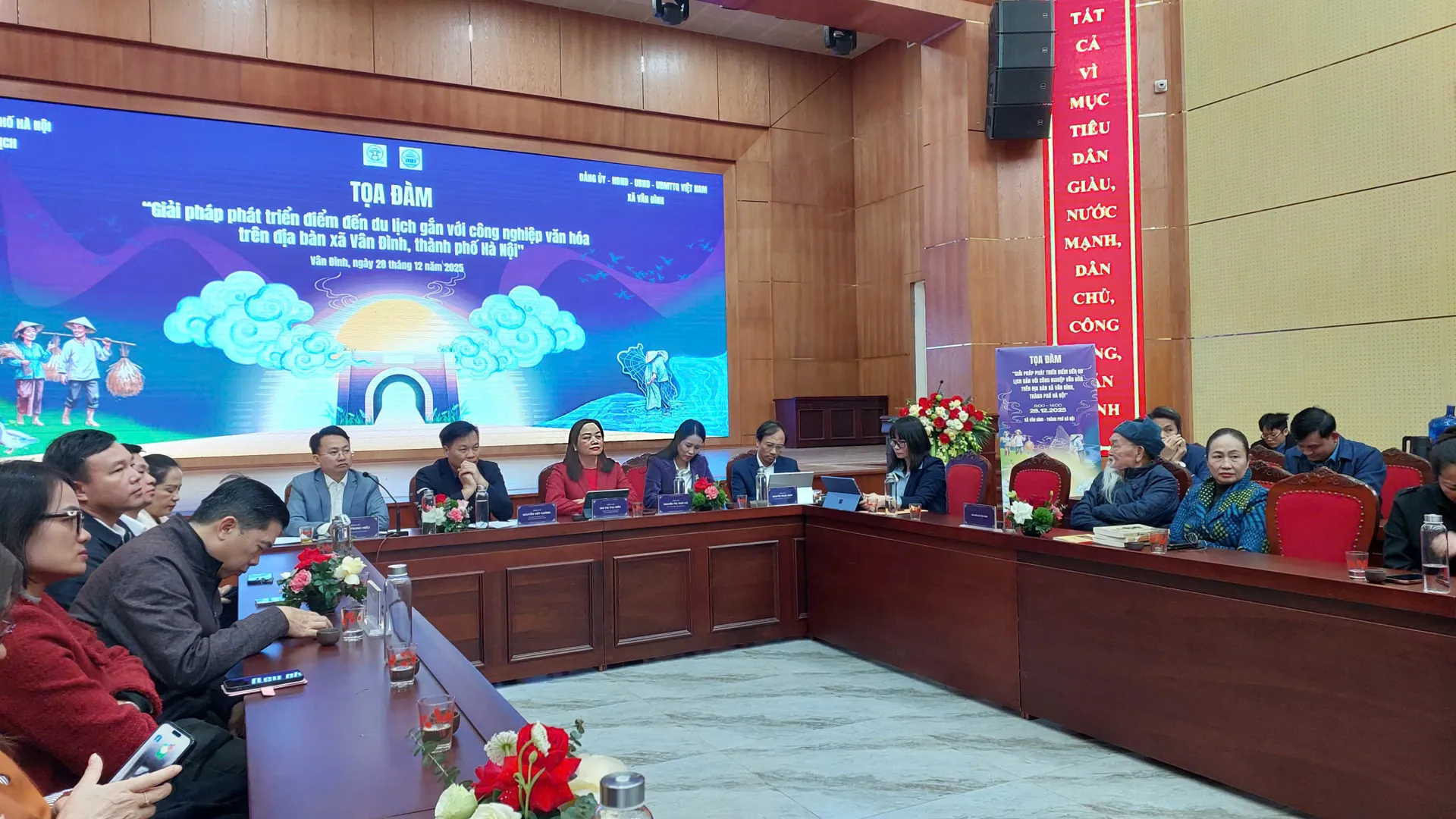
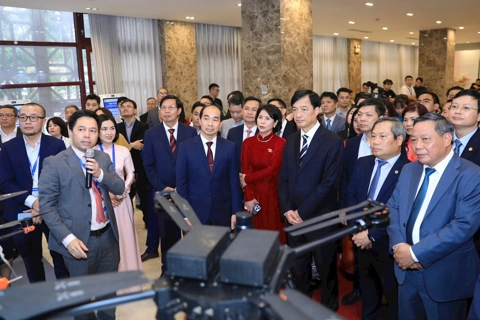
Many representatives gathered at the seminar to find solutions to develop Van Dinh tourism. Photos: Ngo Minh/The Hanoi Times
Located in the heart of southern Hanoi, the newly formed Van Dinh Commune emerged from the administrative merger of Van Dinh Town and the former communes of Cao Son Tien, Phuong Tu and Tao Duong Van under Ung Hoa District.
The area holds deep historical and cultural roots, with a rich system of tangible and intangible heritage, agricultural and rural landscapes that preserve the distinctive identity of the Northern Delta and renowned culinary traditions that have evolved into recognizable local brands, most notably Van Dinh roasted duck.
With its culinary reputation and countryside setting, Van Dinh offers strong potential as an outdoor and experiential tourism destination on the outskirts of the capital.
Duck-based specialties from Van Dinh enjoy nationwide recognition. Local authorities have identified cuisine as a key pillar of the nighttime economy, aiming to extend visitor stays and increase tourism spending.
With these advantages, Van Dinh possesses significant potential to gradually develop into a cultural, experiential and culinary tourism destination closely linked to cultural industry growth, said Tran Trung Hieu, Deputy Director of the Hanoi Department of Tourism.
However, recent tourism development efforts have yet to fully harness the commune’s potential, he said at the seminar “Finding solutions to develop tourism destinations associated with the cultural industry in Van Dinh Commune, Hanoi” on December 28.
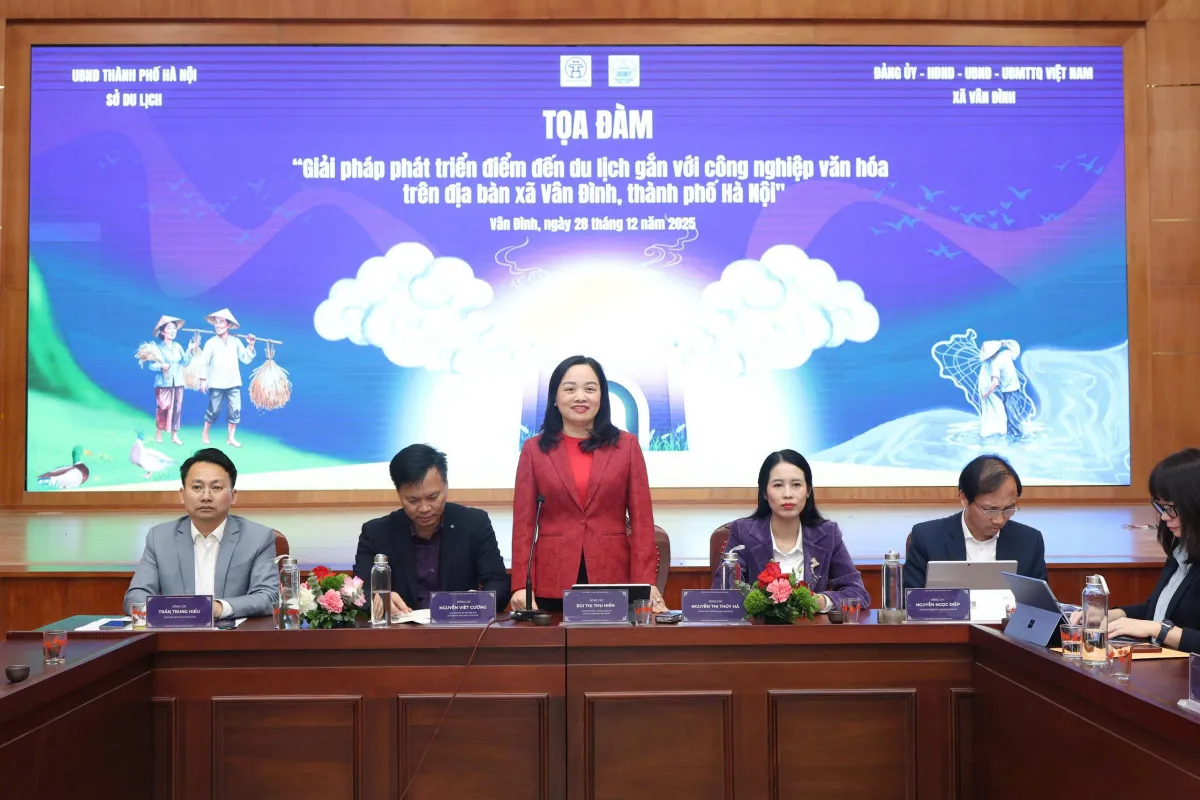
Bui Thi Thu Hien, Secretary of the Party Committee and Chairwoman of the People's Council of Van Dinh Commune, calls for cooperation between travel agents and researchers to find solutions for local tourism development.
According to Hieu, existing challenges include the lack of complete tourism routes and destinations, products that lack distinctiveness and depth and unsynchronized infrastructure.
Coordination between local authorities and travel companies remains limited, while promotion and marketing activities have yet to gain sufficient traction.
“To overcome these constraints, Van Dinh needs specific and feasible solutions to develop tourism in a structured and sustainable manner,” he said.
Nguyen Viet Cuong, Deputy Director of the Department of Heritage under the Ministry of Culture, Sports and Tourism, said Van Dinh has preserved its cultural heritage, historical relics and culinary traditions well over many years.
He noted that several traditional Hanoi dishes have already gained recognition as national intangible cultural heritage, such as Cha Ca La Vong (La Vong grilled fish) and the traditional Bat Trang feast.
Cuong also highlighted Van Dinh’s strategic location along a spiritual tourism axis linking Huong Pagoda in Hanoi with Tam Chuc Pagoda in Ninh Binh Province.
“Instead of short, one-day visits, tourists can extend their stays to two or three days. With its famous duck dishes, Van Dinh can fully develop into a culinary tourism destination,” he said.
He added that the locality should actively promote its strengths by conducting comprehensive heritage inventories and preparing dossiers for domestic and international recognition.
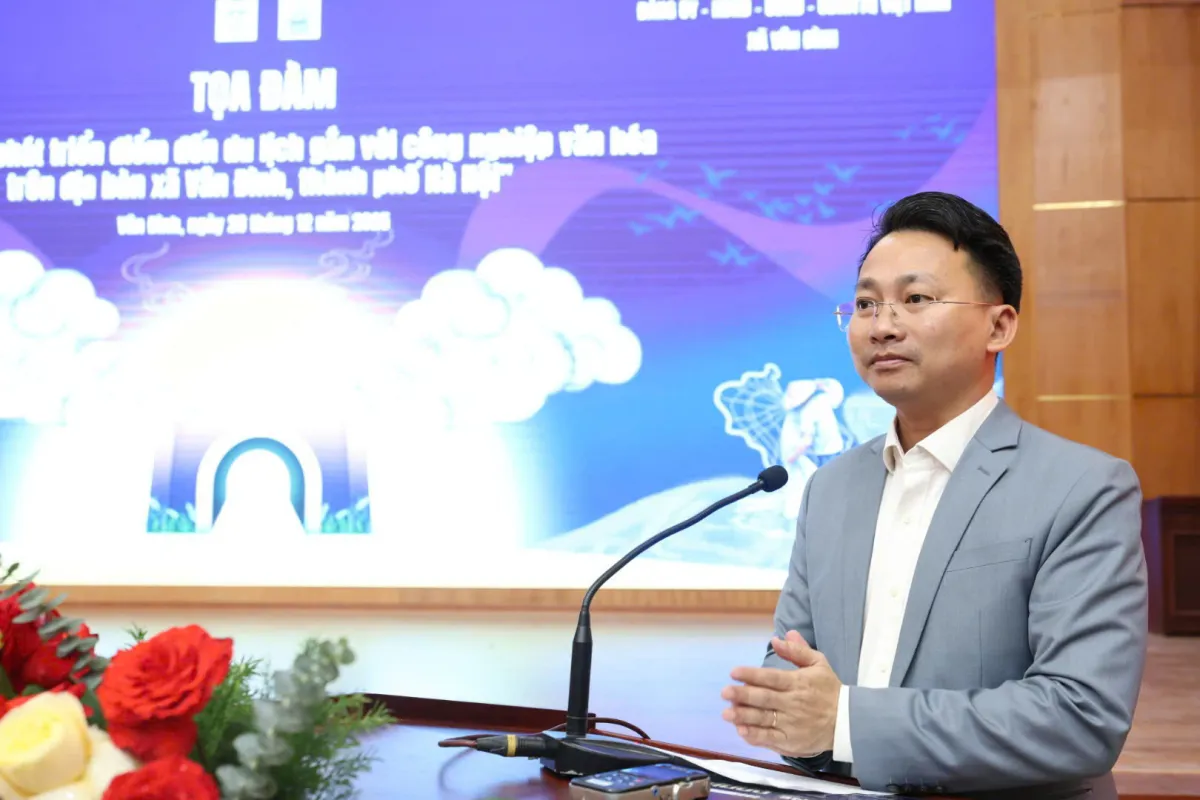
Tran Trung Hieu, Deputy Director of the Hanoi Department of Tourism, speaks at the seminar.
Nguyen Van Cuong, Director of Trang An Travel Company, pointed out that Van Dinh still lacks clearly defined tourism routes and destinations, while distinctive tourism products have yet to undergo systematic development or regular operation.
Tourism infrastructure also remains limited, particularly accommodation facilities, dining services, rest areas, parking spaces, public restrooms and other essential amenities, he said.
Inadequate connectivity between tourism sites further complicates tour organization and route planning, Cuong added.
In addition, several OCOP (One Commune One Product) agricultural products with tourism potential, such as lotus tea from Nguyen Xa Village, VietGAP pomelo from Thanh Vat Village, melons from Vinh Thuong Village and J02 rice from Ngoc Dong Village, have yet to evolve into integrated tourism offerings.
The absence of strong links between production, visitor experience and consumption has reduced the effectiveness of these products in tourism development, Cuong said.
Insights and recommendations gathered from the seminar will provide a foundation for coordinated implementation, with the goal of turning Van Dinh into a model for cultural industry development tied to sustainable tourism in southern Hanoi.
Building specific products for local tourism
Pham Thuy Hoa, Vice Chairwoman of the Van Dinh Commune People’s Committee, said the locality is drafting a comprehensive tourism development plan.
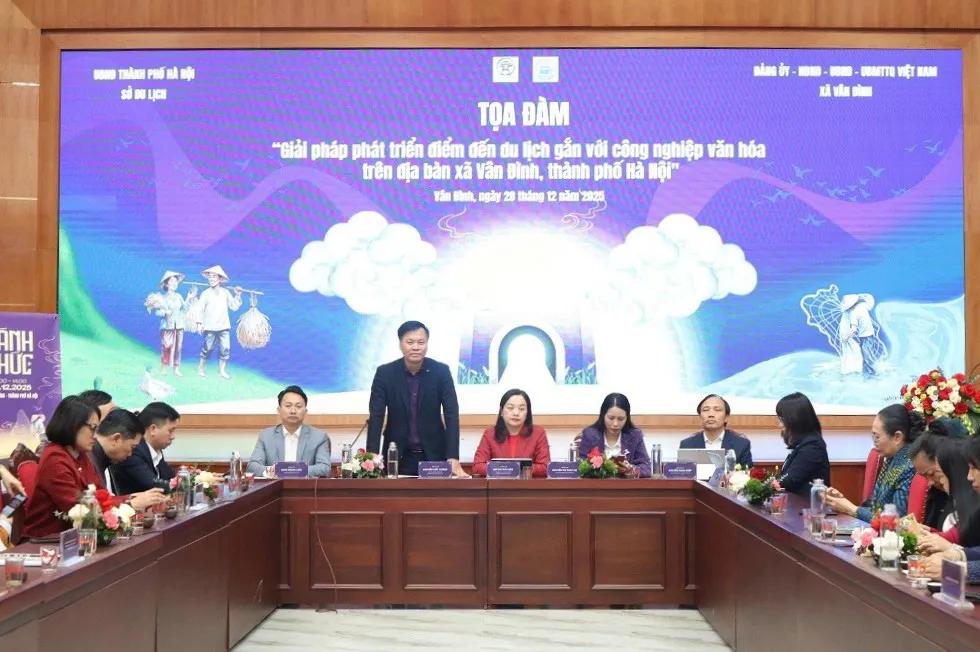
Nguyen Viet Cuong, Deputy Director of the Department of Heritage under the Ministry of Culture, Sports and Tourism, speaks at the seminar.
The plan covers product development, infrastructure and service investment, human resource training, community engagement, promotion, marketing and tourism linkages, she said.
“Van Dinh’s tourism strategy will focus on culinary tourism, heritage tourism, green agriculture and community-based tourism, using tangible and intangible heritage as a foundation, combined with traditional culture, handicrafts, local specialties and the Northern Delta countryside landscape,” she said.
The vice chairwoman added that local authorities will prioritize preserving and promoting heritage values alongside tourism development.
“Future efforts will ensure balance between economic growth, cultural identity and environmental sustainability, while reinforcing the central role of the community in tourism activities.”
According to Bui Thi Thu Hien, Secretary of the Party Committee and Chairwoman of the People’s Council of Van Dinh Commune, the strategy to awaken Van Dinh as a green, civilized, integrated and sustainably developed locality remains a top priority.
“We believe this can be achieved by organizing cultural, artistic and sports events, promoting Van Dinh’s culinary strengths, shaping landscapes that reflect traditional Northern village character and ensuring warm hospitality from local residents,” she said.
She added that the local government will continue to roll out programs that link culture with tourism development, with a strong emphasis on experiential tourism.
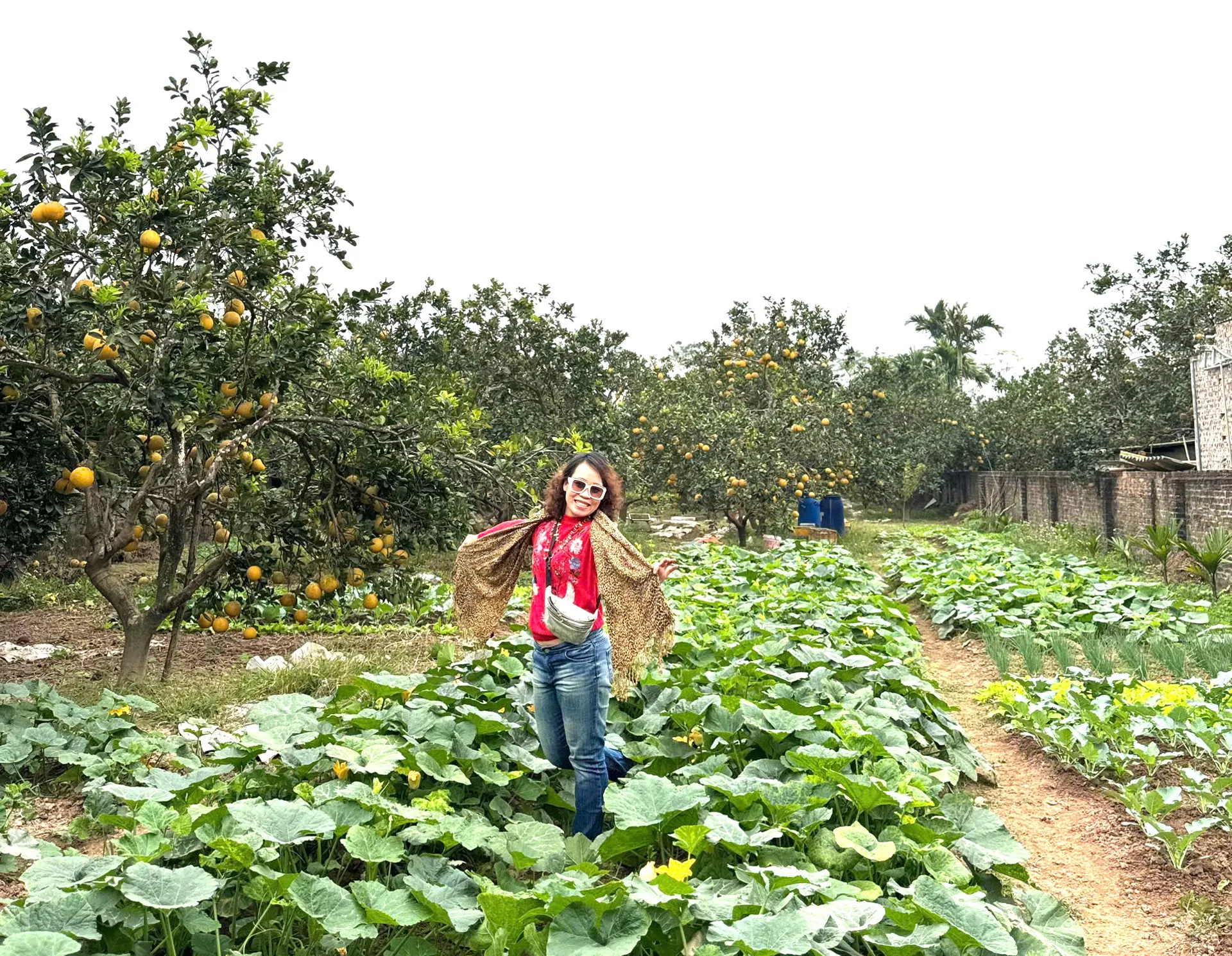
A tourist poses between pomelo and vegetable garden of local people.