Vietnam announces new administrative units
Following the restructuring, Vietnam’s subnational entities will be 34 cities and provinces with two-tiered governments starting July 1, 2025.
THE HANOI TIMES — Vietnam today [June 30] announced all resolutions and decisions on merging provinces, cities and grassroots levels, as well as establishing a two-tiered local government structure which will take effect on July 1, 2025.
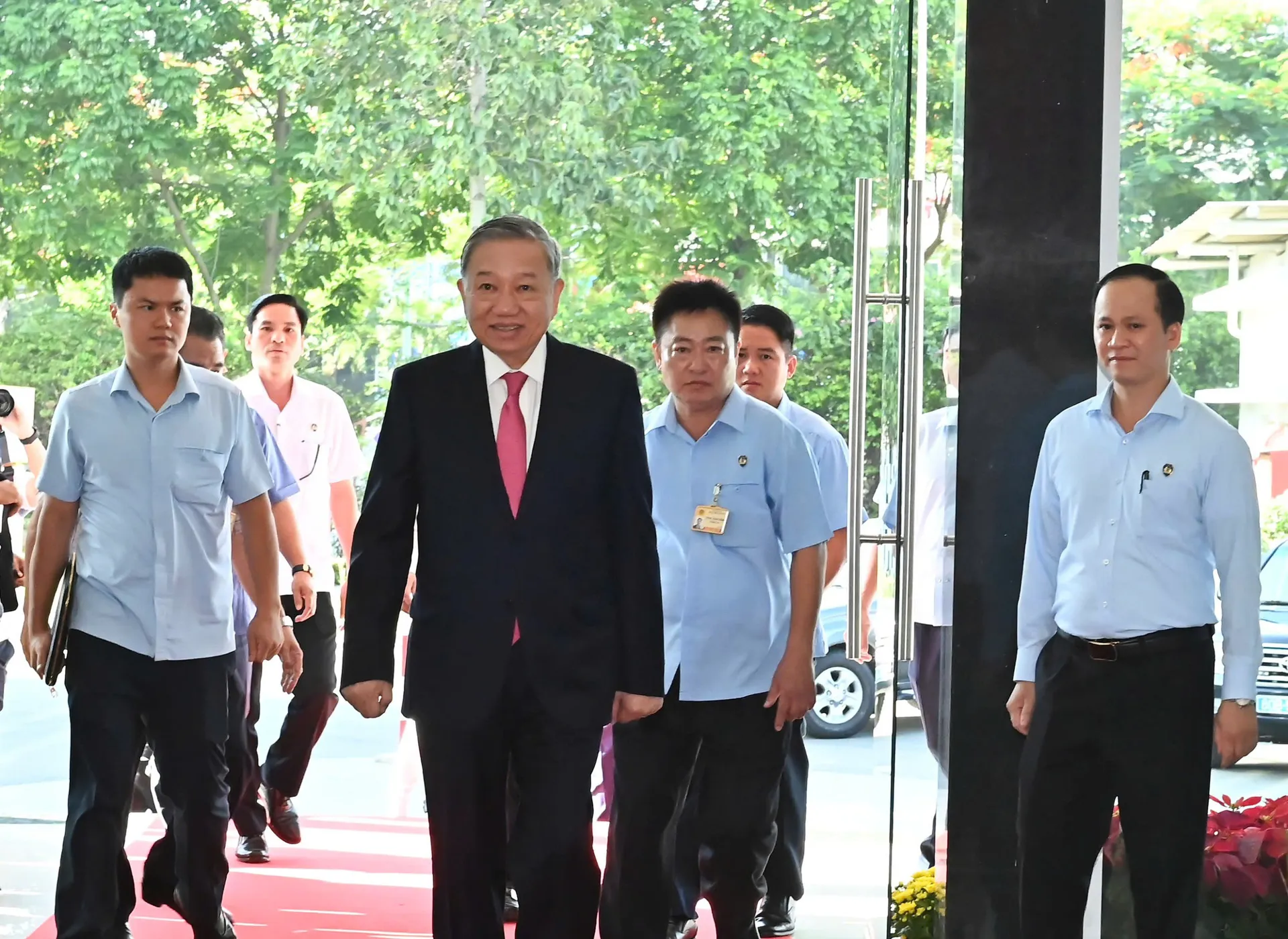
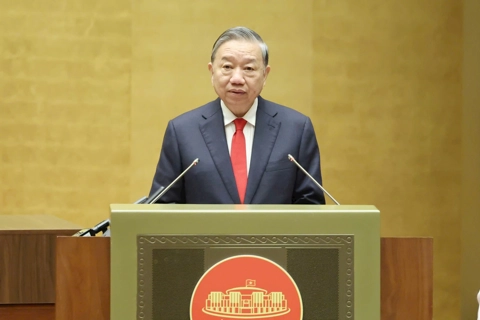
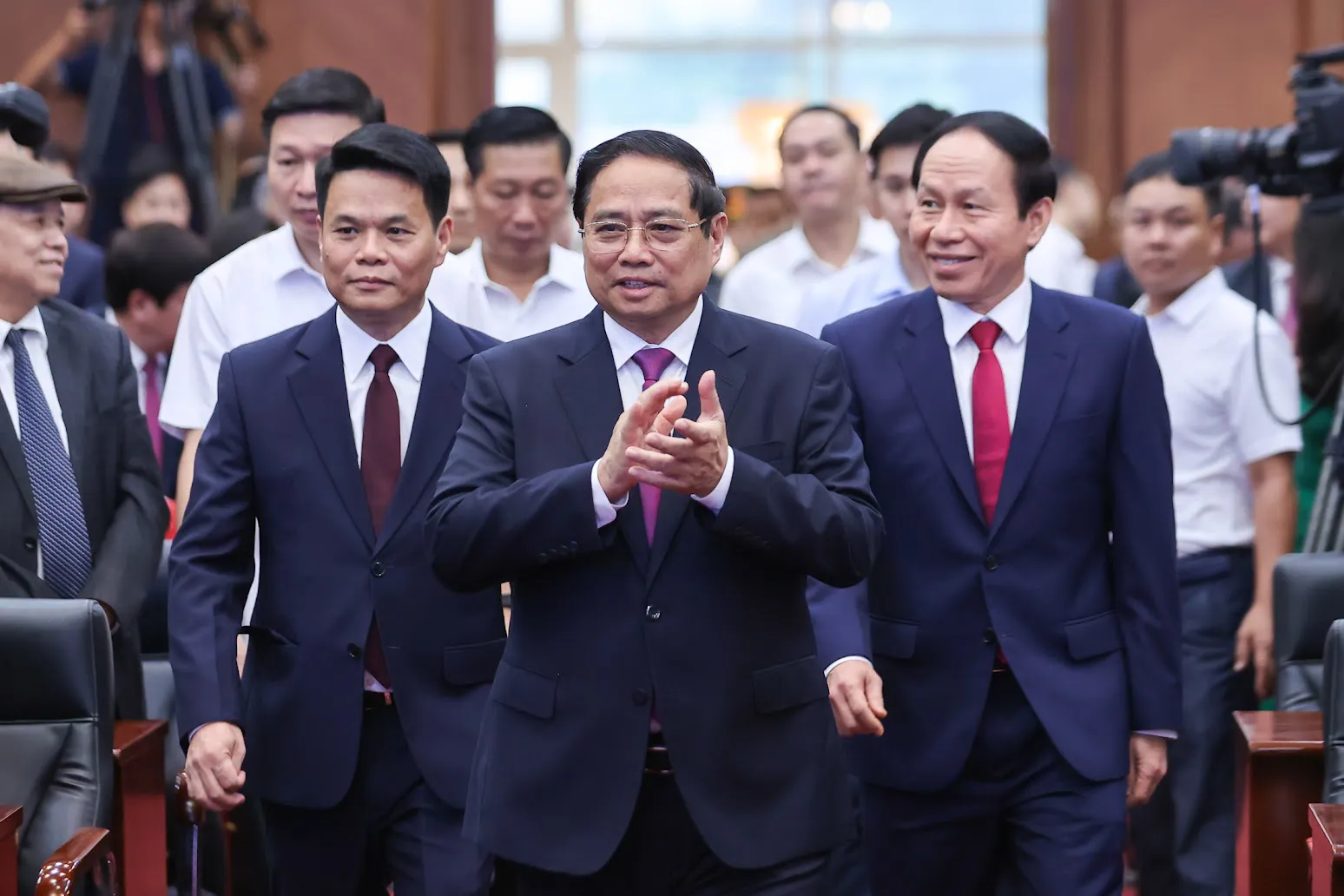
To Lam, General Secretary of the Communist Party of Vietnam, to attend the announcement ceremony in Ho Chi Minh City on June 30. Photo: SGGP
This is a politically significant event for Vietnam, as the nation undergoes a comprehensive administrative restructuring to foster stronger, more sustainable development and streamline governance. As Hanoimoi, the mouthpiece of the Hanoi Party Committee, put it, this marks the beginning of a new era of growth for a prosperous, happy, and sustainable Vietnam.
General Secretary To Lam will attend the official announcement ceremony for the creation of Ho Chi Minh City, formed from the merger of Ho Chi Minh City and the provinces of Binh Duong and Ba Ria-Vung Tau; President Luong Cuong will attend the ceremony for the consolidation of communes and wards in Hanoi. Prime Minister Pham Minh Chinh will be in Haiphong for the merger of Haiphong City and Hai Duong Province. National Assembly Chairman Tran Thanh Man will be in Cantho for the creation of the new Can Tho City; and Standing Secretariat member Tran Cam Tu in Danang. Other high-ranking Party and State officials will attend ceremonies across the country.
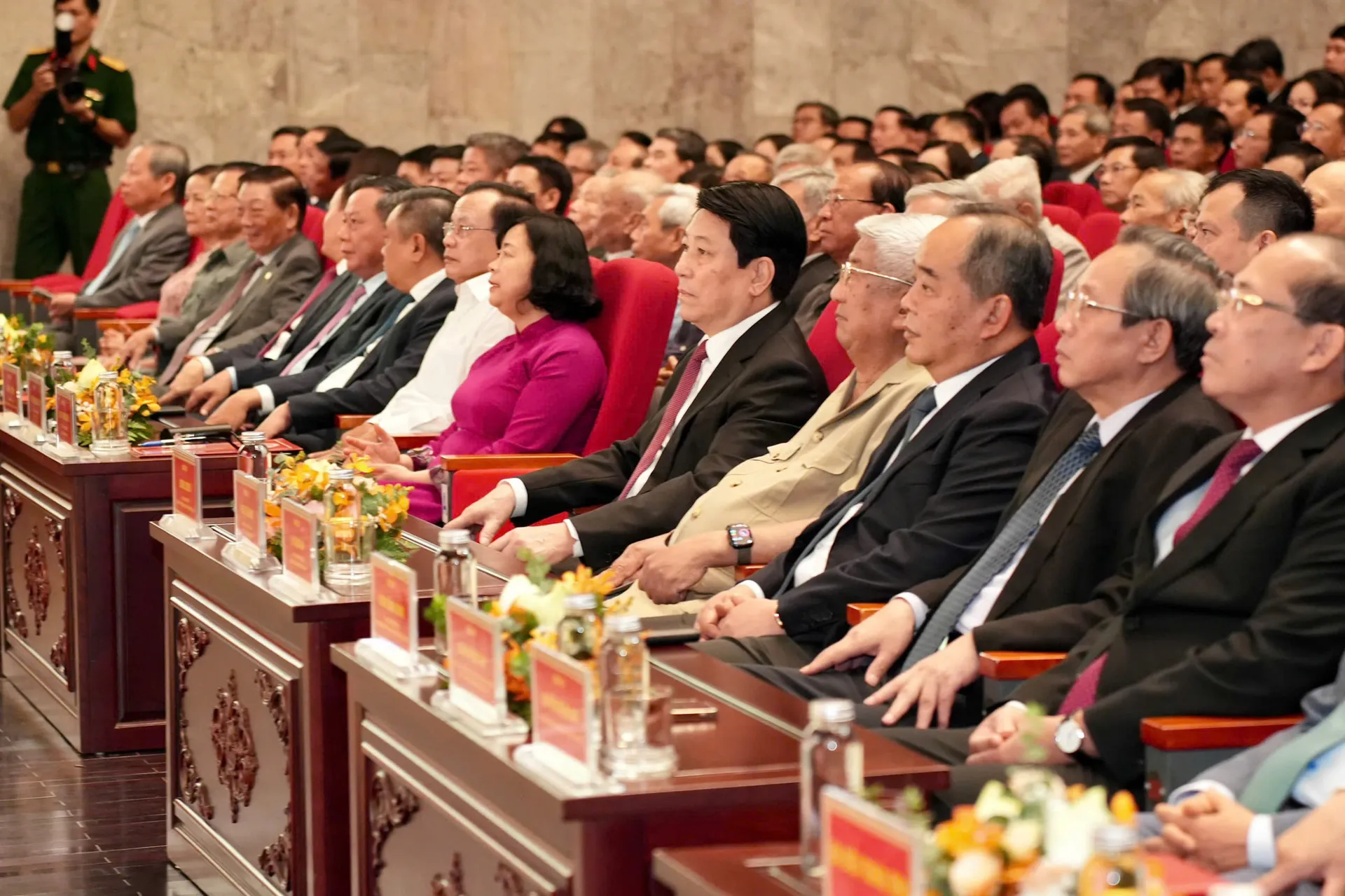
During these ceremonies, a series of resolutions and decisions will be announced, including:
National Assembly Resolutions on the establishment of provinces and cities.
Politburo Decisions on establishing new provincial and municipal Party Committees; and the appointments of Party Executive Committees, Standing Committees, Secretaries, and Deputy Secretaries for the 2020–2025 term.
Decisions by the Party Secretariat on the establishment and leadership of provincial-level Disciplinary Inspection Commissions.
Resolutions from the National Assembly Standing Committee appointing chairpersons and vice-chairpersons of provincial People's Councils, committee heads, and heads and deputy heads of provincial National Assembly delegations.
Prime Ministerial Decisions appointing chairpersons and vice-chairpersons of provincial People’s Committees.
Vietnam Fatherland Front Central Committee Decisions on the formation of provincial-level Fatherland Front Committees.
Resolutions and decisions relating to wards, communes, and special zones will also be announced, including:
National Assembly Standing Committee Resolutions on the establishment of local-level units (wards, communes, and special zones).
Provincial Party Executive Committee Decisions ending the existence of district and commune-level Party organizations.
There will be a new Party Committee formations for wards, communes, and special zones, along with key personnel appointments for Party and government bodies at these levels.
The Fatherland Front will announce decisions on establishing grassroots-level committees in newly formed units.
These documents will be officially handed over, and the new Party and government structures at all levels will be formally introduced at the announcement ceremonies.
A milestone in the country’s history
For the first time in half a century, Vietnam's administrative map is undergoing an unprecedented transformation. Beyond redrawing boundaries, this is a fundamental shift to usher in a new era of local governance that is streamlined, efficient, responsive, and closer to the people.
On April 12, 2025, the Party Central Committee issued Resolution No. 60-NQ/TW, which merged provinces and abolished district-level administrations and shifted to a two-tier local governancesystem. The Politburo and the Party Secretariat then made key decisions on this structural overhaul.
After the National Assembly adopted a plan on June 12, 2025, Vietnam’s 63 provinces and cities were merged into 34, the fewest since reunification (1975), reflecting a bold commitment to reforming the state apparatus.
The National Assembly Standing Committee also approved 34 Resolutions on restructuring commune-level units, merging 10,035 units into 3,321, comprising 2,621 communes, 687 wards, and 13 special zones.
Minister of Home Affairs Pham Thi Thanh Tra said this transformation is not just geographic but also signals a new mindset in national governance. She stated that the consolidation of administrative units has taken into account not only geography and population but also factors such as history, culture, ethnicity, religion, development philosophy, and social psychology.
Moreover, this reform introduces a two-tier local government to replace the current three-tier structure, aligning with international trends for effective governance.
Prime Minister Pham Minh Chinh has emphasized that this revolution in governance is a strategic solution to boost economic growth to 8% this year and double-digit rates in the coming years. These are part of efforts to fulfill the two centennial development goals outlined by the Party (for 2030 and 2045, respectively, to celebrate the founding of the Communist Party of Vietnam (CPV) and the nation, respectively).
The prime minister highlighted that the key reform is shifting the political system from reactive to proactive and service-oriented.
Just before this transformative moment, CPV General Secretary To Lam published an important article titled “The Power of Unity” in which he quoted President Ho Chi Minh’s immortal words: “Unity, unity, great unity – Success, success, great success.”
According to the General Secretary, this quote from the mid-20th century remains deeply relevant. The power of unity is not only a timeless lesson drawn from the long history of humanity but also the very source of Vietnam’s revolutionary triumphs over nearly a century.
Now, as the nation reorganizes its political structure, consolidates administrative units, and lays the foundation for a more sustainable development framework, the spirit of national unity must be more vigorously upheld than ever.
Vietnam is committed to upholding national unity to better realize the people’s aspirations to move forward in the new era.
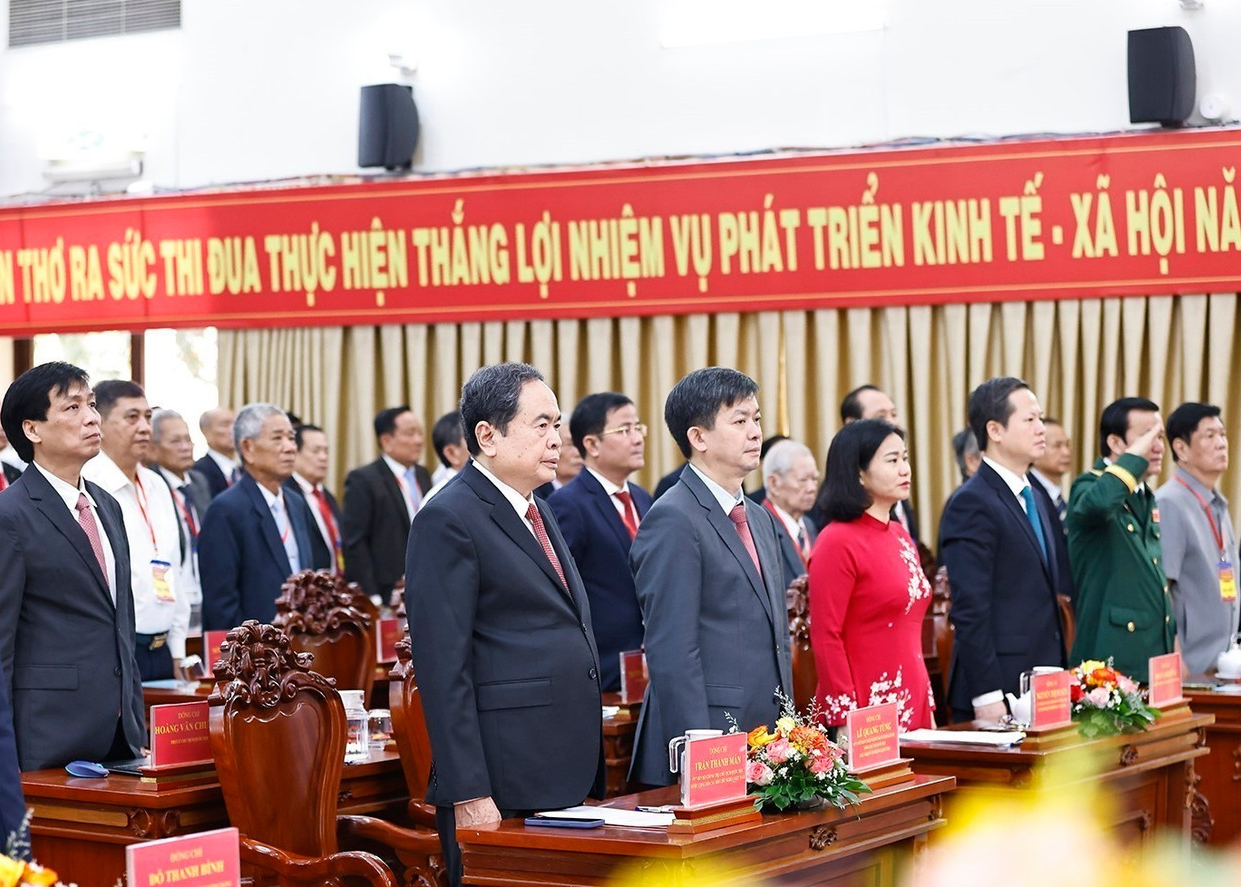
Chairman of the National Assembly Tran Thanh Man at the ceremony in Cantho. Photo: Nhan Dan
|
Names of newly-founded cities and provinces from July 1, 2025: From July 1, 2025, the newly-founded cities and provinces are 34, while 11 remain as they are (Hanoi, Hue City, Lai Chau, Dien Bien, Son La, Cao Bang, Lang Son, Quang Ninh, Thanh Hoa, Nghe An, and Ha Tinh). Meanwhile, the 23 cities and provinces being merged are Ho Chi Minh ( from Ba Ria-Vung Tau and Binh Duong), Haiphong (Haiphong and Hai Duong), Danang (Danang and Quang Nam), Cantho (Cantho, Soc Trang, and Hau Giang), Tuyen Quang (Tuyen Quang and Ha Giang), Lao Cai (Lao Cai and Yen Bai), Thai Nguyen (Thai Nguyen and Bac Kan), Phu Tho (Phu Tho, Vinh Phuc, and Hoa Binh), Bac Ninh (Bac Ninh and Bac Giang), Hung Yen (Hung Yen and Thai Binh), Ninh Binh (Ninh Binh, Ha Nam, and Nam Dinh), Quang Tri (Quang Tri and Quang Binh), Quang Ngai (Quang Ngai and Kon Tum), Gia Lai (Gia Lai and Binh Dinh), Khanh Hoa (Khanh Hoa and Ninh Thuan), Lam Dong (Lam Dong, Dak Nong, and Binh Thuan), Dak Lak (Dak Lak and Phu Yen), Dong Nai (Dong Nai and Binh Phuoc), Tay Ninh (Tay Ninh and Long An), Vinh Long (Vinh Long, Ben Tre, and Tra Vinh), Dong Thap (Dong Thap and Tien Giang), Ca Mau (Ca Mau and Bac Lieu), and An Giang (An Giang and Kien Giang). Among the cities and provinces, Ho Chi Minh will be the most populous with 13.6 million people, followed by Hanoi 8.6 million, Dong Nai 4.4 million, Haiphong 4.1 million, and Ninh Binh 3.8 million. |
![[Infographic] Vietnam after provincial mergers](https://cdn-media.hanoitimes.vn/resources2025/1/users/60/screenshot-2025-06-12-162049-1749720079.png?w=480&h=320&q=100)