Vietnam applies AI to monitor traffic
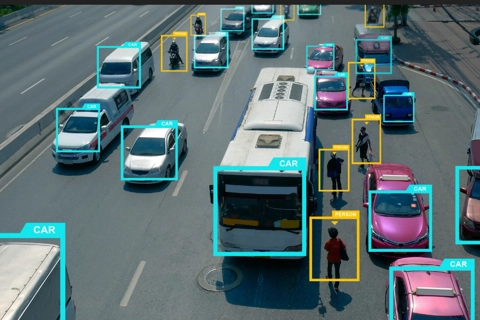
Police officers will no longer need to be on duty at all times because AI-powered cameras work around the clock and can automatically identify traffic infractions.
THE HANOI TIMES — An AI-powered Command and Information Center is piloting in Hanoi linking centers across the country and controlling video feeds from surveillance cameras installed along major roads.
From this center, traffic police detect violations, notify units to handle them, and alert drivers using visuals from AI-powered cameras.

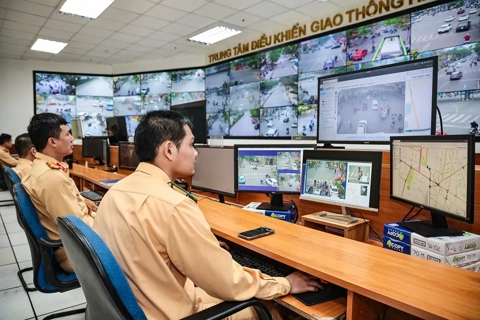
Officers are on patrol on July 17, watching video feeds from surveillance cameras on several expressways at the Command Information Center of the Traffic Police Department. Photos: Pham Cong/The Hanoi Times
The 150-square-meter operation room features two rows of computers that handle video feeds from the national camera system. Officers monitor a large central screen that displays thousands of surveillance points in real time.
Detecting traffic violations via AI
The center operates 24/7 in three eight-hour shifts, with the first shift starting at 6:30 AM. The AI system assists officers with tasks such as monitoring infractions, compiling reports, sending notifications, and managing accident records.
Currently, the AI software can identify over 20 types of the more than 100 legally punishable traffic violations. Officers intervene for violations that the AI cannot detect.
In the initial phase, the center will issue violation warnings through the Ministry of Public Security’s VNeTraffic app. This will apply to vehicles on four major expressways: Noi Bai – Lao Cai, Danang – Quang Ngai, Ho Chi Minh City – Long Thanh – Dau Giay, and Ho Chi Minh City – Trung Luong.
When a violation is detected, the AI extracts relevant visuals, identifies the driver, and compiles a report using license plate data, vehicle color, and distinguishing features.
Officers verify this information by cross-checking it with related databases, including vehicle registration, criminal records, accident history, and inspection records.
Once confirmed, a warning is sent to the vehicle owner via the VNeTraffic app within two hours. Users must install the app on their mobile phones to receive alerts.
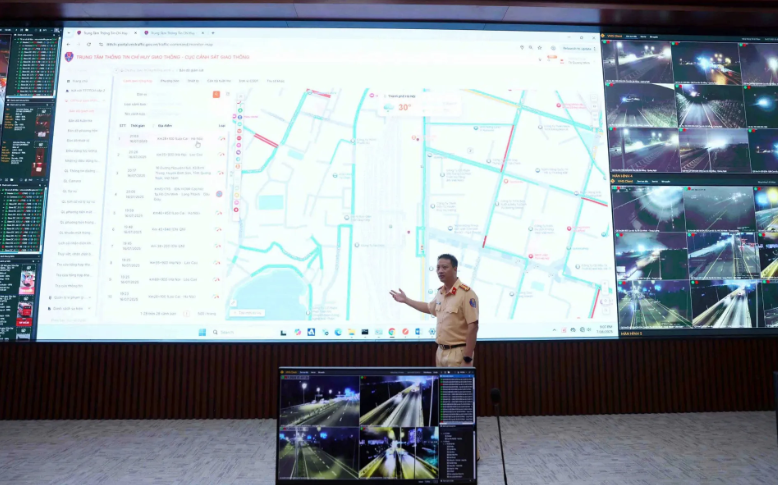
Colonel Pham Quang Huy, Deputy Director of the Traffic Police Department.
Colonel Pham Quang Huy, Deputy Director of the Traffic Police Department, explained that the center also assists police patrols. Equipment such as speed guns and breathalyzers used in the field transmit data back to the center.
"This enables supervisors to track which officers are on duty and their locations, making it easier to dispatch them to scenes of incidents or traffic hotspots," said Colonel Huy.
Moreover, the center monitors all patrol vehicles nationwide. A digital map shows which patrol cars are in motion or parked. Officers can access detailed information on each team, including personnel, equipment, and current assignments.
Ensuring public order
The center’s capabilities extend beyond traffic enforcement. It supports crime prevention by analyzing surveillance footage to detect suspicious activity, identify large gatherings, and recognize wanted individuals through facial recognition technology. When a match is found, the system can trace the suspect’s movements and vehicle usage.

Cameras powered by AI automatically detect traffic violations 24/7, replacing the need for on-site police presence.
The system is also highly effective in accident investigations. If a driver flees the scene and witnesses can only recall the color of the car and the driver's shirt, the AI can sift through the footage to identify matching vehicles within a specific timeframe and location. Then, it can reconstruct the suspected route.
Colonel Huy stated that the center functions as an automated command, analysis, and enforcement hub. The AI can recognize a wide range of traffic offenses and even reconstruct vehicle routes from blurry license plates.
Looking ahead, the system will integrate footage from private and organizational cameras to expand its analytical capacity. The department is rolling out new features, including the ability to pay fines and road tolls online through mobile apps.
"The goal is to digitize all procedures, reduce in-person contact, and simplify administrative steps while maintaining transparency," he noted.