Vietnam-France localities join hands to address environmental challenges
Vietnamese communities work with their French counterparts to address environmental challenges and ensure regional sustainability.
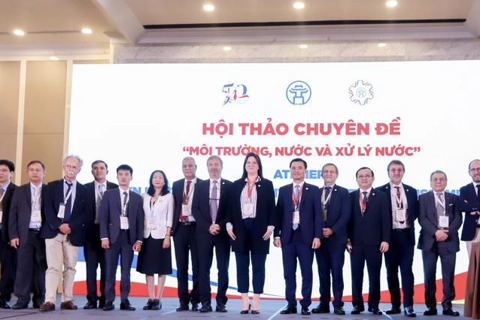
The Hanoi Times talked with experts on the sidelines of the "Environment, Water and Water Treatment" thematic session about how Vietnamese and French communities can work together to address environmental challenges.
Vice Chairman of Ho Chi Minh City People’s Committee Bui Xuan Cuong: France remains a credible partner for Vietnam in sustainable development
| Vice Chairman of Ho Chi Minh City People’s Committee Bui Xuan Cuong. Photos: The Hanoi Times |
.jpeg)
Vietnamese communities recognize that environmental protection requires not only internal resources but also international cooperation and expertise. French localities and investors are seen as reliable partners for sustainable development due to their experience and modern environmental technology.
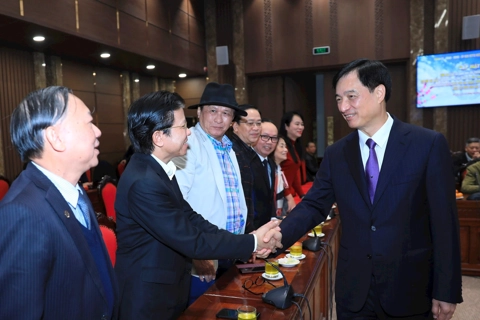
The conference, entitled "Environment, Water and Water Treatment", provided an opportunity for Vietnamese and French localities to share their experiences, assessments, and comments on their cooperation projects, thus promoting effective, long-term, and sustainable cooperation.
Vietnam has been working to strengthen regional linkages in environmental protection and climate change response to increasing management efficiency, promote sustainable use of natural resources, and utilize local strengths. The French model of urban communities, or metropole, provides a means to facilitate urban policy planning and implementation, including environmental protection, and is a model that Vietnamese localities hope to learn from and work with to ensure environmental requirements for the entire region.
Chairman of SEAFF (France) Daniel Material: Expanding environmental sanitation programs in Vietnam
| Chairman of SEAFF (France) Daniel Material. |
.jpeg)
Our goal in Vietnam is to work with Binh Dinh Province on various initiatives, including environmental sanitation programs. For example, we implemented a project to collect wastewater from a residential area in An Nhon Town, treat it at a purification station, and return it to the river.
We also installed toilets for six schools in An Nhon Town and organized meetings to raise people's awareness about toilets. If our first project is successful, we plan to launch a larger initiative with an investment of 20 to 30 million euros.
We also have cross-training programs where our teams and those in Vietnam engage in a self-training process. We have also facilitated the training of Vietnamese delegations in France on water resource management.
Vice Director of Can Tho Department of Natural Resources and Environment Pham Nam Huan: Building specific and practical programs
| Vice Director of Can Tho Department of Natural Resources and Environment Pham Nam Huan. |
.jpeg)
Can Tho places a strong emphasis on environmental protection, particularly in waste collection and treatment, and responding to climate change to promote a circular economy. While the city has achieved some positive results, pollution remains a concern, and Can Tho's central location in the Mekong Delta makes it vulnerable to climate change.
To address these challenges, the city has developed several solutions, such as focusing on the collection and treatment of domestic wastewater in urban areas, managing industrial and hazardous solid waste, and participating in international projects to mitigate the effects of climate change. Can Tho also attaches great importance to cooperation between Vietnamese and French municipalities in environmental protection and climate change initiatives.
In terms of concrete measures, Can Tho implements environmental protection policies and promptly addresses any environmental pollution incidents to prevent recurrence in the future. The city focuses on coordination between Vietnamese and French localities in two areas. Specifically, the two localities aim to fulfill the Paris Agreement by implementing joint projects to reduce greenhouse gas emissions in waste management, urban development, agriculture, and industrial production. In addition, Can Tho also seeks to promote cooperation among enterprises in the environmental sector to promote the development of the circular economy.
The locality is eager to attract investors to implement projects in waste treatment, plastics recycling and clean energy, and would like to learn from France's successful models and initiatives in waste classification and recycling. Both sides can start by developing and implementing specific and practical programs and projects.
Vice Director of Hanoi Department of Natural Resources and Environment Mai Trong Thai: Hanoi tightens management of solid waste
| Vice Director of Hanoi Department of Natural Resources and Environment Mai Trong Thai during the conference. |
.jpeg)
Plastic waste poses a significant threat to both the global and Vietnamese marine environment. In particular, Vietnam is ranked as the fourth largest contributor to marine pollution in the world, after China, Indonesia and the Philippines.
In Hanoi, however, plastic waste from everyday life is not collected and treated separately. Instead, it is mixed with domestic solid waste and sent to landfills for treatment. This practice poses numerous challenges for waste treatment, affecting the decomposition process, releasing microplastic particles and leachate, and resulting in wasted resources.
The majority of plastic waste in the Hanoi treatment area is plastic bags, which make up a significant portion of the plastic waste composition due to Vietnamese consumer habits.
Hanoi's recycling of plastic waste is also disorganized, with informal craft villages using outdated technologies.
Tackling the problem of plastic waste in Hanoi requires a joint effort from the government, businesses, and individuals. The government needs to strengthen its management, inspection, and sanctions, while businesses should prioritize environmental protection and individuals need to increase their sense of responsibility.
An important step is to establish a waste separation management system at the source, increase waste reuse and recycling, promote resource-saving activities, and improve waste collection, transportation, and treatment technologies.
To support these efforts, Hanoi has already issued regulations with requirements to reduce plastic waste for State administrative agencies, socio-political organizations, and non-business units under the City.
Going forward, Hanoi asked the Ministry of Natural Resources and Environment to continue improving and issuing regulations on environmental protection techniques for solid waste and financial incentives for plastic waste recovery, recycling, and reuse. In addition, Hanoi will finalize and promulgate a plan to prepare the necessary resources, financial institutions, and policies to implement waste separation at source while strengthening government management of solid waste.