Hanoi Party Chief pledges full support for artists, scientists
Hanoi is sharpening its development strategy around institutional reform, long-term planning and innovation-led growth, as city leaders underline the role of science, culture and human capital in shaping the capital’s next phase.
THE HANOI TIMES — Hanoi Party Secretary Nguyen Duy Ngoc on February 5 pledged to create the most favorable conditions for artists, scientists, intellectuals and experts to contribute effectively and practically to the development of the capital, as the city enters a new phase of long-term growth.
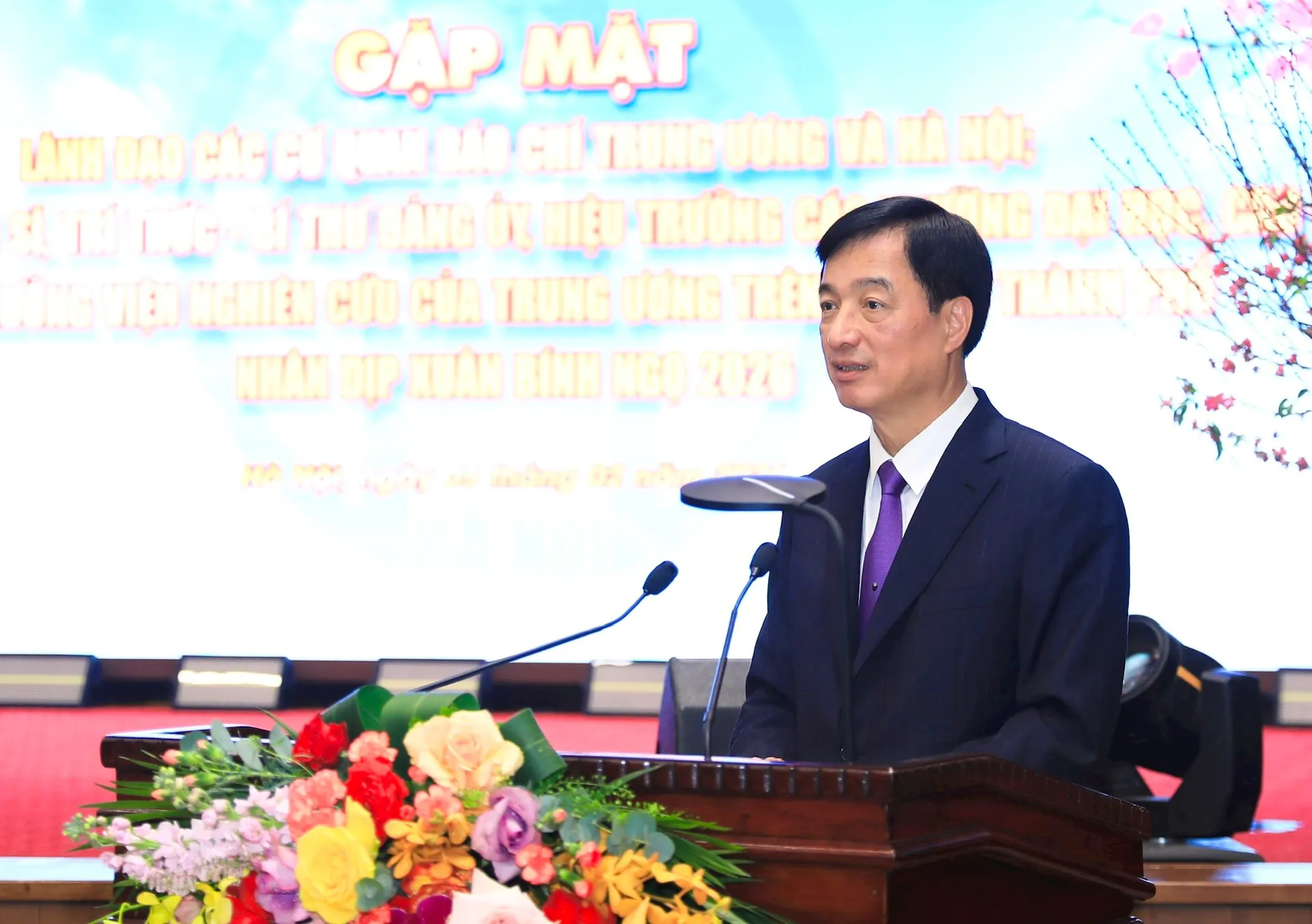
Hanoi Party Secretary Nguyen Duy Ngoc speaks at the event. Photos: Quang Thai
Speaking at a meeting with leaders of central and Hanoi-based media organizations, artists, intellectuals and heads of universities and research institutes, Ngoc said the participation of the scientific and intellectual community is a decisive factor in generating momentum for Hanoi’s future development.
He stressed that Hanoi’s development strategy is built on harmonizing the preservation of cultural identity with the promotion of modern elements, ensuring the capital remains rooted in its historical values while adapting to global changes.
“Hanoi is fully aware of its role as the political, cultural and intellectual heart of the nation and as a center for shaping national development,” said Ngoc.
That responsibility requires innovation, strategic vision and strong engagement from the scientific and intellectual community.”
According to Ngoc, the city has identified three strategic pillars, including institutions, planning and development models, as the foundation for its long-term growth. He said recent guidance from the Politburo and direct working sessions between Party General Secretary To Lam and Hanoi leaders have granted the capital stronger decentralization and clearer authority to design and implement its own development policies.
“Under this framework, Hanoi is empowered to proactively organize implementation and take responsibility for outcomes, creating greater space for development toward a modern, civilized and livable capital with a 100-year vision,” said Ngoc.
These orientations will be institutionalized through amendments to the Politburo’s Resolution 15 and revisions to the 2024 Capital Law.
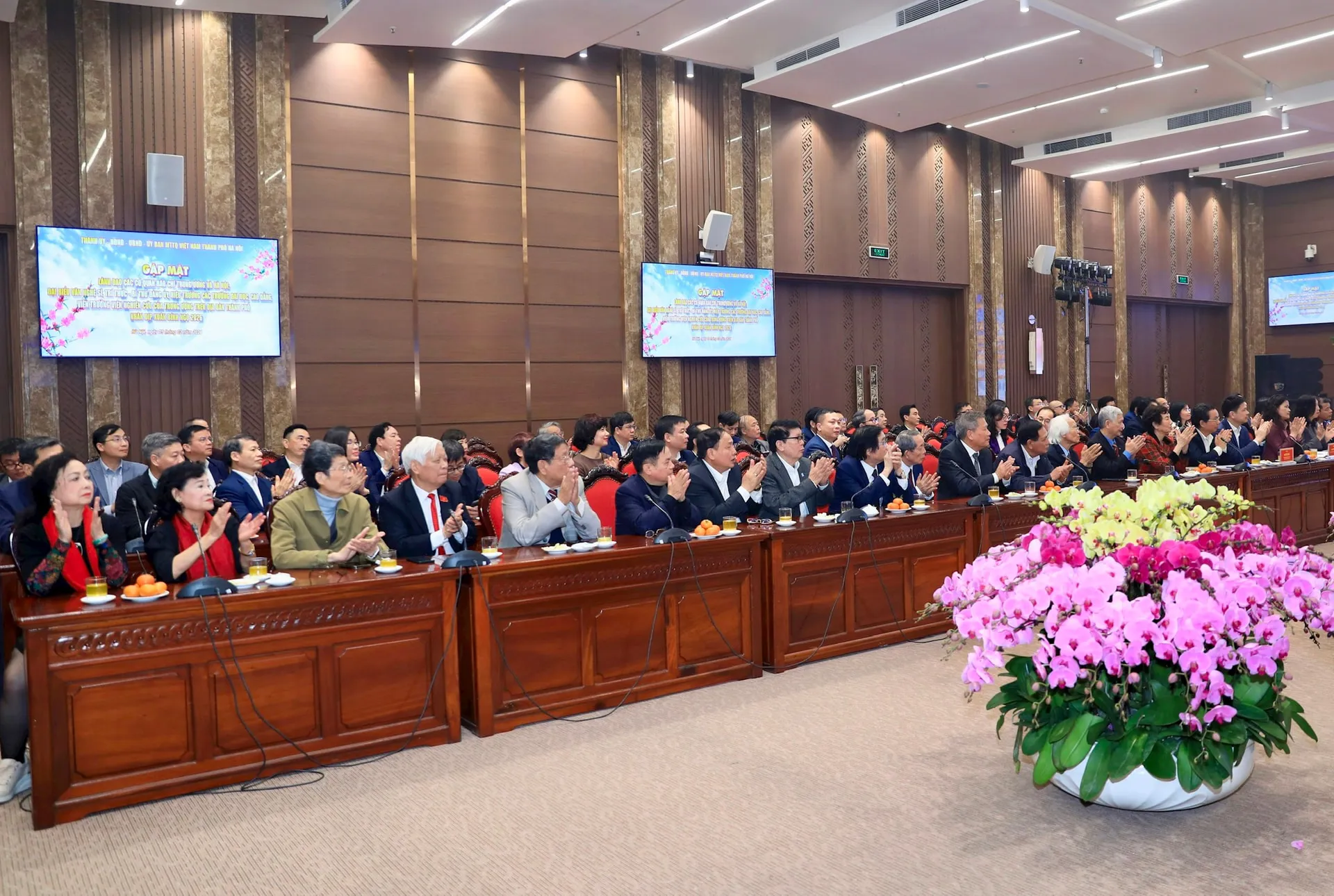
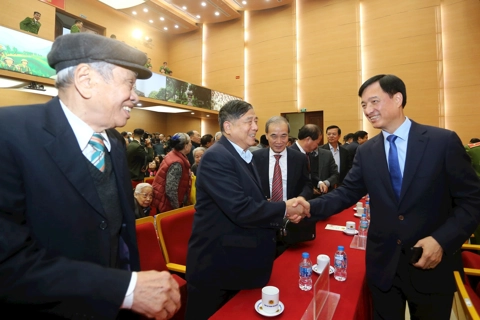
Scientists, intellectuals and experts attend the meeting.
On the planning front, Ngoc said the city has defined seven major requirements, emphasizing a multi-layered, multi-center planning approach that seeks to maximize the potential of underground space, low-rise areas and emerging development zones, while maintaining balances between heritage conservation and modern urban expansion.
Regarding development models, the city has identified science, technology, innovation and digital transformation as the primary drivers of growth. For this model to operate effectively, three essential conditions must be met, including a robust legal framework, modern infrastructure and high-quality human resources.
He called on scientists, researchers and experts to continue offering practical, experience-based and actionable recommendations, stressing that such contributions would be carefully studied and incorporated into the city’s policymaking and implementation processes.
“Hanoi is committed to creating the best possible conditions for scientists, intellectuals and experts to accompany the capital’s development in a meaningful and effective way,” Ngoc said.
Earlier at the meeting, participants watched a television report reviewing the situation and results of the implementation of the Capital’s objectives and tasks in 2025, as well as outlining key directions and priority tasks for 2026 and the years ahead.
The report showed the city’s early progress in addressing five long-standing bottlenecks, including traffic congestion, environmental pollution, flooding, urban order and food safety - issues that have affected daily life and public confidence for many years.
The spirit of “saying less and doing more, delivering results and seeing tasks through to the end” has become deeply embedded in the actions of Hanoi’s officials and Party members. Driven by this proactive, development-oriented approach, the capital is steadily enhancing its credibility and increasing its appeal to both domestic and international investors.
Speakers at the meeting expressed strong support for Hanoi’s recent reforms and people-centered development approach.
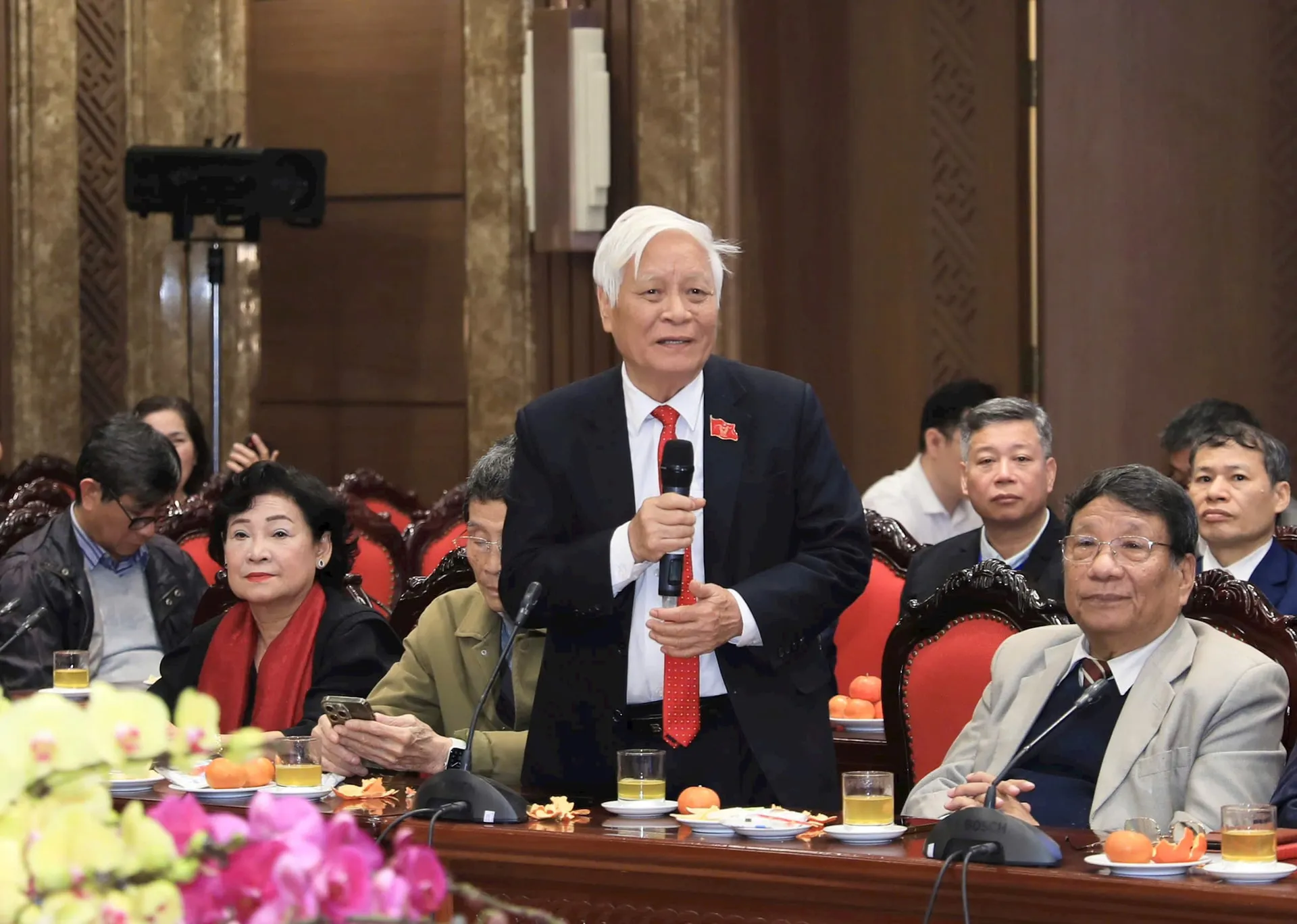
Nguyen Viet Chuc, former Vice Chairman of the National Assembly’s Committee for Culture and Education, said the city’s determination to address persistent shortcomings marked a positive and encouraging shift after prolonged stagnation.
He praised Hanoi’s focus on major programs serving the people and culture, noting that development policies must not only solve immediate problems but also help build a capital worthy of its status as a city of a thousand years of civilization.
“Hanoi must take the lead and dare to do difficult things that others hesitate to attempt. Close and in-depth consultation with leading experts in each field is essential to build social consensus and ensure real effectiveness,” said Chuc.
Merited Artist Tran Quoc Chiem, Chairman of the Hanoi Union of Literature and Arts Associations, congratulated the city on its achievements in 2025 and the successful conclusion of the 14th National Party Congress and the 18th Hanoi Party Congress.
He said these major political events have laid a solid foundation for Hanoi’s comprehensive development in the coming period.
Chiem emphasized the responsibility of artists and intellectuals to continuously strengthen political awareness, civic responsibility and professional integrity, identifying themselves as a frontline force on the ideological and cultural front.
“Artists and intellectuals are ready to contribute their talent and creativity to protect Hanoi’s cultural values and accompany the city on its new development journey,” he said.
Le Anh Tuan, Party Secretary of Hanoi University of Science and Technology, praised Hanoi’s strategic vision and political determination to become a leading regional hub for innovation, science and technology. He said the city’s master planning reflects both ambition and a strong sense of leadership responsibility in the new era.
Tuan highlighted Hanoi’s action plan to implement the Politburo’s Resolution 57 on breakthroughs in science, technology, innovation and national digital transformation, describing it as well-structured with clear objectives, tasks, solutions, resources and timelines.
“The growing involvement of universities in city-level programs demonstrates increasingly close ties between Hanoi and research and training institutions,” said Tuan.
Concluding the meeting, Hanoi Party Secretary Nguyen Duy Ngoc thanked central and local media agencies, scientists, intellectuals, experts and artists for their long-standing support and contributions to the capital’s development.
He said the city would carefully review the ideas raised at the meeting and incorporate them into future development strategies.
On the occasion of the Lunar New Year of the Horse (2026), Ngoc extended his best wishes for health, happiness and success to journalists, scientists, intellectuals and artists, expressing hope for continued partnership to generate breakthroughs and new momentum for Hanoi’s development in the years ahead.