China ready to support Hanoi’s urban planning, metro development
China has expressed readiness to support Hanoi in urban planning and sustainable development as the Vietnamese capital accelerates efforts to become a greener, more livable global city.
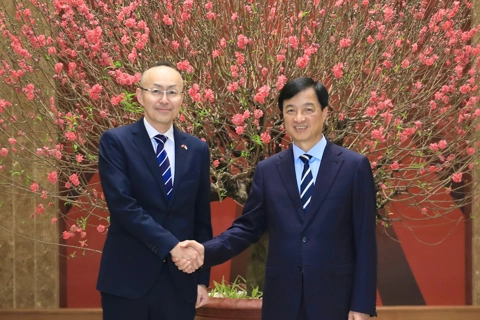
THE HANOI TIMES — China will support Hanoi in urban planning and sustainable development as the Vietnamese capital accelerates efforts to become a greener, more livable global city, Chinese Ambassador to Vietnam He Wei said on February 5.
The statement, made at the meeting between Ambassador He Wei and Chairman of the Hanoi People’s Committee Vu Dai Thang, comes as Hanoi steps up outreach to domestic and international partners to support long-term urban development.
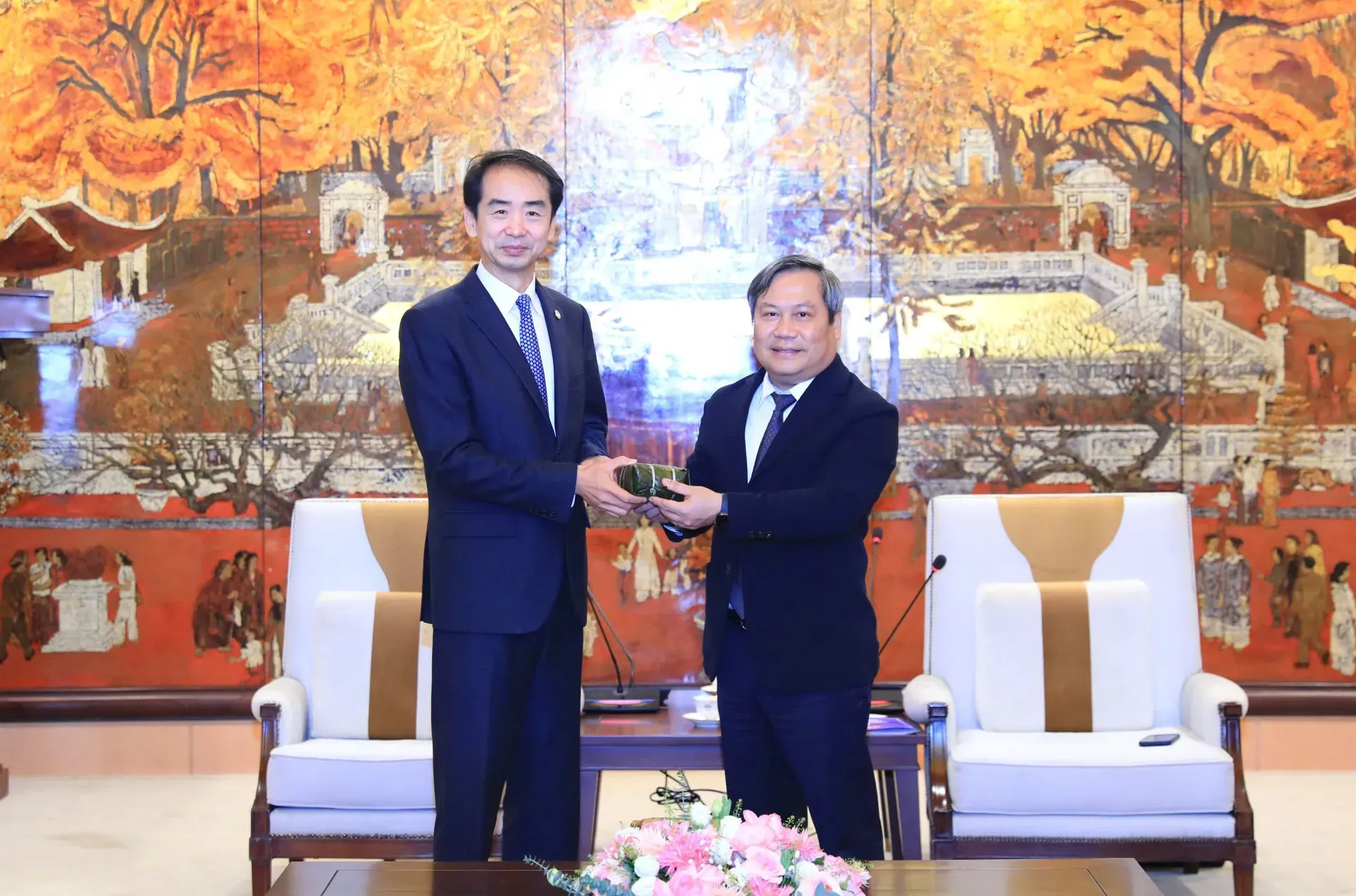
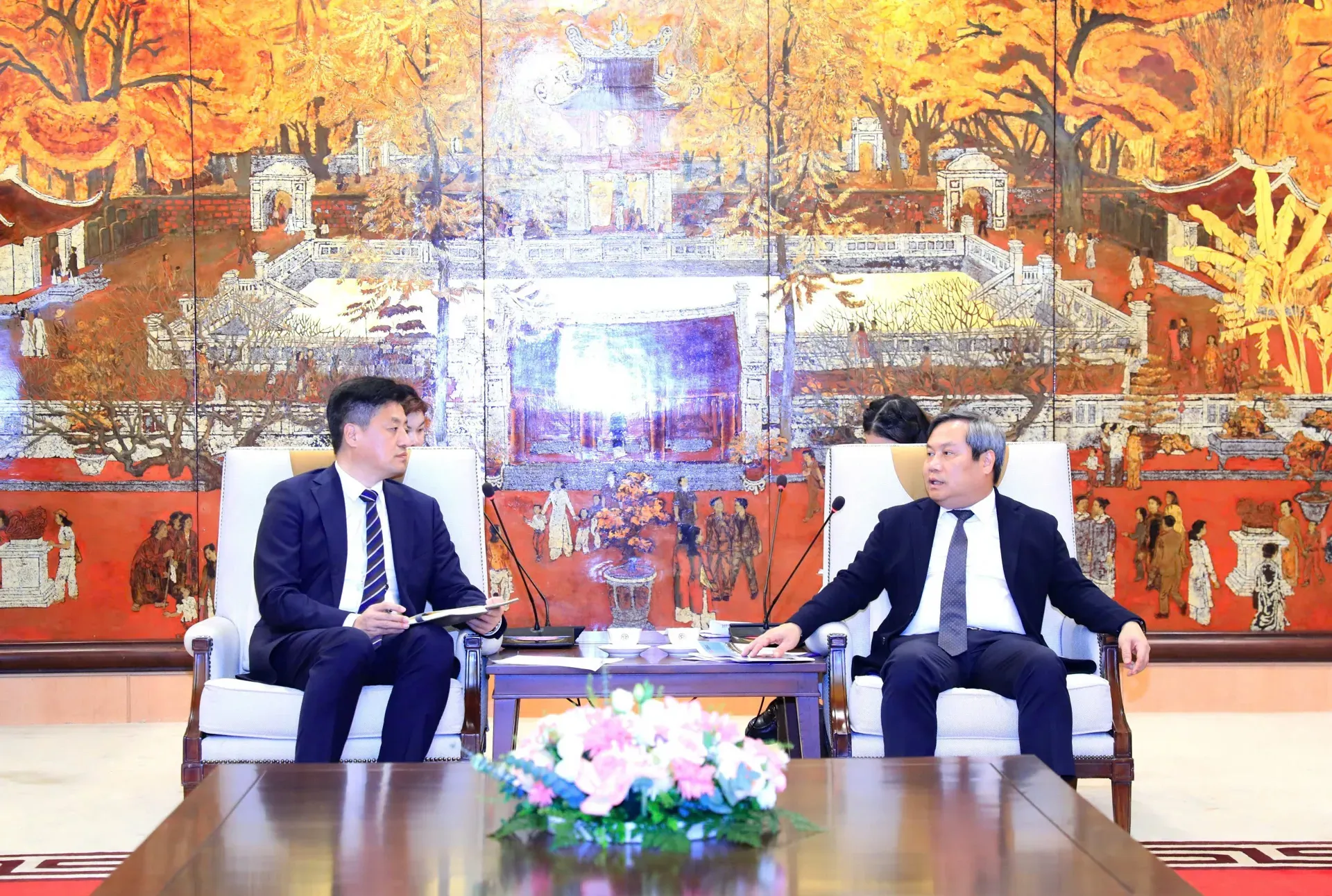
Chairman of the Hanoi People’s Committee Vu Dai Thang (right) and Chinese Ambassador to Vietnam He Wei at their meeting on February 5. Photos: The Hanoi Times
A Hanoi delegation led by Standing Vice Chairman of the municipal People’s Committee Duong Duc Tuan is currently visiting China to exchange experience with authorities and businesses in Beijing, Nanjing and Shanghai on urban planning and city management.
The Chinese Embassy stands ready to help connect Hanoi with development models, training programs and experience from major Chinese cities, including Beijing, Ambassador He said.
He said Hanoi and Beijing share similarities and face common challenges typical of rapidly modernizing megacities, adding that cooperation on planning, environmental management and traffic congestion still holds significant potential.
Building a livable city requires effective planning alongside science- and technology-based solutions to environmental problems and congestion, he said.
Chairman of the Hanoi People’s Committee Thang said the capital aims to become a civilized, culturally rich, high-income city with international standing as Vietnam enters a new development phase.
He said Hanoi plays a key role in national growth and has adopted ambitious long-term plans, including a 100-year master plan and revisions to Resolution No. 15-NQ/TW and the Capital Law to provide stronger institutional foundations for development.
“These key policy frameworks will allow Hanoi to make stronger economic and social decisions with regional impact,” Thang said.
He said the city is prioritizing solutions to five major bottlenecks – flooding, traffic congestion, urban upgrading, environmental protection and food safety – to improve living standards and create a new growth model.
Hanoi is also placing science and technology at the center of growth, expanding infrastructure and developing large-scale public transport systems, including urban rail and high-speed rail, the Hanoi official said.
Against this backdrop, Hanoi hopes to deepen exchanges with Beijing on environmental protection, infrastructure development and the digital economy, Thang said.
Both sides said recent progress in the Vietnam-China relations has created a solid foundation for cooperation between Hanoi and Beijing.
Urban rail cooperation
Hanoi welcomes Chinese enterprises to invest in and transfer technology for urban rail development, Thang said at a meeting with China’s CRRC Dalian the same day.
Vice Chairman of the Hanoi People's Committee Vu Dai Thang (right) and CRRC Dalian President Cao Zhongde at their meeting on February 5.
He said urban rail is central to Hanoi’s strategy to reduce private vehicles, cut air pollution and promote green transport. Hanoi plans to build 15 urban rail lines or sections by 2045, totaling about 600 kilometers, with estimated investment of US$55.4 billion.
The city is accelerating work on urban rail projects as well as the North-South railway, Thang said, adding that Hanoi is revising railway infrastructure planning to include clearer standards and technology requirements to ensure efficiency and scale.
He asked CRRC Dalian to support the development of unified railway standards for Hanoi and Vietnam and encouraged the company to expand local production, increase localization and transfer technology.
CRRC Dalian General Director Gao Zhongde thanked Hanoi authorities for their support and said the company values opportunities to cooperate on infrastructure development, workforce training, technical exchange and technology transfer.
With more than 120 years of history, CRRC Dalian operates in 33 countries and territories, employs more than 10,000 staff and reported revenue of $3 billion in 2025. Its products include diesel, electric and hybrid locomotives, urban rail vehicles and high-speed trains operating below 250 kilometers per hour.
In November 2024, the company signed a memorandum of understanding with Vietnam Railways on training and research for a railway industrial complex in Vietnam. It currently supplies rolling stock for the Lao Cai-Hanoi-Haiphong railway and two China-Vietnam border rail lines.
Gao said CRRC Dalian hopes Hanoi will continue supporting its activities and expressed confidence in deeper cooperation with the city and Vietnamese partners in the period ahead.