Vietnam inflation set to stay below 4% target this year: Experts
Inflationary pressure in the remaining six months would be insignificant as the oil prices are unlikely to surge, which is a result of a possible global economic recession.
The government’s target of keeping the inflation around 4% this year would be feasible if the monthly consumer price index (CPI), the main gauge of inflation, rises by an average of below 0.6% for the rest of the year, according to experts.
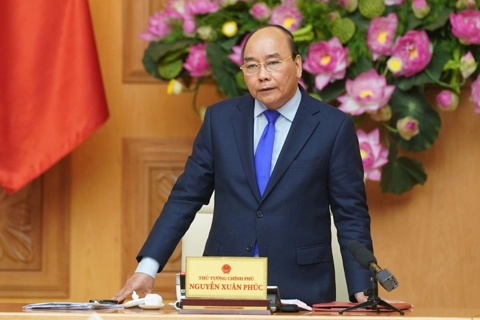
| Overview of the conference. Photo: Ngoc Thuy. |

The country’s CPI in June saw an increase of 0.66% against May, mainly due to price hikes of gasoline and high pork prices. The index, however, declined by 0.59% versus last December, which is the weakest drop in the 2016 – 2019 period.
For the first six months of 2020, the CPI grew 4.19% year-on-year, the highest six-month growth rate during the 2016 -2020 period, while core inflation picked up 2.81% year-on-year.
“Prices of pork and petroleum products have significantly affected Vietnam’s CPI,” said Nguyen Duc Do, vice president of the Institute of Economics – Finance, at a conference on July 2.
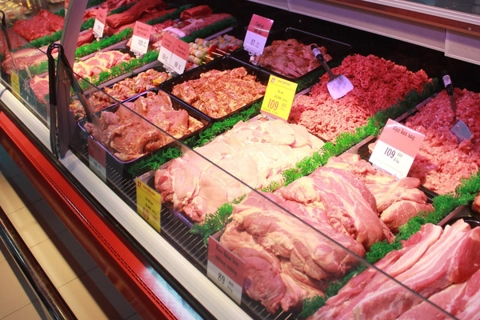
Do attributed a surge in pork prices of up to VND100,000 (US$4.35) per kilogram to the 14.28% increase year-on-year in prices of food, in turn putting pressure on the overall CPI.
Meanwhile, the Covid-19 pandemic plunged global oil prices to US$27 per barrel in the second quarter this year from US$57 per barrel in the fourth quarter of 2019.
Such a fall in oil prices led to a reduction of 9.26% in prices of transportation during the first half of this year and partly offset the negative impacts of high pork prices, Do stated.
“Inflationary pressure in the remaining six months would be insignificant as the oil price is unlikely to surge, which is a result of a [possibe] global economic recession,” Do suggested.
In case the Covid-19 pandemic is put under control worldwide, oil prices may fluctuate around US$40 per barrel in the coming time, the economist added.
While live hog prices remain higher than the government's expectations, they should be stabilized soon as the authorities started importing pigs from abroad and the agricultural sector is repopulating pig herds.
“Vietnam’s inflation rate would be in range of 3.5 – 4% for this year,” Do predicted.
Economist Ngo Tri Long said the Covid-19 pandemic has complicated government’s efforts in controlling inflation, not to mention the severe impacts from the African swine fever that caused a surge in pork prices.
Long warned the government’s supporting policies to stimulate consumption and economic recovery, as well as high pork prices, could be major risks to the 4%-inflation target.
Despite Vietnam’s early success in containing the Covid-19 pandemic, the complicated progression of the pandemic globally is putting pressure on Vietnam’s major driving growth forces, including tourism, trade and transportation.
A second outbreak of the Covid-19 may jeopardize countries’ efforts to boost a economic recovery. In the case of Vietnam, inflation control in this year is much harder compared to previous periods, Long said.
However, as the domestic demand remains relatively weak and credit growth is set to expand at 9 – 10% in 2020, inflation could well be under control, Long stated.
“With a solid macroeconomic fundamental and the government’s cautious approach in containing inflation, the 4% inflation target is entirely achievable,” Long commented.
The management of CPI should aim to support economic growth and avoid causing inflationary pressure for subsequent years, Long said.
At a July 1 meeting, Prime Minister Nguyen Xuan Phuc said the government sticks to its 4% inflation target this year, adding this would help stabilze the macro-economy and create favorable conditions for economic growth.